
Table of Contents
The Shift to Creative Autonomy
I remember the exact moment my perspective on work changed. I was sitting in a dimly lit studio, surrounded by unfinished canvases and the sharp scent of turpentine. My back ached from ten hours of client revisions. I realized I was trading my life force for a one-time check. That was the day I decided to build passive income streams for creative professionals.
Generating recurring creative revenue isn’t about laziness. It is about building a foundation that supports your art. You want to spend your mornings painting for yourself, not for a deadline. By creating automated artistic earnings, you reclaim your time. This guide is my personal roadmap for monetizing your art without losing your soul.
The Problem with the Hourly Rate
Trading hours for dollars is a trap for any visionary. There are only so many hours in a week. If you stop working, the money stops flowing. This creates a cycle of constant pressure. I found that the secret lies in decoupled income.
Why Every Artist Needs a Safety Net
Market tastes change fast. A single big client leaving can ruin your month. Having diverse income sources provides peace of mind. It allows you to say “no” to projects that don’t inspire you. This is the true meaning of creative freedom.
Turning Your Portfolio into an Engine
Your hard drive is likely full of gold. Those discarded sketches and half-finished fonts are assets. In the following sections, I will show you how to polish these into products. We are going to build a system that works even when you are far from your desk.
Digital Assets: The “Build Once, Sell Forever” Model
I opened my laptop to find a notification for a sale. It was for a texture pack I created three years ago. I had completely forgotten it existed. That tiny chime on my phone represented the purest form of passive income streams for creative professionals.
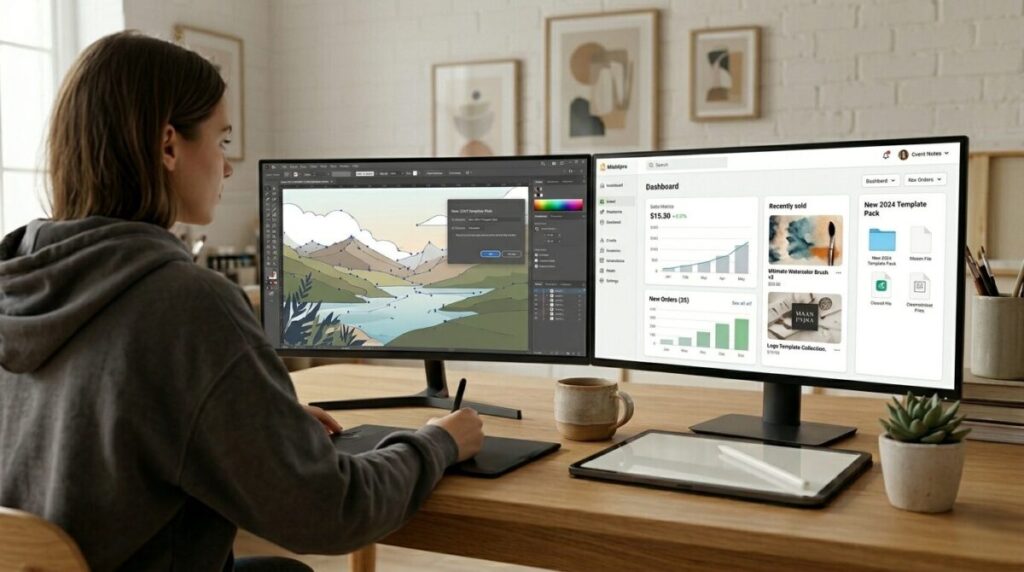
Creating digital creative products is the ultimate leverage. You exert the effort once. After that, the internet handles the distribution. You are no longer selling your time. You are selling a solution that helps other creators finish their work faster.
Identifying Your Unique Digital Toolkit
Every artist has a “secret sauce.” For me, it was a specific set of charcoal brushes. For you, it might be a Lightroom preset or a Notion template for project management. These are monetizable artistic assets hiding in your workflow.
The Low Overhead of Virtual Goods
There is no shipping. There is no inventory. If a thousand people buy your file, your costs stay the same. This scalability is why digital goods are the gold standard for monetizing your art. It allows you to build wealth without a warehouse.
Choosing the Right Marketplace
Platforms like Creative Market, Gumroad, and Etsy are ready-made storefronts. They already have the traffic you need. I found that starting on a marketplace is easier than building a solo website. You get to tap into an existing pool of hungry buyers immediately.
Quality Control and Passive Support
Low maintenance does not mean zero maintenance. I spend one hour a month updating my files for software compatibility. This small act keeps the reviews high and the search rankings steady. It ensures your engine keeps humming for years.
Print-on-Demand (POD) for Physical Goods
I remember the first time I saw a complete stranger wearing a hoodie with my design on it and I was sitting in a crowded coffee shop, and there it was—the “Ethereal Fox” illustration I had sketched on a rainy Tuesday. I hadn’t touched a single piece of fabric or visited a post office. That is the magic of passive income streams for creative professionals through Print-on-Demand.
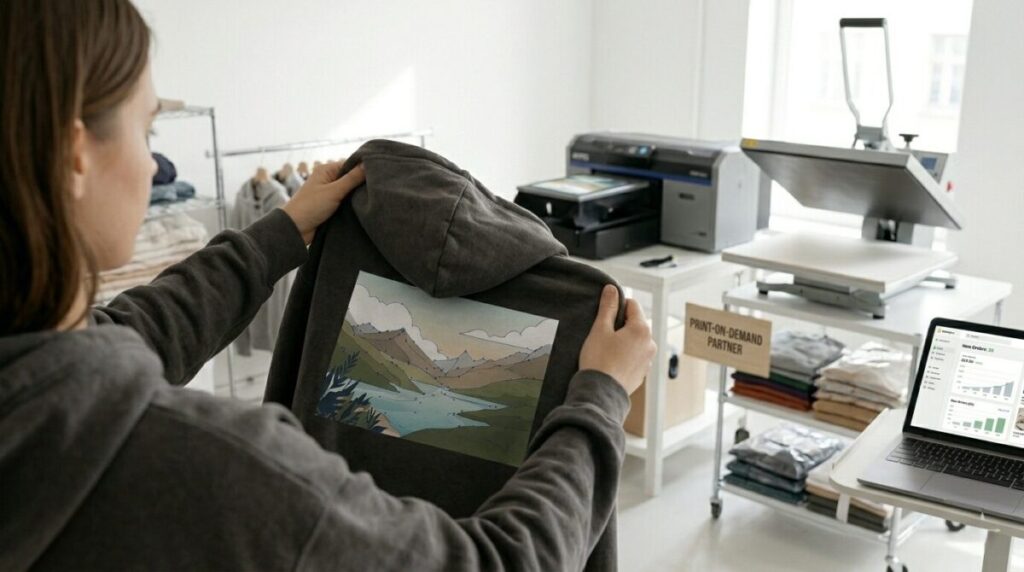
Integrating automated merchandise sales into your business model removes the biggest barrier to entry: physical inventory. You provide the vision, and the provider handles the logistics. This is a primary pillar of monetizing your art while keeping your studio clutter-free.
The No-Risk Retail Revolution
Traditional retail requires buying five hundred shirts and hoping they sell. With POD, the product only exists after a customer pays for it. This shift from “push” to “pull” economics changed my entire career. I no longer had to worry about unsold boxes in my garage.
Curating a Lifestyle Brand
Don’t just slap a logo on a mug. I found success by treating my POD shop like a high-end boutique. Whether it is museum-quality posters or embroidered caps, the quality must match your brand. Your artistic income sources should reflect the care you put into your original works.
Master the Mockup Game
People buy with their eyes. High-quality mockups show your art in a real-world context. Seeing a print framed on a minimalist wall helps a buyer visualize it in their home. I spend more time on my product presentation than I do on the actual upload process.
Finding Your Fulfillment Partner
Platforms like Printful, Printify, and Redbubble offer different strengths. Some integrate directly with your website, while others are standalone marketplaces. I prefer a “hybrid” approach. I use a marketplace for discovery and a personal store for my dedicated collectors.
Licensing and Royalties
I remember the thrill of seeing my illustration on a book cover in a London airport and I hadn’t sold the original painting. I had simply sold the right to use it. This is the sophisticated world of passive income streams for creative professionals through licensing.

Think of intellectual property royalties as renting out your brain. You retain the deed (the copyright), but you allow others to live in the house for a fee. This method of monetizing your art is how top-tier creators detach their income from their daily labor.
The Power of the Non-Exclusive Deal
You do not have to give your work to just one person. I found that selling non-exclusive licenses for my patterns allowed me to get paid by ten different brands at once. One design became wallpaper, a phone case, and a fabric print simultaneously.
Finding Your Ideal Creative Partners
Companies are always looking for fresh visuals. I started by researching brands that aligned with my aesthetic. Sending a professional portfolio to a creative director can lead to a multi-year contract. These artistic licensing agreements provide a steady drip of income.
Understanding the Royalty Check
Most deals involve an upfront fee plus a percentage of sales. I love the “mailbox money” aspect of this model. Every quarter, a check arrives based on how many units the brand sold. It is a reward for work I finished months or even years ago.
Protecting Your Creative Assets
Always read the fine print. I learned early on that “work for hire” means you lose your rights. I prefer “license for use” agreements. This keeps the asset in my portfolio while letting the brand benefit from its beauty.
Knowledge as a Product
I sat across from a talented illustrator who was struggling to pay rent. She had mastered a unique watercolor technique that took her a decade to perfect. I told her that her hands weren’t her only asset; her brain was the real goldmine. This is the power of passive income streams for creative professionals through education.
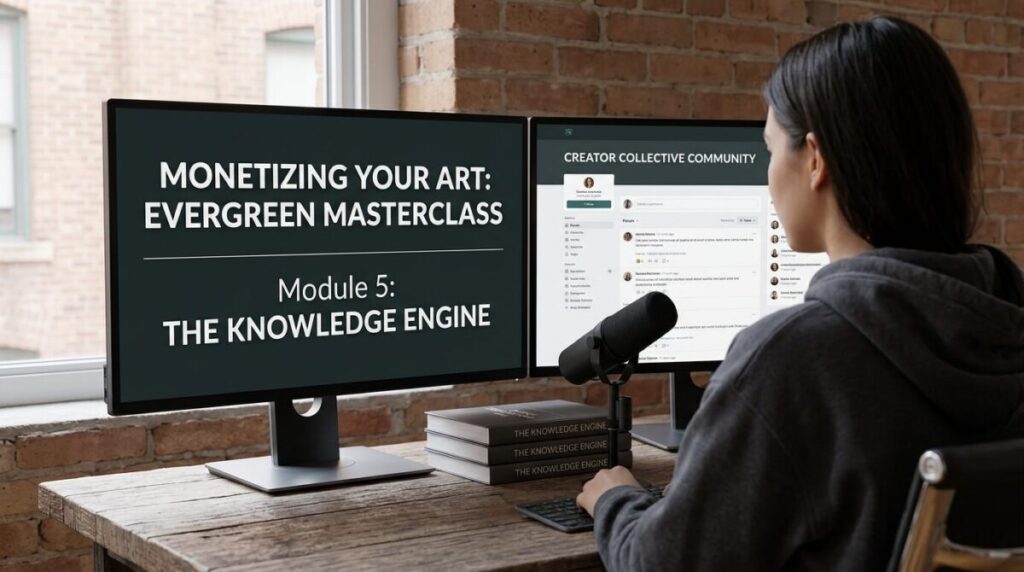
Packaging your expertise into digital learning products is transformative. You stop being a practitioner and start being a mentor. This shift in monetizing your art allows you to impact thousands of students while you sleep.
From “How-To” to “Done-For-You”
My first course was a simple PDF guide. It sold better than my original paintings. I realized people weren’t just buying my art; they were buying my process. Sharing your artistic skill mastery creates a deeper connection with your audience.
The Evergreen Course Architecture
I spent two months filming my masterclass. That was three years ago. It still sells every single week. By focusing on fundamental principles, your content stays relevant. You avoid the “treadmill” of constant content creation.
Building a Community of Peers
Education isn’t just about a one-way lecture. I found that my students became my biggest advocates. They share their progress on social media, which drives new sales. This organic growth is the ultimate engine for passive income streams for creative professionals.
Choosing Your Teaching Platform
Platforms like Skillshare or Udemy offer built-in audiences. However, hosting on your own site via Teachable or Kajabi gives you total control. I prefer the “land and expand” strategy. Use a marketplace to find students, then move them to your private platform.
Technical Setup & Automation
I remember staring at my screen at 2:00 AM, manually sending download links to customers. My “passive” dream felt like a second full-time job. I realized then that passive income streams for creative professionals are only as good as the systems behind them. To truly achieve freedom, you must automate the boring stuff.
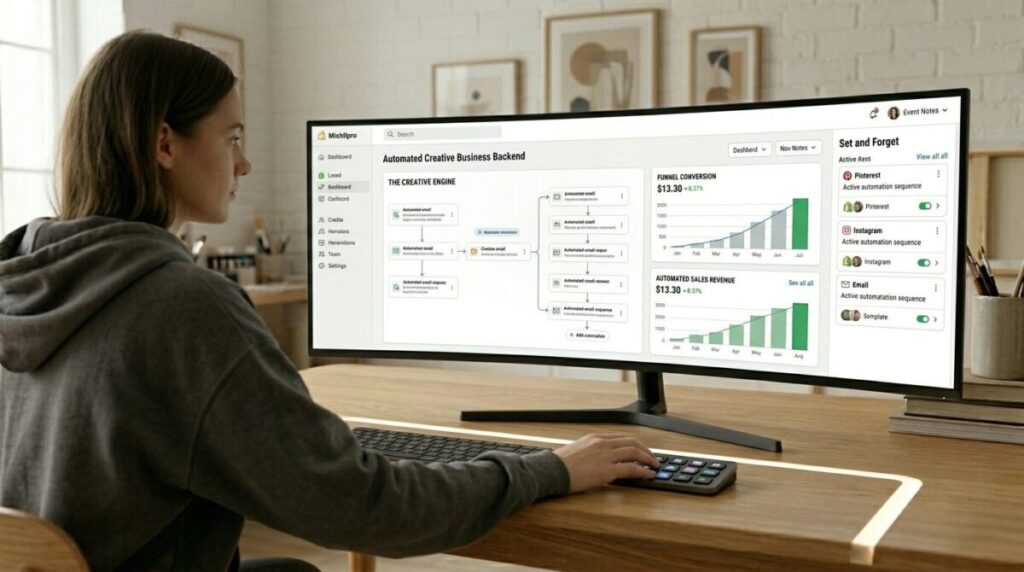
Building a creative business engine is about removing yourself from the transaction. You want the handoff from payment to product to be instant. This seamless experience is the hallmark of monetizing your art with professional polish.
The Self-Sustaining Sales Funnel
A funnel is just a map for your customers. I started by offering a free brush set in exchange for an email address. This allowed me to stay in touch with fans. Automated emails then introduced them to my premium courses. This artistic marketing automation works while I am out sketching in the park.
Choosing Your Command Center
You don’t need a degree in coding. Tools like Shopify, Squarespace, or WooCommerce handle the heavy lifting. I chose a platform that integrated with my email provider. This meant every new sale automatically updated my accounting software.
The Power of “Set and Forget”
I spent a weekend setting up my Pinterest and Instagram schedulers. Now, my art reaches new eyes every day without me touching a phone. This consistent visibility drives traffic to my passive creative storefronts. It ensures the top of the funnel is always full.
Maintenance vs. Creation
Even an automated ship needs a captain. I spend one morning a month checking for broken links or outdated plugins. This small “tune-up” prevents major headaches down the road. It keeps the revenue flowing and the customers happy.