
Table of Contents
In the vast, dynamic arena of financial markets, every aspiring and seasoned investor eventually stands at In the vast, dynamic arena of financial markets, every aspiring and seasoned investor eventually stands at a critical crossroads. On one path lies the reassuring, broad embrace of the Index Fund, a strategy lauded for its simplicity, diversification, and historical resilience. On the other beckons the thrilling, potentially high-reward gamble of Individual Stocks, where fortunes can be forged—or lost—on the fate of a single company.
This isn’t merely a choice between two investment vehicles; it’s a fundamental decision that shapes your risk exposure, your potential returns, your time commitment, and ultimately, your financial destiny.
For decades, this debate has raged, fueled by market pundits, success stories, cautionary tales, and deeply held personal philosophies about wealth creation. Is it wiser to bet on the collective genius of an entire economy, or to meticulously seek out the next revolutionary disruptor? Do you prefer the steady, predictable current of a river, or the exhilarating, unpredictable surge of a wave?
This guide will serve as your compass. We’ll navigate the complexities of both strategies, dissect their mechanics, illuminate their advantages and disadvantages, and ultimately equip you with the knowledge to construct a portfolio that is uniquely and optimally yours.
Part I: Understanding the Combatants – A Primer on Index Funds and Individual Stocks
Before we can weigh the merits of each, a crystal-clear understanding of what they are, and how they function, is paramount. Let’s strip away the jargon and lay bare the core essence of our two primary contenders.
What Exactly is an Index Fund?
Imagine the entire stock market, or a significant portion of it, as a vast, bustling city. An index fund isn’t an individual building in that city; it’s a meticulously crafted miniature replica of the entire cityscape itself, or at least a predefined district within it.
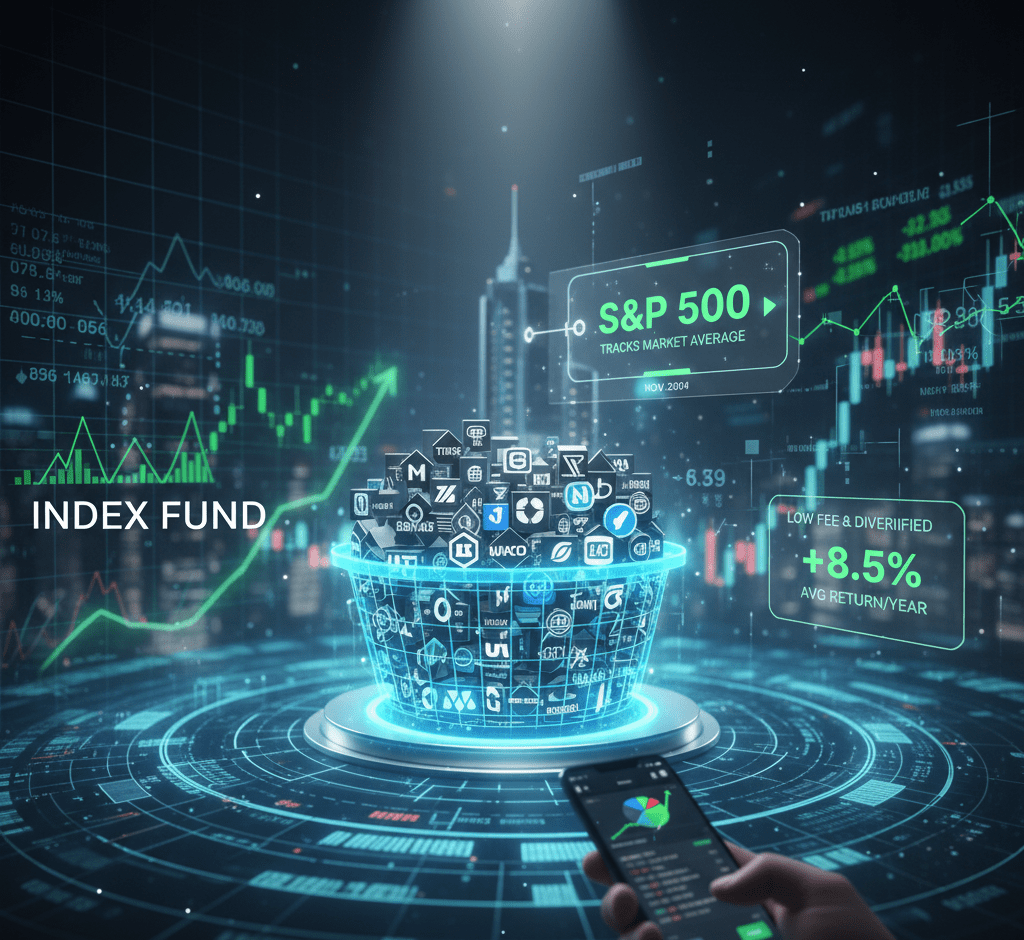
At its heart, an index fund is a type of mutual fund or Exchange-Traded Fund (ETF) designed to mirror the performance of a specific financial market index. Think of famous indices like:
- S&P 500: Represents 500 of the largest U.S. publicly traded companies, encompassing approximately 80% of the U.S. equity market.
- Dow Jones Industrial Average (DJIA): Tracks 30 large, publicly owned U.S.-based companies.
- NASDAQ Composite: A stock market index of the common stocks listed on the Nasdaq stock market, heavily weighted toward tech.
- Russell 2000: Focuses on small-cap U.S. companies, offering exposure to growth potential outside mega-cap stocks.
- MSCI EAFE: Tracks large and mid-cap equities across developed markets excluding the U.S. and Canada.
- Bond Indices: Such as the Bloomberg U.S. Aggregate Bond Index, which tracks a broad range of investment-grade bonds.
Instead of having a fund manager actively select stocks based on predictions (as in an actively managed fund), an index fund’s strategy is passive. Its sole objective is to hold the same securities, in the same proportions, as the index it tracks. For example, if Apple makes up 5% of the S&P 500, an S&P 500 index fund will hold Apple stock as 5% of its total assets.
This passive approach comes with profound benefits: low costs, broad diversification, and long-term consistency—all without requiring daily market monitoring.
What Exactly is an Individual Stock?
If an index fund is the entire cityscape, then an individual stock is a single, discrete building within that city. When you purchase an individual stock, you are buying a fractional ownership stake in a specific publicly traded company.

Ownership comes with certain rights and implications:
- Share in Profits: As an owner, you may receive dividends or benefit from an increase in the stock price as the company grows.
- Voting Rights: Common stock typically allows voting on corporate matters, proportionate to your ownership.
- Direct Exposure: Your investment performance is directly tied to the company’s successes and failures, making it highly sensitive to management decisions, competition, and market trends.
Investing in individual stocks is essentially a bet on your ability to pick winners—companies that will outperform the broader market. The potential upside can be enormous, but the risks are equally tangible.
Part II: Advantages of Index Funds
Index funds have become a cornerstone of modern investing for a reason. Their advantages include:
1. Broad Diversification
- Reduces the impact of any single company’s poor performance.
- Provides exposure to dozens or hundreds of companies across various industries.
- Automatically balances risk across sectors and market capitalizations.
2. Lower Costs
- Minimal trading leads to low expense ratios.
- Avoids the high fees often associated with active management.
- Over time, lower costs can significantly improve your net returns.
3. Historical Consistency
- Many index funds track long-term upward trends of the market.
- While short-term fluctuations exist, markets have historically grown over decades.
- Ideal for long-term investors seeking steady compounding.
4. Minimal Time Commitment
- Passive strategy means less research, fewer trades, and no need for constant market monitoring.
- Perfect for beginners or investors who prefer a hands-off approach.
Part III: Advantages of Individual Stocks
Individual stocks, while riskier, can be a powerful way to accelerate wealth:
1. Higher Potential Returns
- Exceptional companies can outperform the market.
- Early investors in companies like Apple, Amazon, or Tesla experienced extraordinary growth.
- Opportunity to leverage innovation, market disruption, and unique company performance.
2. Personal Control
- Decide exactly what to invest in.
- Align investments with personal beliefs, interests, or industry expertise.
- Customize portfolio weighting according to conviction in specific companies.
3. Active Engagement
- Deepen your understanding of markets, industries, and business fundamentals.
- Can make investing intellectually engaging and even enjoyable.
- Opportunity to capitalize on mispriced assets or market inefficiencies.
Part IV: Disadvantages of Each Approach
No strategy is perfect. Understanding potential pitfalls is critical.
Index Funds Cons
- Limited Upside: You can’t beat the market if you want to, because your returns mirror the index.
- Market Risk Exposure: Index funds rise and fall with the market. In a broad downturn, there’s no hiding.
- Lack of Excitement: For some, the hands-off approach may feel uninspiring.
Individual Stocks Cons
- High Risk: A single bad investment can wipe out a large portion of your portfolio.
- Time-Intensive: Requires research, monitoring, and disciplined decision-making.
- Emotional Stress: Watching individual stocks fluctuate can be nerve-wracking.
- Costs Can Add Up: Frequent trading may incur higher fees and taxes.
Part V: Risk Tolerance and Personal Strategy
Choosing between index funds and individual stocks depends largely on your risk tolerance and financial goals.
- Low Risk Tolerance → Index funds are ideal. They smooth volatility and reduce the chance of catastrophic losses.
- High Risk Tolerance → Individual stocks offer opportunities for outsized gains, but come with increased volatility.
- Hybrid Approach → Many investors use a mix: core holdings in index funds for stability and select individual stocks for growth potential.
Part VI: Tax Efficiency Considerations
Tax strategy can influence your choice:
- Index Funds: Tend to be tax-efficient due to lower turnover and long-term holdings.
- Individual Stocks: Active trading can trigger frequent capital gains taxes, reducing net returns.
- ETFs: Some index ETFs are even more tax-efficient, thanks to the creation/redemption mechanism.
Part VII: Costs and Fees – Don’t Underestimate Expenses
Investing isn’t just about returns—it’s about net returns after costs:
- Index Funds: Expense ratios are usually 0.03–0.25%, very low compared to actively managed funds.
- Individual Stocks: Costs are lower if buying long-term, but frequent trades or platform fees can add up.
- Hidden Costs: Slippage, bid/ask spreads, and taxes may erode profits for active traders.
Part VIII: Practical Portfolio Construction Tips
1. Decide Your Core
- For most investors, the core should be index funds.
- Provides stability and long-term growth.
2. Add Satellites
- Use individual stocks as a “satellite” strategy for high-potential growth.
- Keep allocation reasonable—10–30% of total portfolio depending on risk appetite.
3. Diversify Across Asset Classes
- Include bonds, REITs, or international funds.
- Helps weather market volatility and reduces reliance on a single sector.
4. Rebalance Periodically
- Maintain your desired risk allocation.
- Prevents overexposure to outperforming sectors or stocks.
- Can be done annually or semi-annually.
Part IX: Behavioral Considerations
Investing success isn’t just math—it’s psychology:
- Index Funds: Passive strategy reduces emotional trading.
- Individual Stocks: Humans are prone to overconfidence, fear, and herd behavior.
- Tips: Create rules for entry and exit, avoid chasing hot tips, and keep a long-term mindset.
Part X: Case Studies
Case Study 1: Index Fund Success
- Investor A: Invested $50,000 in an S&P 500 index fund 20 years ago.
- Outcome: Annualized returns of ~9%, portfolio grew to over $300,000 with minimal effort.
Study 2: Individual Stock Win
- Investor B: Invested $10,000 in Tesla in 2010.
- Outcome: Investment grew to over $1,000,000, but volatility was extreme.
Study 3: Individual Stock Loss
- Investor C: Invested $20,000 in a single tech startup that failed.
- Outcome: Total loss, highlighting the risks of concentrated bets.
Part XI: Long-Term Outlook
Index funds remain the backbone for wealth building:
- Historically, markets appreciate over decades.
- Perfect for retirement accounts, IRAs, and long-term savings.
Individual stocks are best approached as opportunistic investments:
- Allocate only what you can afford to lose.
- Focus on industries you understand and can follow closely.
Part XII: Choosing the Right Broker
Selecting a brokerage impacts costs, research access, and convenience:
- For Index Funds: Look for low-fee ETFs or mutual funds.
- For Individual Stocks: Prioritize platforms with research tools, low commissions, and tax-efficient trading.
Part XIII: The Hybrid Portfolio Approach
Many successful investors blend both approaches:
| Portfolio Component | Allocation | Purpose |
|---|---|---|
| Index Funds | 60–80% | Core stability, broad diversification |
| Individual Stocks | 10–30% | Growth opportunities, higher returns |
| Bonds/REITs | 10–20% | Reduce volatility, income generation |
This approach balances risk, growth potential, and time commitment.
Part XIV: Key Takeaways
- No universal answer: Your choice depends on goals, risk tolerance, and personality.
- Index funds: Low-cost, diversified, and historically consistent.
- Individual stocks: High-risk, high-reward, requires research and discipline.
- Hybrid strategies: Offer balance between security and growth.
- Time horizon matters: Long-term investors benefit more from passive approaches.
- Emotional discipline: Avoid panic selling and impulsive trading.
Part XV: Final Thoughts – Craft Your Unique Path
The debate between Index Funds vs. Individual Stocks isn’t about right or wrong; it’s about alignment with your financial vision. A portfolio is personal, just like your risk appetite, goals, and timeline.
- For most people, the index fund core plus individual stock satellites approach offers an optimal balance.
- For investors with industry expertise or higher risk tolerance, individual stocks can accelerate growth—but always within reason.
Remember, investing isn’t a sprint; it’s a marathon. Long-term consistency, strategic allocation, and disciplined execution will outperform any hot stock tip or market timing attempt.
Start Today
The earlier you begin, the more powerful compounding becomes. Whether you start with an index fund, a few hand-picked stocks, or a mix of both, the key is taking action. The market rewards patience, knowledge, and prudence.
With this definitive guide, you now have the roadmap to navigate the choice between Index Funds and Individual Stocks, build your personalized portfolio, and take confident steps toward financial independence.