
Table of Contents
The Primal Need
I remember sitting in the glow of my laptop late one Tuesday night. The blue light felt cold. I realized I was scrolling through endless feeds, yet I felt an old, familiar hunger. It was a hunger for modern folklore for the digital age. We are surrounded by data, but we are starving for stories. We need digital mythology to help us make sense of this chaotic, hyper-connected world.
Humans have always used contemporary urban legends to process fear and hope. In the past, we gathered around flickering fires to speak of forest spirits. Today, our fires are the glowing screens of our smartphones. The setting has changed, but our DNA remains the same. We crave the structure that only an ancient myth can provide.
Stories are the software of the human soul. Without them, we are just biological machines processing binary code. I’ve found that when I lean into these shared narratives, the digital noise fades away. Myths provide a map for the soul. They give us a way to navigate the deep woods of the internet without losing our way.
The Anchor of the Ancient Mind
We often think we have outgrown the need for old gods. We believe our algorithms and data points have replaced the Oracle. However, the more I study our online behavior, the more I see the old patterns emerging. We are not just users; we are storytellers. We are constantly searching for a “why” in a world that only offers a “how.”
Our ancestors understood that logic alone cannot sustain a community. They knew that a shared story is the strongest glue for a society. As I navigate the web, I see us building new temples and creating new icons. We are desperately trying to find the sacred within the silicon. This is why we must reclaim our right to wonder.
Why Screens Can’t Replace Campfires
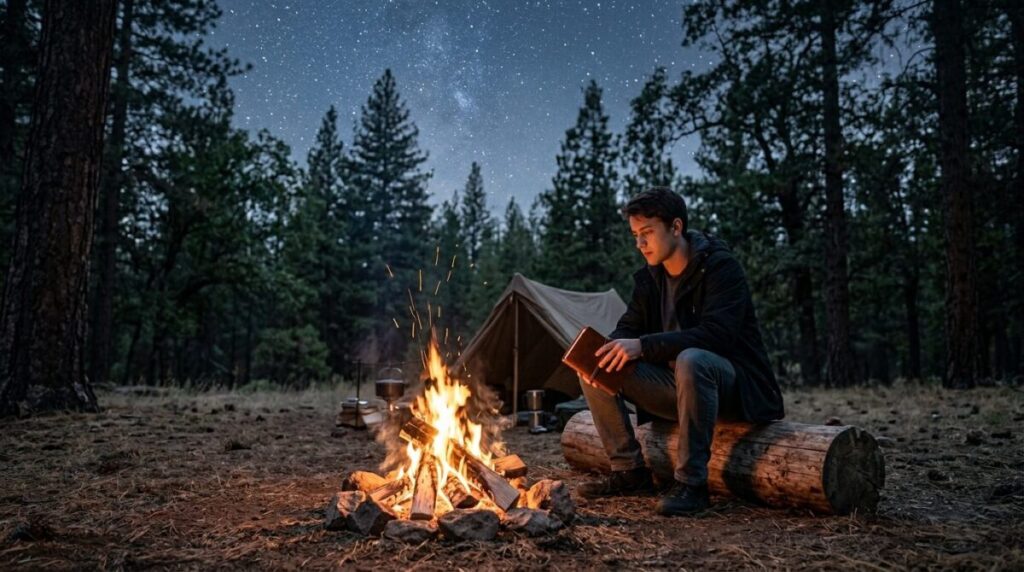
The flickering screen is a poor substitute for the flickering hearth. A screen demands your reaction; a campfire demands your presence. When we consume digital mythology through a feed, we lose the communal breath. We lose the shared eye contact that makes a story real. I felt the difference in my bones as the wood popped and hissed in that cabin.
We are trying to find contemporary urban legends in the comment sections of viral videos. But those spaces are often too loud for the nuance of a myth. A true myth requires a bit of shadows. It needs the “unseen” to take root in the mind. On the internet, everything is over-exposed. We have too much light and not enough mystery.
The Loss of the Oral Cadence
There is a specific frequency to a human voice telling a tale. I’ve noticed that when I listen to a podcast, I get close to it, but it’s still filtered. The oral tradition was never just about the plot. It was about the pause. It was about the storyteller leaning in when the forest in the story grew dark.
In our current era, we prioritize speed over resonance. We want the summary, not the saga. But a saga is what builds the soul’s muscles. I believe we are currently in a “Narrative Recession.” We have plenty of content, but very little context. We are drowning in information while starving for the wisdom that a well-timed myth provides.
The campfire was the first classroom. It taught us how to be human. Today, we are trying to learn that same lesson through a glass pane. It is possible, but it is much harder. We have to be intentional about creating those “firelight moments” in our own lives. We have to put down the phone to pick up the thread of the story.
Identifying New Gods (The Algorithm)
I often find myself wondering who the new Olympians are. As I navigate my daily digital routine, I realize I am constantly making offerings to an invisible power. We call it “The Algorithm.” This is the cornerstone of modern folklore for the digital age. It is a force that feels divine because it is both everywhere and nowhere. We speak of it in hushed tones, hoping for its favor.
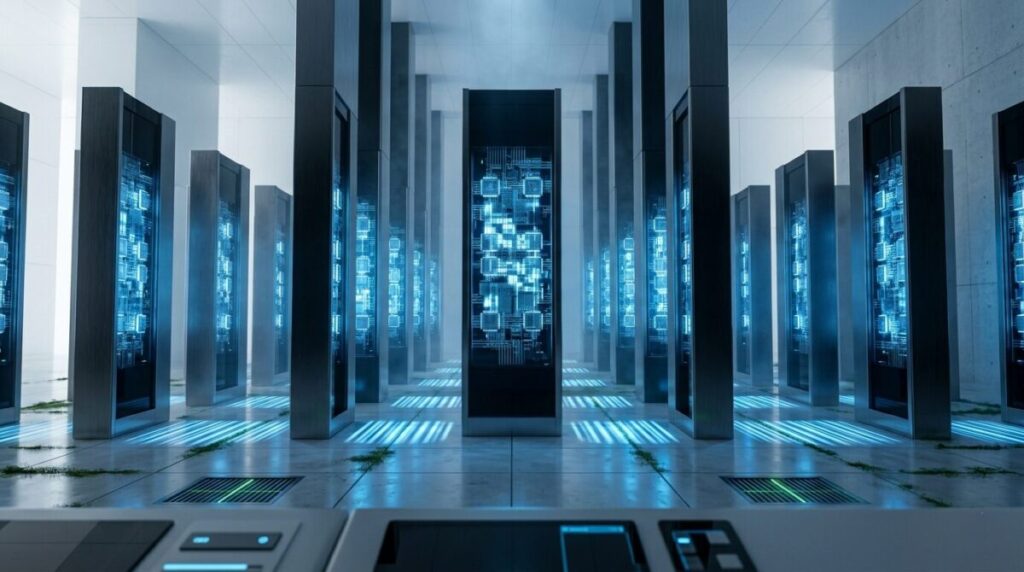
In this landscape of digital mythology, the “For You” page is our modern Oracle at Delphi. We feed it our data, our likes, and our deepest fears. In return, it provides a curated prophecy of what we should desire next. These are our contemporary urban legends—stories of individuals who “went viral” or were “shadowbanned” by the digital deities.
I’ve noticed how we anthropomorphize these lines of code. We say the algorithm “loves” a certain video or “hates” a specific creator. This is a classic mythological behavior. We are assigning human emotions and divine whims to a mathematical formula. It makes the cold, binary reality of the internet feel a bit more familiar. It makes the chaos feel like a choice.
The Silicon Pantheon
Our new gods do not live on mountain peaks. They live in server farms in the desert. They govern our visibility, our social status, and our livelihoods. When I talk to fellow creators, the language we use is deeply ritualistic. We perform “hacks” and “optimization rituals” to stay in the light of the digital sun.
We have traded lightning bolts for notifications. Both can strike without warning. Both can change your life in an instant. This shift in our collective psyche is fascinating to watch. We are no longer praying for rain; we are praying for engagement. We are looking for a sign from the silicon sky that we still matter.
I believe we must recognize these patterns to stay grounded. If we don’t, we risk becoming servants to a myth we didn’t choose. By naming the “God of the Feed,” we regain a bit of our own power. We can choose when to bow and when to walk away. We can remember that even the most powerful algorithm is just a story we’ve agreed to believe.
The Biology of Myth-Making
Our need for modern folklore for the digital age isn’t just a cultural preference. It is written into our very biology. When I listen to a powerful story, my brain doesn’t just process words. It undergoes a physical transformation. This is the foundation of digital mythology. Our gray matter is a simulation machine designed to turn abstract data into lived experience.
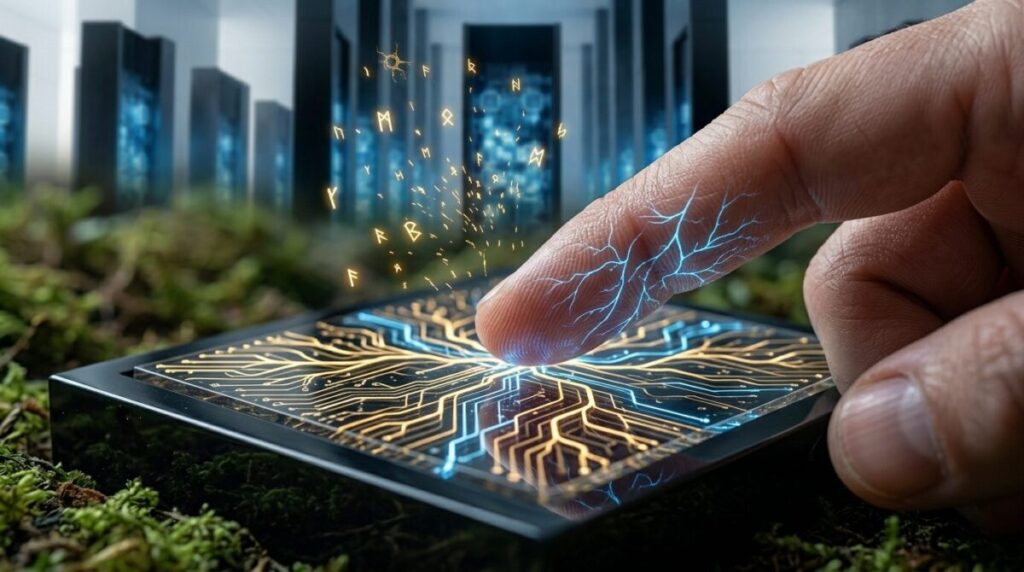
Recent studies show that narratives activate the prefrontal cortex and the hippocampus. These areas are responsible for memory and social simulation. When we engage with contemporary urban legends, our brains release oxytocin. Scientists often call this the “moral molecule.” It builds trust and empathy between strangers who share the same story.
I’ve noticed that a well-told tale creates “neural coupling.” This means the listener’s brain waves begin to mirror the storyteller’s. It is a form of biological synchronization. Even through a digital screen, this connection remains potent. Our ancestors used this to survive in the wild. We use it to survive the complexities of the modern world.
The Survival Value of a Story
Storytelling was never just a leisure activity for humans. It was an adaptive survival mechanism. Myths provided “maps of danger zones” and cultural rules. Before we had written laws, we had legends. These legends taught us who to trust and what to fear. I believe we are still using the same old software on our new digital hardware.
Our brains prioritize “sticky” stories over cold facts. A list of statistics rarely changes a person’s mind. However, a narrative about a single person’s struggle can move mountains. This is because stories “hitch a ride” on the ego. They allow us to imagine ourselves as the protagonist. We are hardwired to learn through the experiences of others.
In the digital era, this biological trait is often exploited. Viral misinformation works because it follows the structure of a classic myth. It has a hero, a villain, and a high-stakes conflict. To protect ourselves, we must understand our own biological triggers. We need to recognize when a story is designed to help us—and when it is designed to hack us.
Viral Stories as Modern Lore
I recently watched a short video of a “glitch in the matrix” that had millions of views. A bird seemed to freeze mid-air against a gray sky. In the comments, thousands of people debated the nature of reality. This is the heart of modern folklore for the digital age. We are no longer looking for ghosts in the graveyard; we are looking for bugs in the simulation.
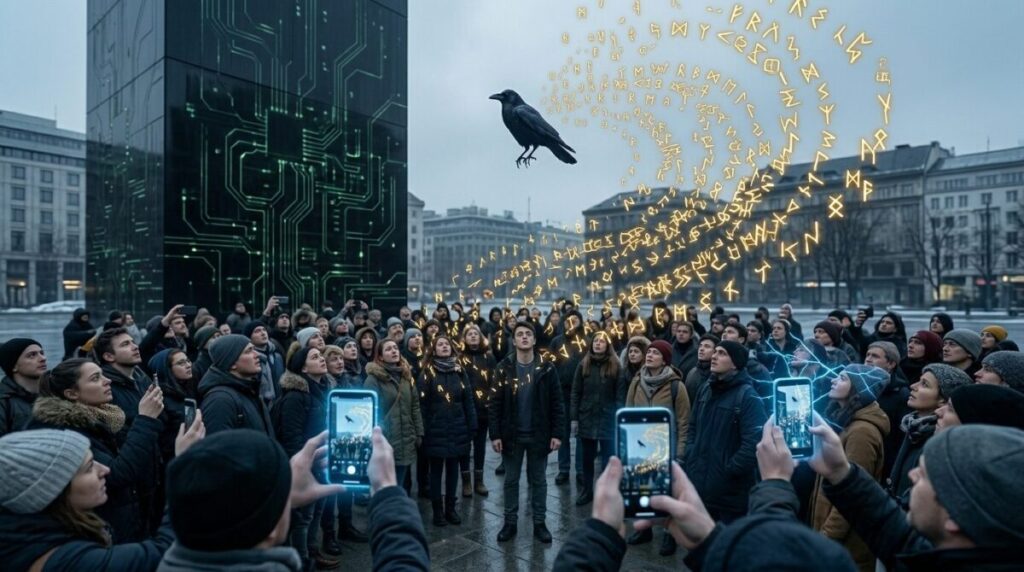
These viral moments are the digital mythology of our era. They spread because they provide a collective “what if?” that breaks the monotony of the mundane. When we share these clips, we are participating in a global campfire. We are building contemporary urban legends in real-time. I felt the same chill watching that bird as I did hearing ghost stories as a child.
The speed of the internet acts as a catalyst for myth-making. A story that once took decades to travel across a continent now circles the globe in minutes. I’ve seen how a simple “creepypasta” can evolve into a full-blown legend. These stories tap into our primal fear of the unknown. They remind us that despite our tech, we are still afraid of the dark.
The Evolution of the Digital Cryptid
In the past, we had Big Foot and the Loch Ness Monster. Today, we have “The Backrooms” and “Slender Man.” These are the new monsters that haunt our collective subconscious. They don’t live in the woods; they live in the “liminal spaces” of abandoned malls and poorly lit corridors. They represent our anxiety about the artificial worlds we’ve built.
I find it fascinating how these legends are crowdsourced. No single person owns the “Slender Man” myth. It belongs to the internet. It is a living, breathing narrative that grows with every new image and story added to the pile. This is the ultimate expression of the oral tradition. It is a story that refuses to stay static.
We use these modern monsters to process our technological dread. They are the shadows cast by our own innovations. By sharing them, we are trying to domesticate our fears. We are turning the “scary unknown” into a “scary story” we can control. It is a survival tactic as old as humanity itself, just updated for a high-speed world.
Practical Ways to Rebuild Personal Rituals
I used to start my day by reaching for my phone before my eyes were even fully open. I was feeding the “God of the Feed” before I had even fed myself. This habit left me feeling fragmented and hollow. To reclaim modern folklore for the digital age, I had to build my own digital altars. I had to create personal rituals that felt sacred again.
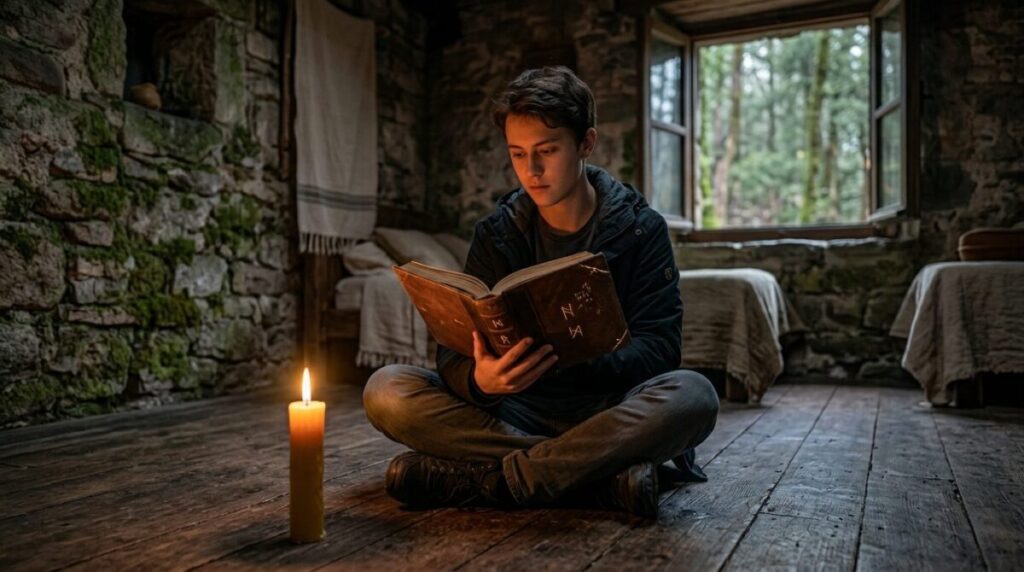
True digital mythology requires a boundary. I’ve started a “Sunset Protocol” where all screens go dark at 8:00 PM. In that space, I light a single candle and read a physical book. This simple act changes the texture of my evening. It turns a mundane Tuesday into a storied experience. I am no longer a consumer; I am a character in my own quiet narrative.
We often think rituals must be elaborate or religious. However, contemporary urban legends are born from the repetition of small, meaningful acts. I’ve found that writing one handwritten letter a month feels like a revolutionary act. It is a slow story sent through a fast world. It is a physical artifact of a digital life.
The Power of the Analog Pause
I once tried a “Digital Sabbath” for twenty-four hours. The withdrawal was real, but the clarity that followed was better. Without the constant hum of notifications, I began to notice the stories in my own backyard. I watched the way the wind moved through the trees. I listened to the birds and realized they had their own ancient songs.
We need these pauses to let our own internal myths catch up to us. When we are constantly “on,” we have no time to process the “why.” I suggest starting small. Find one activity that requires your full, un-fragmented attention. It could be gardening, baking bread, or simply walking without headphones.
These are not just hobbies; they are the building blocks of a resilient soul. They provide the “soil” in which new myths can grow. When I am working with my hands, I am participating in a story that is thousands of years old. I am connecting to the craftsmen and dreamers who came before me. This is how we anchor ourselves in the storm of the silicon age.
Preserving the Oral Tradition Digitally
I recently discovered a voice memo from my grandmother that I had forgotten on an old drive. Hearing her crackling laughter was more moving than any high-definition video I’ve seen. This is the challenge of modern folklore for the digital age. We have the tools to record everything, but we often fail to preserve the soul of the message. We must learn to use our gadgets as vessels for digital mythology.
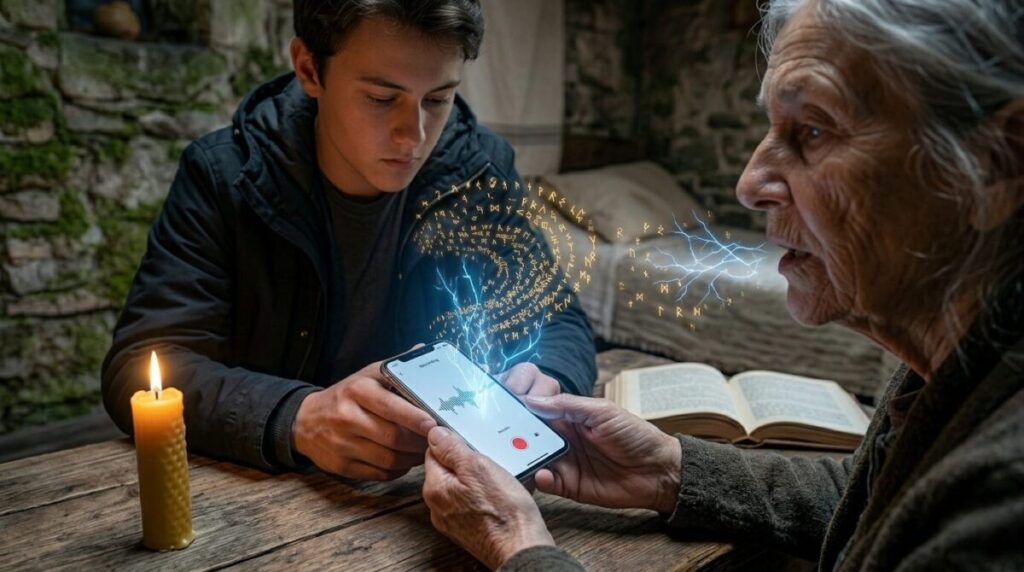
The oral tradition was never about perfect accuracy. It was about the “breath” of the story. I’ve started using my phone to record “legacy interviews” with my elders. I don’t care about the lighting or the backdrop. I only care about the cadence of their speech. These recordings are the contemporary urban legends of my own family tree. They are the myths that will guide my children.
We can use the internet to build a global archive of human wisdom. But we must be careful not to let the data drown out the depth. I find that audio-only platforms often capture the magic of the campfire better than video. When you can’t see the face, your imagination has to do the heavy lifting. This internal work is where the myth truly lives.
Building Digital Longhouses
In ancient times, the longhouse was the center of the village. It was where the stories were kept and the history was sung. Today, our longhouses are private servers, niche forums, and encrypted chats. I’ve joined small digital “circles” where we share personal essays instead of memes. These spaces feel like sacred groves in a plastic forest.
We need to curate our digital environments with intention. If your “longhouse” is a toxic comment section, your stories will be sour. I’ve learned to prune my digital garden ruthlessly. I follow storytellers, poets, and historians who value the slow burn of a narrative. This allows me to participate in a digital mythology that nourishes rather than drains.
The future of folklore isn’t just about looking back. It is about how we transmit our current lived experience to the future. I want to leave behind a digital footprint that reads like a poem, not a receipt. By treating our online interactions as “lore-building,” we shift our perspective. We become the ancestors that the next generation will talk about around their own fires.
The Eternal Narrative
I sat on my porch last night as the sun dipped below the horizon. The sky turned a deep, bruised purple. I didn’t reach for my phone to capture the moment. Instead, I simply watched. I realized that the quest for modern folklore for the digital age is actually a quest for ourselves. We are the storytellers we have been waiting for.
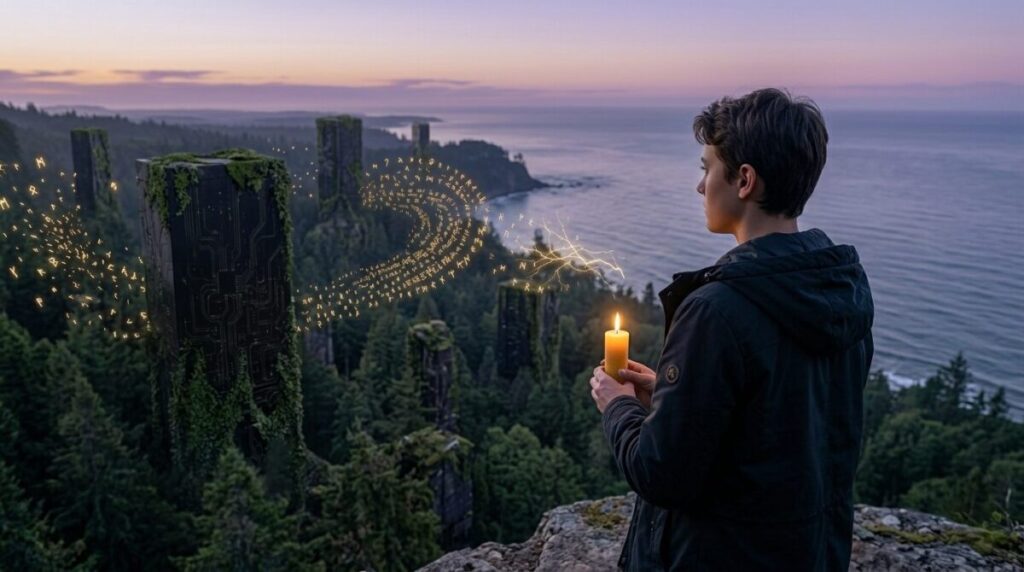
We have built a world of silicon and light, but we still inhabit bodies of bone and spirit. This tension is the birthplace of digital mythology. It is where the ancient meets the avant-garde. We don’t need to choose between the fiber-optic cable and the campfire. We can carry the flame of the past into the digital future. Our contemporary urban legends are just the latest chapters in a book that never ends.
I’ve found that the more I honor my need for myth, the less the digital noise bothers me. I can see the “God of the Feed” for what it is—a tool, not a master and I can participate in the viral moments without losing my center. I am grounded in a narrative that started long before the internet and will continue long after. We are the architects of the next great legend.
If you had to name a “Digital God” that rules your daily life, what would their name be and what offerings would they demand?