
Table of Contents
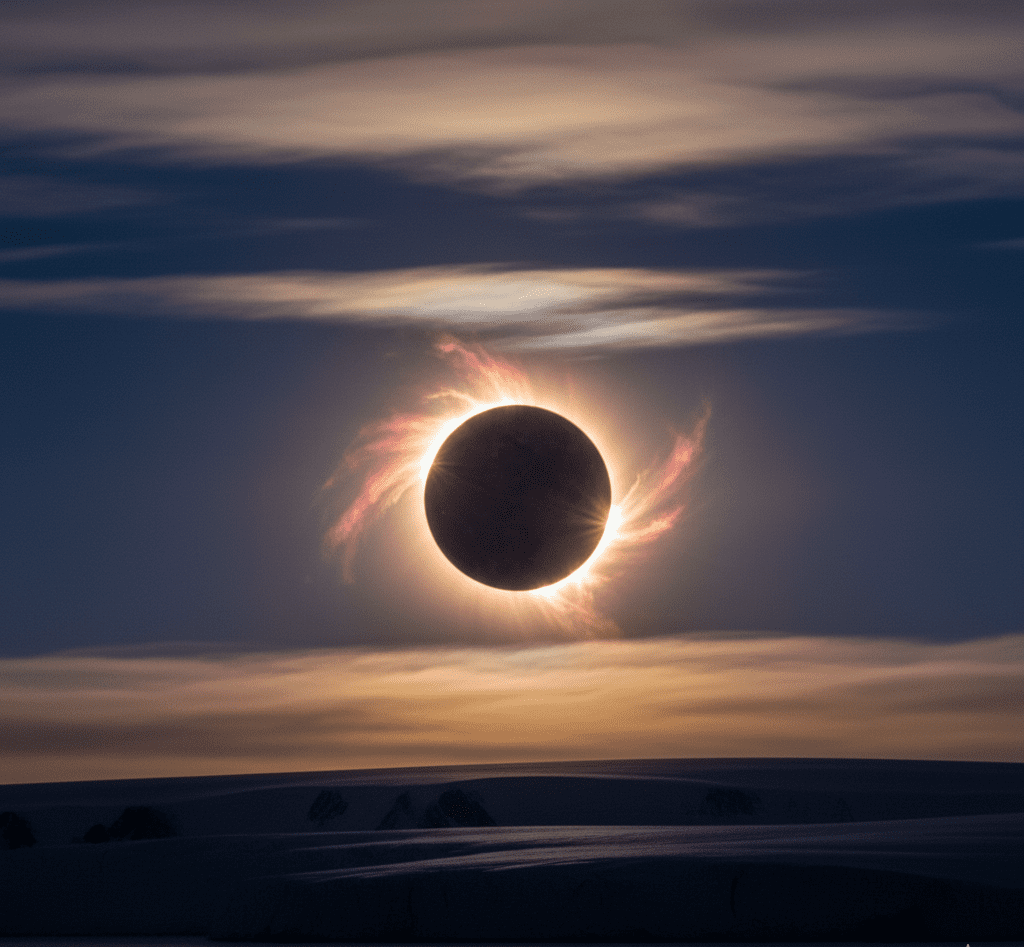
Today is February 17, 2026, and if you’re currently on a research station in Antarctica or a high-latitude cruise ship in the Southern Ocean, you’re witnessing the first great celestial event of the year: a “Ring of Fire” Annular Solar Eclipse.
For the rest of us, today’s news is a reminder that the window to plan for the next decade of eclipses is closing. Solar eclipses are the “Super Bowl” of amateur astronomy, but they require more than just looking up. They require precise geography, specific hardware, and an understanding of the cosmic dance between the Sun and Moon.
This is the Encycloblog Master Almanac—your guide to every major solar event through 2035.
I. The Physics: Why a “Ring of Fire”?
Not all eclipses are created equal. The difference between a Total and an Annular eclipse comes down to a single variable: Lunar Distance.
The Moon’s orbit around Earth is an ellipse, not a perfect circle.
- Perigee: When the Moon is closest to Earth. If an eclipse happens now, the Moon appears large enough to block the entire Sun (Total Eclipse).
- Apogee: When the Moon is farthest from Earth. Even when perfectly aligned, the Moon appears slightly smaller than the Sun.
Today’s event is Annular because the Moon is near its apogee. Instead of total darkness, a thin border of the Sun’s photosphere remains visible.
The Science of the Antumbra
During a total eclipse, you stand in the Umbra (the darkest part of the shadow). During an annular eclipse, you are in the Antumbra. This is a region where the Moon appears entirely within the disc of the Sun. Because the Sun is a “powerhouse” of light, even the 5% that remains visible during a “Ring of Fire” is enough to prevent the sky from going pitch black. You get a surreal, eerie “deep twilight” rather than midnight.
II. The Hardware: The 2026 Safety Standards
The most dangerous mistake a sky-watcher can make is assuming a 99% eclipse is “safe” to look at. Even 1% of the Sun’s light can cause Solar Retinopathy—permanent scarring of the retina.
For Your Eyes: Beyond the Paper Glasses
In 2026, we’ve moved beyond the flimsy cardboard glasses of the 2017/2024 era.
- ISO 12312-2: This is the only certification that matters. It ensures the filter blocks 99.99% of visible light AND harmful UV/IR rays.
- Smart-Optics: New “active” solar glasses now use liquid crystal layers (similar to welding helmets) that can adjust the darkness level based on the Sun’s intensity, allowing you to see the “Baily’s Beads” effect more clearly without eye strain.
For Your Camera: The “Meltdown” Warning
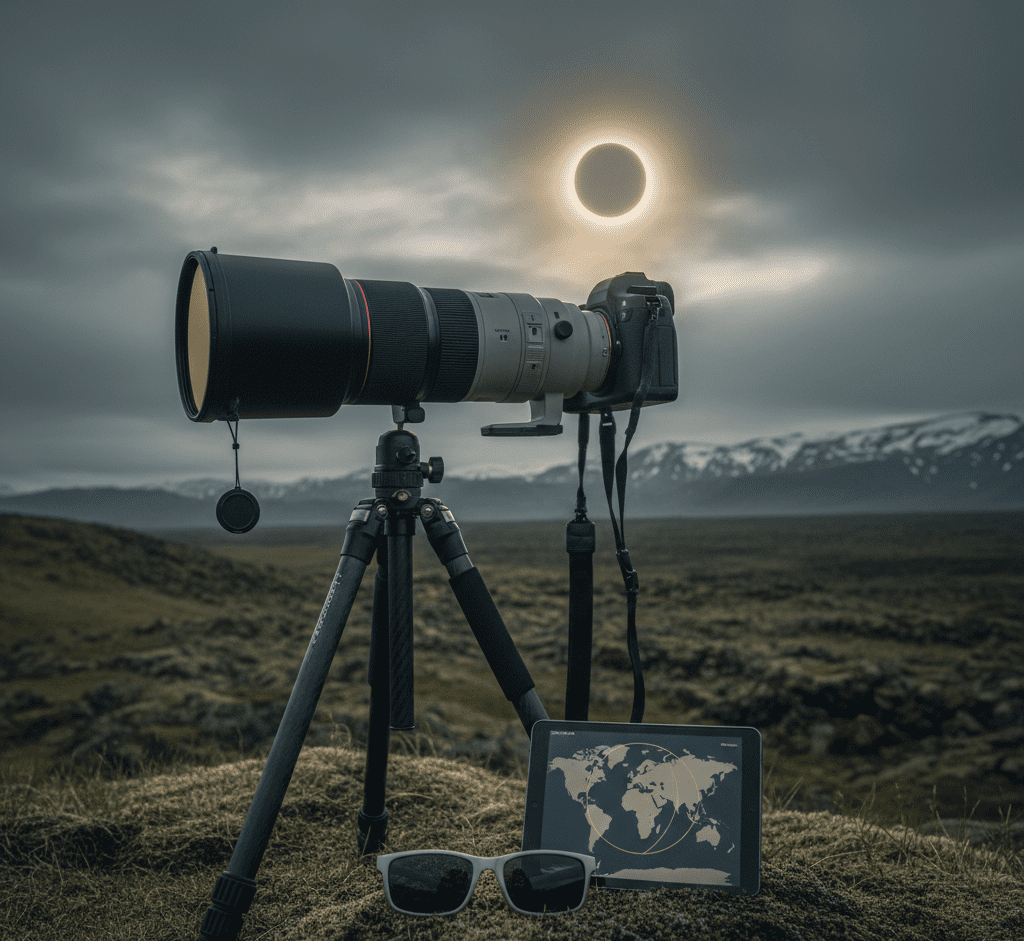
Never point a naked lens at the Sun during an annular eclipse. The glass acts as a magnifying mirror, focusing thermal energy directly onto your camera’s sensor. Within seconds, it will melt the plastic components and fry the silicon.
- Front-Loaded Filters: Your filter must go on the front of the lens.
- Focal Length Logic: * 200mm: Shows the Sun as a small disc in a wide landscape.
- 600mm+: Necessary to capture the “texture” of the Ring of Fire and potential solar flares.
III. The “Long-Term” Almanac: 2026–2035
Eclipse chasing is the ultimate “Pre-Travel” hobby. The best hotels in the path of totality are often booked three years in advance.
| Date | Type | Primary Visibility Path | Travel Notes |
| Aug 12, 2026 | Total | Greenland, Iceland, Spain | Spain will be the hub; expect massive crowds in Palma de Mallorca. |
| Aug 2, 2027 | Total | North Africa & Egypt | Luxor will see over 6 minutes of totality—the “Eclipse of the Century.” |
| Jul 22, 2028 | Total | Australia | Direct hit on Sydney Harbor. Start looking at Sydney hotels by 2026. |
| Sep 2, 2035 | Total | Japan & China | Beijing and Tokyo (suburbs) are in the path. A massive logistical event. |
IV. Solar Photography: The “Stacking” Secret
To get those “magazine-quality” shots you see in the 2026 Antarctica reports, pros use a technique called Digital Stacking.
- The Bracket: You take 10–20 photos at different exposures during the 4 minutes of the “Ring” phase.
- The Stack: Using software (like StarStacker or Lightroom), you overlay these images.
- The Result: This pulls out the detail in the solar prominences (the loops of fire) without blowing out the “Ring” itself. It allows you to see the jagged mountains on the edge of the Moon silhouetted against the Sun.
V. The Phenomenon of “Shadow Bands”
If you are on the ground for the August 2026 eclipse in Spain, look at a white wall or the sand on a beach about 60 seconds before totality. You might see faint, wavy lines of light racing across the surface.
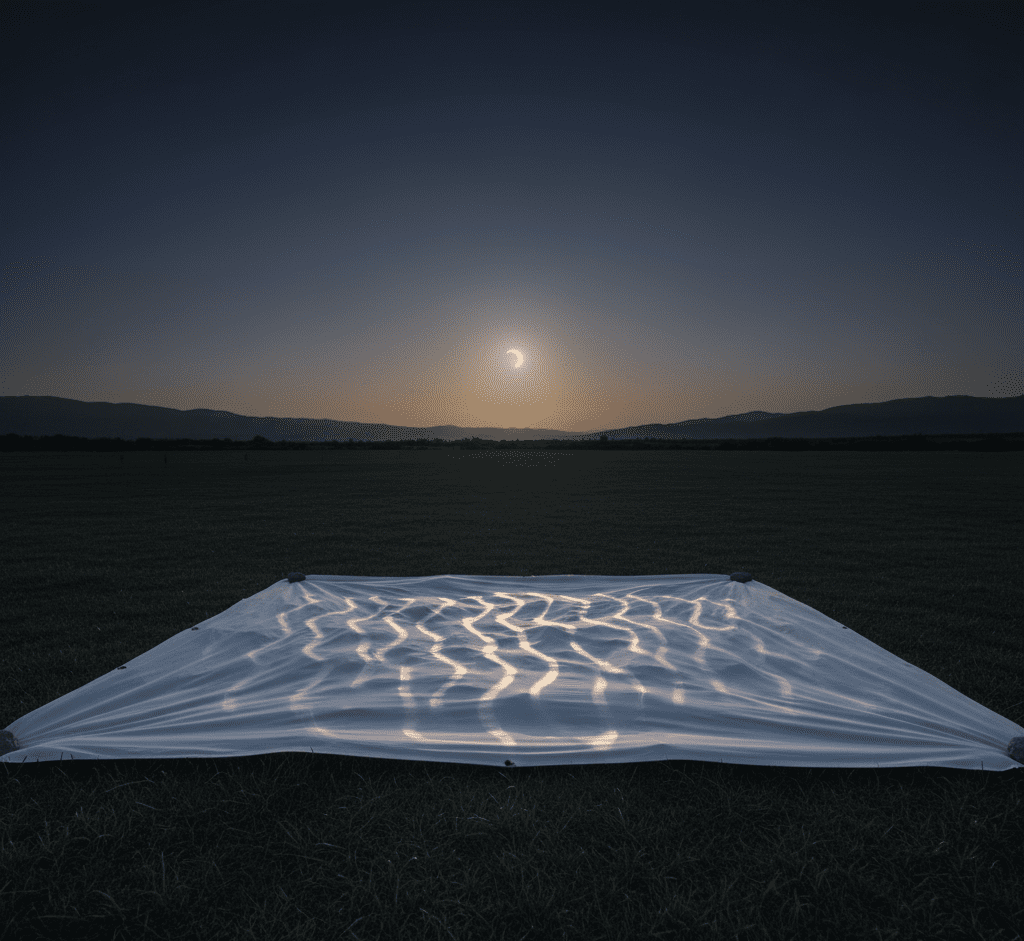
- Why it happens: This is the “Twinkle” effect of stars, but on a massive scale. As the Sun becomes a tiny sliver, the light is easily distorted by the Earth’s atmosphere. It’s one of the few times you can actually “see” the air moving.