
Table of Contents
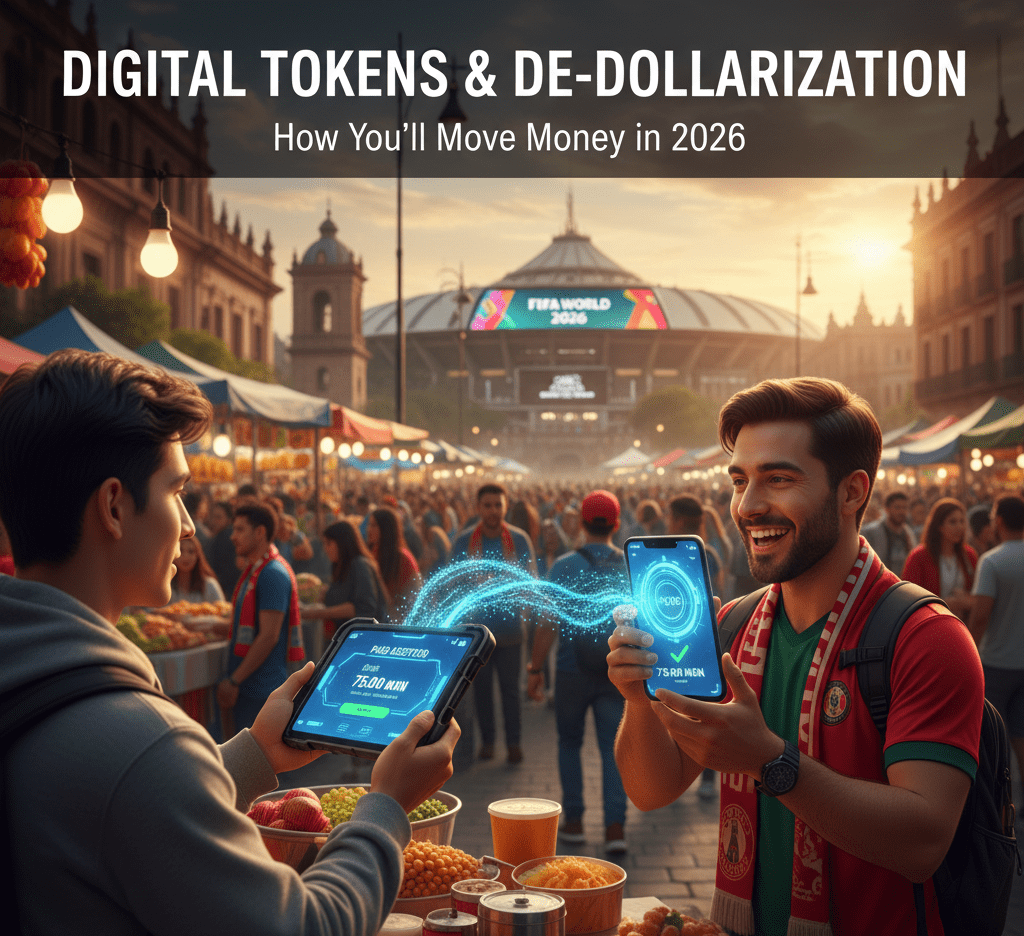
I am currently standing in the heart of a bustling mercado in Mexico City. The air is a thick, dizzying blend of roasting al pastor, fresh lime, and the frantic, electric energy of ten thousand football fans. It’s the 2026 World Cup, and for the first time in my life as a global traveler, I realized something profound while buying a $3 taco: Unified Ledger Revolution
The currency exchange booth is dead.
I didn’t hunt for an ATM with a reasonable fee and I didn’t check the current USD-to-MXN mid-market rate on my phone. I didn’t even pull out a physical piece of plastic and I simply hovered my phone over a street vendor’s weathered tablet. Within two seconds, the transaction was cleared. Not “pending,” not “authorized”—actually settled.
What the vendor saw was local Pesos hitting his account instantly. What left my digital wallet were Tokenized Deposits. No correspondent banks, no three-day waiting periods, and no 3% “foreign transaction fee” hidden in the fine print.
Welcome to the year the border became invisible.
The Ghost in the Machine: Why the Old Way Broke
To appreciate the “magic” of 2026, you have to remember how broken the world was just a few years ago. Moving money across a border was effectively like sending a physical letter in the 1800s. Your money had to pass through a series of “correspondent banks”—middlemen who didn’t know you and didn’t know the person you were paying. Each one took a tiny slice of your money and held onto it for a day to “verify” the ledger.
In 2024, the G20—the world’s largest economies—finally had enough. They realized that high-speed internet and 24/7 global trade couldn’t survive on a 1970s banking backbone (the old SWIFT system). They launched a roadmap to make cross-border payments faster, cheaper, and more transparent. The result of that roadmap is what I just used in that market: Project Agorá.
Project Agorá: The Unified Ledger Revolution
The “brain” of our 2026 economy is Project Agorá, an initiative led by the Bank for International Settlements (BIS). It moved the world from “messaging” to “tokenization.”
In the old world, a bank would send a message saying, “I owe you $10.” The money followed days later. In the tokenized world of 2026, the money is the message. ### The Three Pillars of the New Money
- Atomic Settlement: This is the big one. “Atomic” means the payment and the delivery happen at the exact same micro-second. It’s binary: either the whole transaction happens, or none of it does. No more “money lost in transit.”
- Programmable Smart Contracts: These tokens are “smart.” For example, when I booked my Airbnb in Guadalajara this morning, the money was tokenized and held in a smart contract. It will only release to the host the moment my phone’s GPS confirms I’ve arrived at the front door.
- 24/7/365 Liquidity: The concept of “Bankers’ Hours” feels as ancient as the telegraph. Because these ledgers are automated and distributed, my money moves at 3:00 AM on a Sunday with the same effortless speed as a Tuesday morning.
De-Dollarization: The Rise of the “Bankless” Traveler
For decades, the US Dollar was the “lingua franca” of the world. If a fan from Brazil traveled to Mexico, their Reais were often converted to Dollars first, then to Pesos. Every “hop” was a fee. Every “hop” was a delay. This is where the term De-Dollarization moves from a geopolitical headline to a personal reality.
In 2026, we are seeing the rise of Retail-Level De-Dollarization. Central Bank Digital Currencies (CBDCs) and regulated, multi-asset tokens now allow for “direct-pair” trading. When I paid that street vendor, the system didn’t look for a Dollar bridge; it found the most efficient digital route between my home currency and his.
This is what we mean by “Bankless” travel. You aren’t relying on a traditional commercial bank to “permission” your move; you are moving a digital asset that holds its own value intrinsically, much like handing over a physical gold coin—but with the speed of a fiber-optic cable.
The “Cashless” Stadium: A Glimpse into the Future
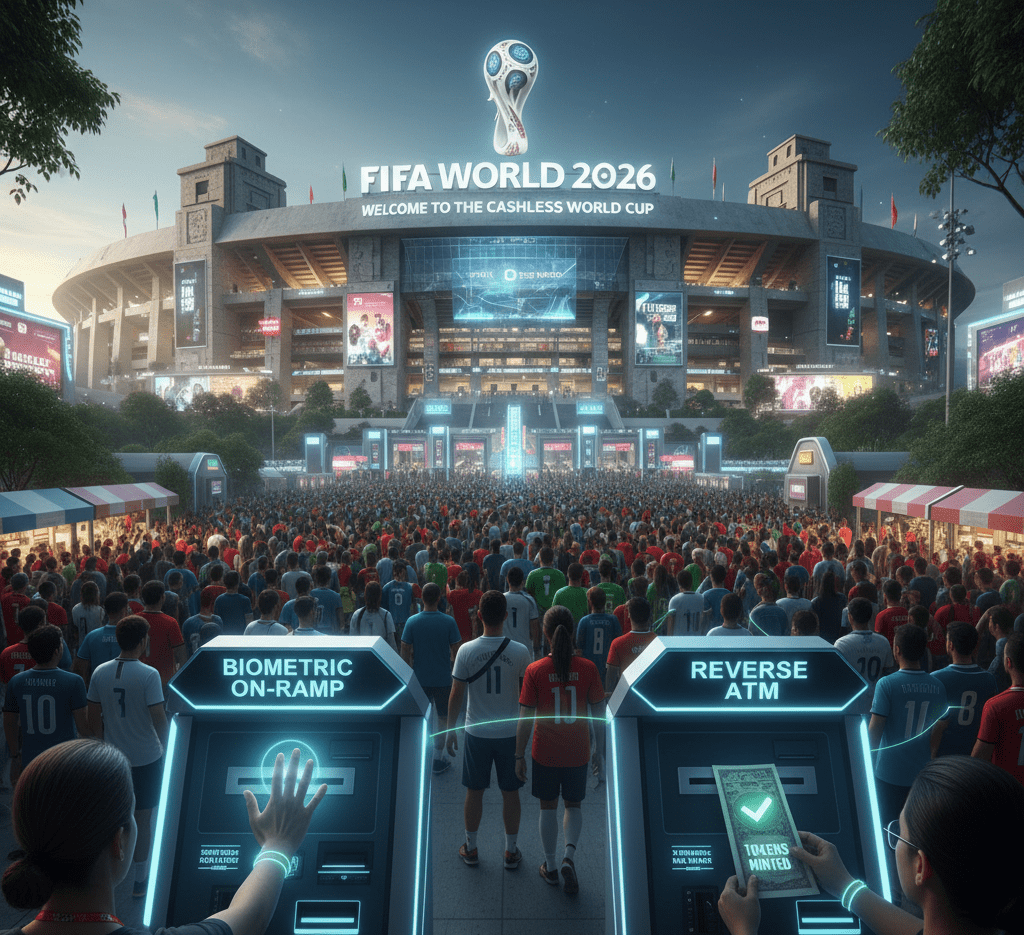
Walking toward the Azteca Stadium for the opening matches, the transformation is total. This is the first “Truly Cashless” World Cup.
- Biometric On-Ramps: I watched a fan pay for a jersey by simply scanning their palm. No cards, no leather wallets to lose, no risk of pickpockets. The palm print is linked to their tokenized vault.
- Reverse ATMs: For the few who still carry physical bills, kiosks at the gate don’t give you “change.” They ingest your paper cash and instantly “mint” travel tokens to your phone or a wearable wristband.
- Micro-Payments: I can now tip a stadium performer 50 cents without a single coin changing hands. In the old system, the transaction fee for a 50-cent payment would have been 30 cents. Today, it’s a fraction of a penny.
Verdict: The End of Financial Anxiety
We used to plan our lives around “the money.” We worried about which credit cards had the best exchange rates, where the “safe” ATMs were, and how much emergency cash to hide in our luggage.
In 2026, that anxiety has evaporated. The integration of tokenized assets into our daily lives has turned money into a background utility—something that just works, regardless of which flag is flying over the building you’re standing in. We haven’t just reached a new era of travel; we’ve reached the Peak of Payment, where the only thing you have to worry about is whether your team can actually score a goal.