
Table of Contents
I am currently sitting in a crowded Terminal 5 at Heathrow. It’s the kind of place where personal space is a myth and everyone is inadvertently “co-working” with the person in 4B. Usually, this is where I’d be hunched over, tilting my screen away or dimming the brightness to hide half-finished scripts and sensitive emails. Samsung Galaxy S26 Ultra Review
But today, I just tapped a toggle on the Samsung Galaxy S26 Ultra, and the world around me vanished.
The new Privacy Display is, quite frankly, sorcery. I watched the traveler next to me—who had been shamelessly peering at my screen—suddenly squint and turn away. From his angle, my phone looked like a powered-down slab of black glass. For me, looking head-on at the 6.9-inch M14 OLED panel, the colors were still punching through at a blinding 3,000 nits. It’s hardware-level privacy that feels like a superpower. For the first time, I felt like my “office” was actually mine, even in a sea of strangers.
The Oryon Leap: A Desktop in My Palm
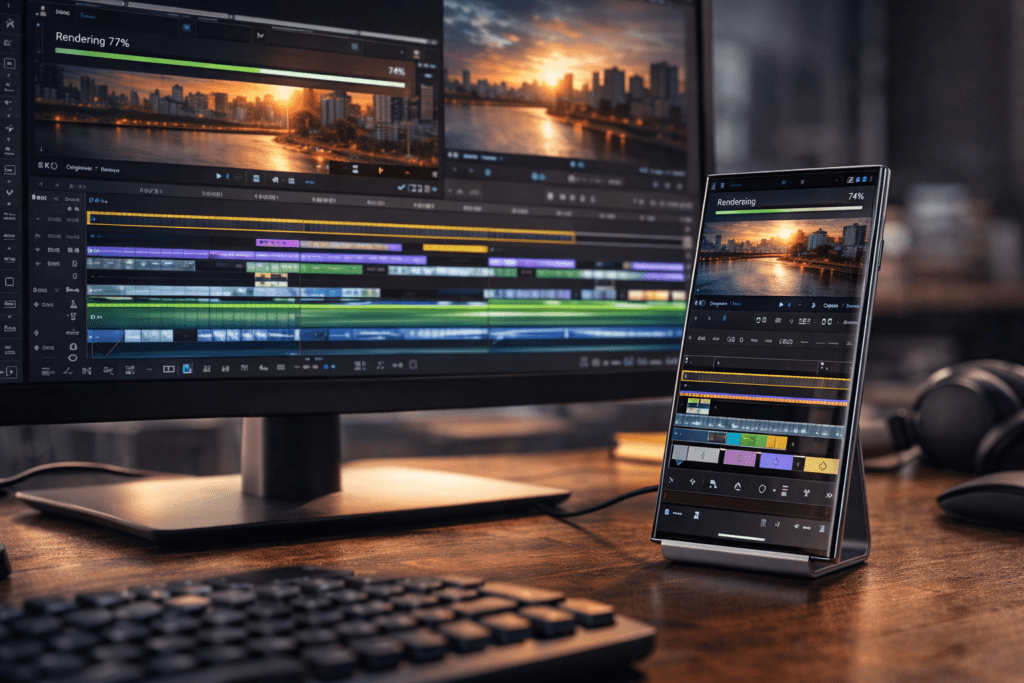
When Samsung announced the Snapdragon 8 Elite Gen 5, I’ll admit I rolled my eyes at the “desktop-class” marketing. We’ve heard that song every February since 2019. But after three days of handling 8K video timelines and running local LLMs (Large Language Models) without the phone turning into a hand-warmer, I’m a believer.
The move to the Oryon core architecture has finally closed the gap. This isn’t just a fast phone; it’s a 3nm beast that makes my 2023 laptop feel sluggish. The titanium frame has a new, sandblasted texture that feels more “tool” than “toy,” and the move to a more structural, industrial design language gives it a heft that says, I’m here to work.
I spent the morning rendering a 40-minute podcast episode while simultaneously running an AI-driven transcription in the background. In previous years, that would have triggered a thermal throttle within ten minutes. On the S26 Ultra? The vapor chamber didn’t even break a sweat.
Galaxy AI 3.0: The End of “Correcting” Photos
We’ve moved past the era of AI just removing “photo-bombers” or cleaning up a blurry face. On the S26 Ultra, the One UI 8.5 suite has introduced what I call the “Director’s Cut.”
I took a flat, gray photo of the London skyline—classic overcast February—and typed a simple prompt into the Photo Assist box: “Add a cinematic sunset and make the Thames look like glass.”
Most AI filters look like cheap stickers. This didn’t. The AI understood the light source, recalculated the reflections on the buildings, and even adjusted the white balance of the original subjects to match the new “golden hour” light. It didn’t just edit the photo; it reimagined the moment I was standing in.
Combined with the new f/1.4 aperture on the 200MP main sensor, the low-light video isn’t just “good for a phone”—it’s professional-grade. I’m starting to see why the “prosumer” camera market is in a state of absolute panic.
The March Threat: The $599 Ghost in the Machine
While I’m basking in the glow of this $1,300 masterpiece, there’s a shadow looming over the tech world: The J700.
In less than a month, Apple is rumored to drop their “Budget MacBook.” The leaks point to a $599–$699 price point, an A18 Pro chip, and a vibrant aluminum chassis. It’s a direct strike at the one thing the Galaxy Ultra can’t fight: Economy.
The question I’ve been wrestling with all week: Is the S26 Ultra too much phone?
| Feature | Galaxy S26 Ultra | Rumored “Budget” MacBook |
| Primary Use | Everything (Pocket) | Productivity (Lap) |
| Display | 144Hz Dynamic OLED | 60Hz Liquid Retina |
| Starting Price | $1,299 | $599 (Est.) |
| The “Hook” | Integrated AI & 200MP Camera | macOS at Chromebook Prices |
Samsung is betting that we want everything in one device—the camera, the AI, the privacy, and the power. Apple is betting that we still want a “real” computer for the price of a mid-range phone.
The Lived Experience: Why I Can’t Go Back
Last night, I was sitting in a dim pub, trying to settle a debate about the historical architecture of Southwark. I pulled out the S-Pen, circled a building in an old 1920s photograph on the wall, and the S26 Ultra didn’t just find the building—it built a 3D model of it using Circle to Search 2.0, showing me how the street looked a century ago.
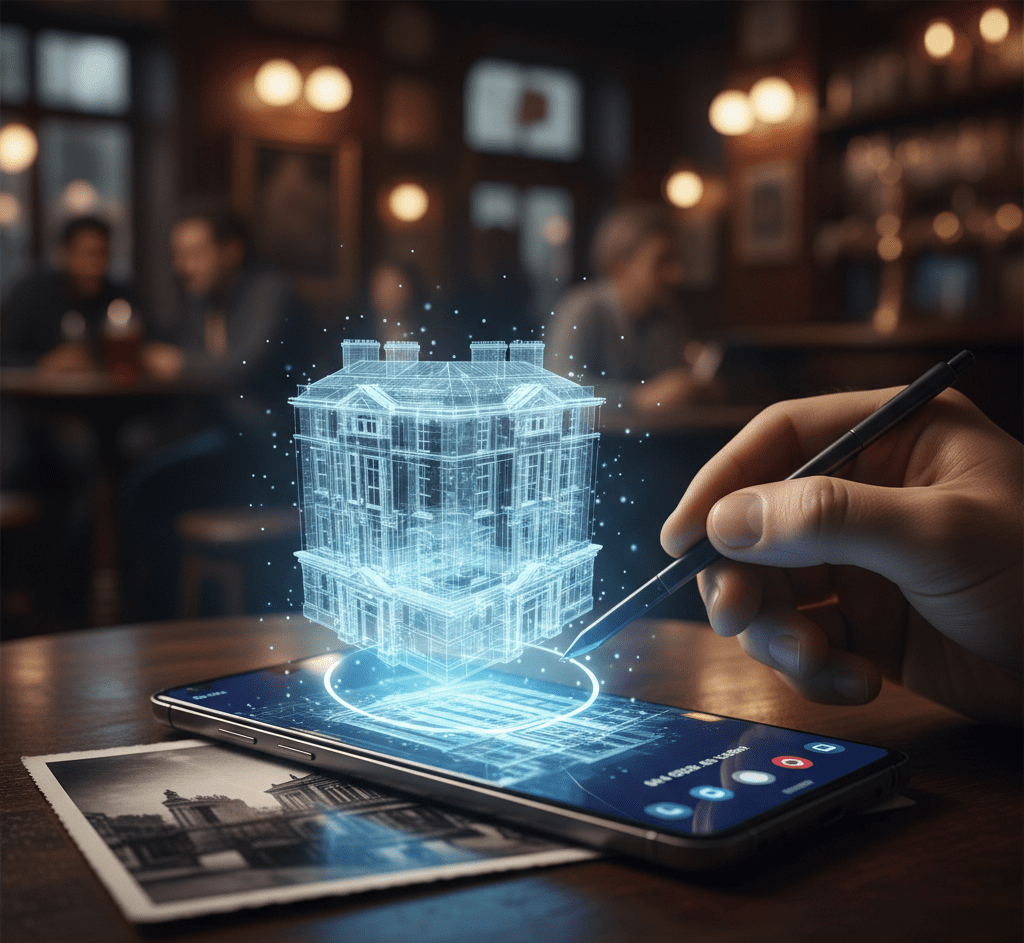
That is the “Peak Smartphone” moment. It’s when the hardware becomes a lens through which you see the world, rather than just a screen you stare at.
Verdict: Have We Reached the Summit?
Holding the S26 Ultra, it’s hard to imagine what a “S27” would even need. We have the privacy, the 144Hz fluidity, and AI that can literally draw for us. This feels like the end of the “Incremental Era.” We’ve reached a point where the hardware is so capable that the only thing left to innovate is the price—which is exactly where that rumored MacBook is looking to strike.
For now, I’m keeping the Ultra. Not because it’s a phone, but because it’s the first device I’ve owned that feels like it doesn’t have a ceiling.