
Table of Contents
I still remember the smell of fresh-cut grass and the deafening roar of the crowd during the T20 World Cup. But I wasn’t on the pitch facing a 150kph bouncer, and I wasn’t in the stands with a painted face. I was in a small, air-conditioned booth filled with humming servers and three flickering monitors. Sports Technology Careers
That day, I wasn’t just watching cricket; I was watching data. As a bowler delivered a yorker, my screen lit up with a “biometric stress spike.” I could see the player’s heart rate hitting 180 BPM and his muscle fatigue levels climbing into the red zone. This wasn’t science fiction—it was my Tuesday morning.
If you love sports but realized early on that you aren’t destined for an Olympic podium or a professional contract, I have good news. The “human” side of sports is now inextricably linked to the “digital” side. In 2026, the biggest stars in the stadium aren’t always the ones in jerseys; they are the engineers, data scientists, and kinesiologists who give those athletes their competitive edge.
My Journey into the “Smart-Piste”
A few years back, I found myself in Italy, standing on a fencing “piste”—the long, narrow strip where fencers duel. Italy has always been the heart of fencing, but they’ve recently turned the sport into a high-tech laboratory. I helped install a “smart-piste” tracking system that uses computer vision to track the tip of a sword—an object moving too fast for the human eye to see.
By using AR (Augmented Reality) synthesis and deep learning, we weren’t just scoring points; we were visualizing the “intent” of the fencer. Seeing a 3D heat map of where a sword had been provided more information in five seconds than a coach could gather in five years. That experience taught me something vital: sports tech isn’t about replacing the game; it’s about revealing the invisible layers of it.
The Career Pillars: Where Do You Fit In?
When I speak to students, they often think they need to be a “math genius” to work in this field. While math helps, the sports tech ecosystem is actually built on three distinct academic pillars. I’ve worked alongside people from all three, and each brings a different “superpower” to the team.
The Data Scientist (The Architect of Strategy)
If you enjoy patterns and puzzles, this is your home. In my role during the World Cup, the Data Scientists were the ones who took the raw biometric data from player sensors and turned it into actionable advice.
- The Degree: A B.S. or M.S. in Data Science or Statistics.
- The Day-to-Day: You aren’t just looking at spreadsheets. You are building models that predict when a player is most likely to get injured or which batting lineup has the highest statistical probability of winning under specific weather conditions.
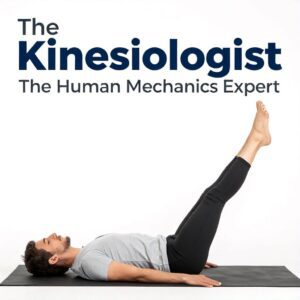
The Kinesiologist (The Human Mechanics Expert)
I once worked with a Kinesiologist who could look at a player’s running gait on my monitor and tell, with 90% accuracy, if they were about to pull a hamstring. They bridge the gap between “machine data” and “human meat.”
- The Degree: Kinesiology or Exercise Science.
- The Day-to-Day: You spend your time in “Biomechanical Labs.” You use high-speed cameras and wearable sensors to analyze movement. Your goal is maximum efficiency: how can a player jump higher or swing faster with the least amount of physical strain?
3. The Material Engineer (The Gear Innovator)
At a recent tech summit, I handled a new type of cricket bat infused with graphene sensors. That bat was the brainchild of Material Engineers. They are the ones who design the “hardware” of the future.
- The Degree: Material Science or Mechanical Engineering.
- The Day-to-Day: You work with carbon fiber, polymers, and smart fabrics. You might be designing a shoe that adapts its grip based on the moisture level of the turf or a helmet that can absorb a 160kph impact without the player feeling a thing.
How to Break In (My “Pro-Tips”)
I didn’t get my job by sending out a generic resume. The sports world is small, and it values “Proof of Work” over everything else.
First, build a portfolio. If you’re a data student, go to a site like Kaggle, grab a public sports dataset, and build a visualization. Show me that you can find a “story” in the numbers.
Second, learn the language of the locker room. You can be the best engineer in the world, but if you can’t explain your data to a coach who has been in the game for 30 years, you won’t last. You have to be a translator and you need to turn “Standard Deviation” into “We should change the bowler.”
Lastly, embrace the “Agile” mindset. Technology in 2026 moves fast. The sensor I used last year is already obsolete. You have to be a lifelong student.
I’ll never forget the first time I saw a coach’s eyes light up when my data confirmed exactly what he “felt” was happening on the field. It’s that moment of connection—where the digital meets the physical—that makes this job worth it.
I want to hear from you: If you could work for any professional team in the world as their “Secret Tech Weapon,” which team would it be and what’s the first problem you’d try to solve for them?