
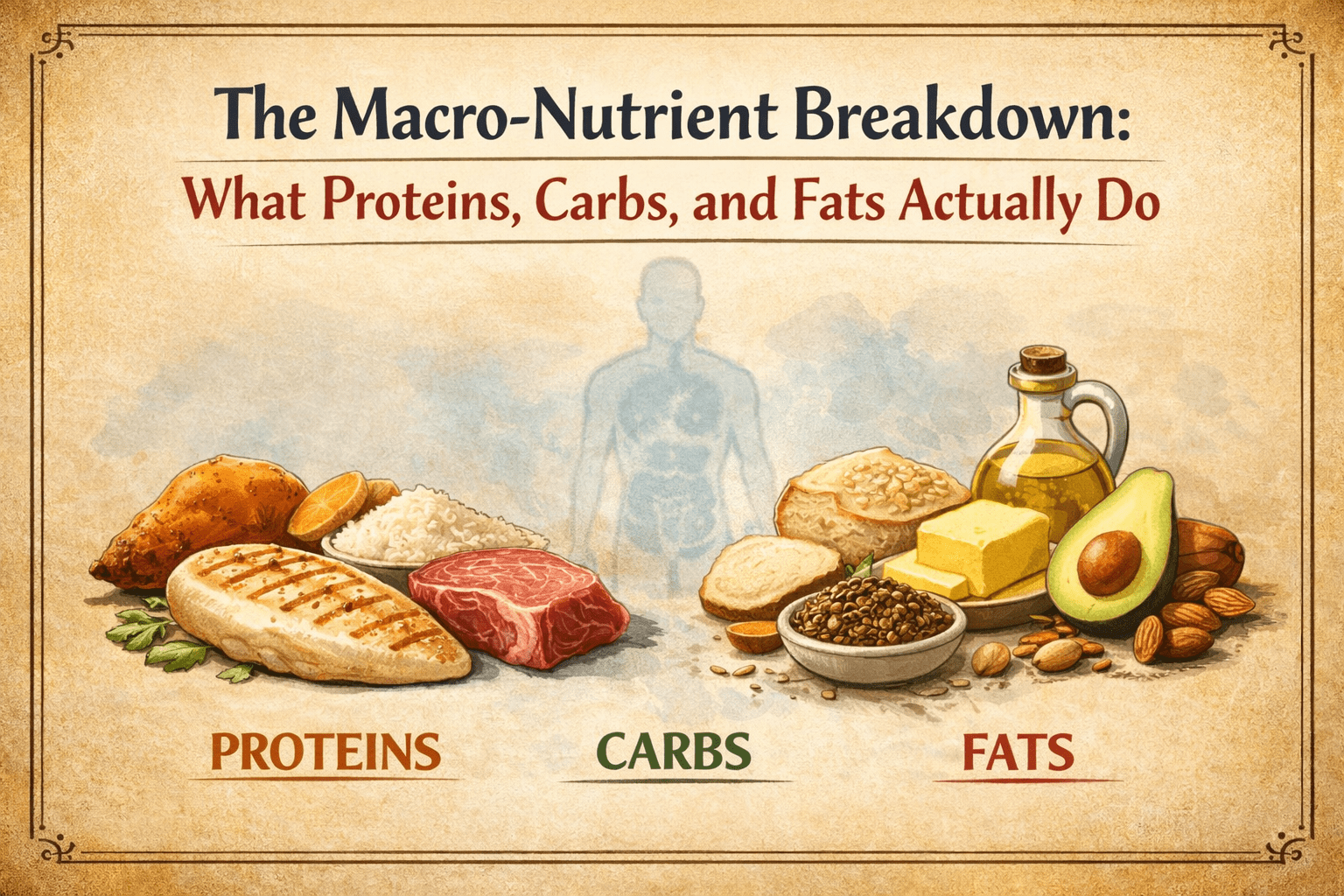
Table of Contents
I remember sitting at my kitchen table a few years ago, surrounded by three different health books. One told me that carbohydrates were the enemy and would lead to certain ruin. Another claimed that high fat was the secret to mental clarity. The third insisted that lean protein was the only thing that mattered. Macronutrient Logic
I felt paralyzed. I was staring at a plain chicken breast and a sweet potato as if they were unexploded landmines and I realized then that I didn’t actually know what food did once I swallowed it and I was just following “rules” without understanding the logic.
That was the day I stopped looking at diet trends and started looking at biology. I decided to treat my body like a high-performance engine. If I was going to put fuel in the tank, I needed to know exactly which gear that fuel was turning. This is the “user manual” I wish I had been given years ago.
The Three Pillars: What is a Macro?
When we talk about “macros,” we are just using shorthand for macronutrients. These are the substances the human body needs in large amounts to function, grow, and stay alive. While vitamins and minerals (micronutrients) are vital in small doses, macros are the literal building blocks of your physical existence.
Every gram of food you eat falls into one of three categories: Protein, Carbohydrates, or Fats.
1. Protein: The Master Architect
In my early days of training, I thought protein was just for people who wanted to look like bodybuilders. I couldn’t have been more wrong. I soon learned that protein is the “architect” of the body.
Every time I looked in the mirror, I was looking at protein. My hair, my skin, my nails, and even the enzymes that help me digest my food are all made of protein. When I don’t get enough, I feel it. My recovery slows down, I feel “soft,” and my hunger becomes insatiable.
What Protein Actually Does
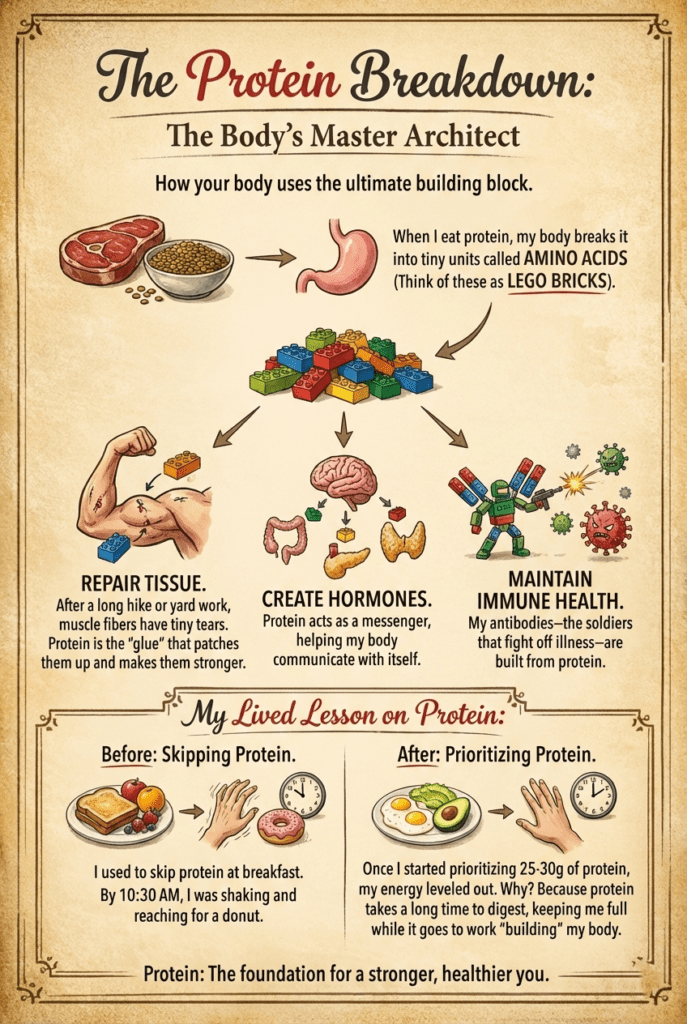
When I eat a piece of steak or a bowl of lentils, my body breaks that protein down into tiny units called amino acids. Think of these as Lego bricks. My body takes those bricks and uses them to:
- Repair Tissue: After a long hike or a day of yard work, my muscle fibers have tiny tears. Protein is the “glue” that patches them up and makes them stronger.
- Create Hormones: Protein acts as a messenger, helping my body communicate with itself.
- Maintain Immune Health: My antibodies—the soldiers that fight off illness—are built from protein.
My Lived Lesson on Protein
I used to skip protein at breakfast, opting for just toast or fruit. By 10:30 AM, I was shaking and reaching for a donut. Once I started prioritizing 25-30 grams of protein in the morning, my energy leveled out. Why? Because protein takes a long time to digest, keeping me full and satisfied while it goes to work “building” my body.
2. Carbohydrates: The High-Octane Fuel
Carbs have a bad reputation lately, but I learned the hard way that cutting them out entirely is like trying to drive a Ferrari without gas.
I remember trying a “zero-carb” approach for a month. By day ten, I felt like I was walking through chest-deep mud. My brain felt foggy, and I couldn’t remember simple words. That’s because carbohydrates are the body’s preferred and most efficient source of energy, especially for the brain.
What Carbohydrates Actually Do
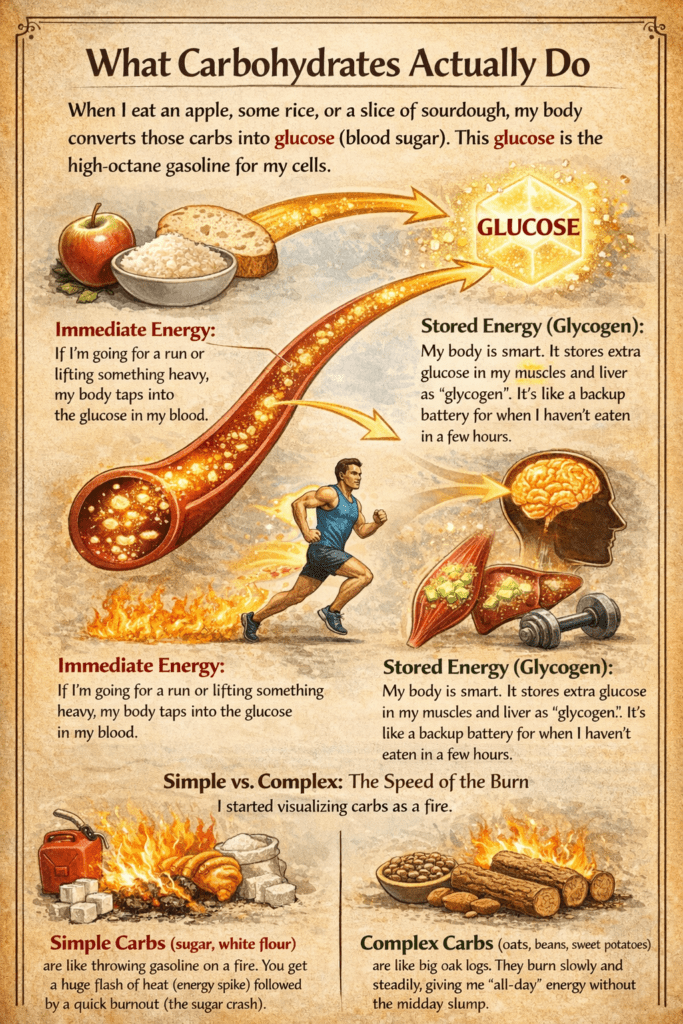
When I eat an apple, some rice, or a slice of sourdough, my body converts those carbs into glucose (blood sugar). This glucose is the high-octane gasoline for my cells.
- Immediate Energy: If I’m going for a run or lifting something heavy, my body taps into the glucose in my blood.
- Stored Energy (Glycogen): My body is smart. It stores extra glucose in my muscles and liver as “glycogen.” It’s like a backup battery for when I haven’t eaten in a few hours.
- Brain Power: The brain is a fuel hog. It uses a massive percentage of the body’s daily glucose just to keep you thinking and focused.
Simple vs. Complex: The Speed of the Burn
I started visualizing carbs as a fire.
- Simple Carbs (sugar, white flour) are like throwing gasoline on a fire. You get a huge flash of heat (energy spike) followed by a quick burnout (the sugar crash).
- Complex Carbs (oats, beans, sweet potatoes) are like big oak logs. They burn slowly and steadily, giving me “all-day” energy without the midday slump.
3. Fats: The Long-Term Battery and Protector
For years, I was a child of the “low-fat” era. I bought fat-free yogurt and skim milk, thinking I was being healthy. But I was constantly irritable, my skin was dry, and my hormones were a mess.
I finally realized that fat isn’t the enemy; it’s the body’s essential “long-term battery” and its primary insulator.
What Fats Actually Do
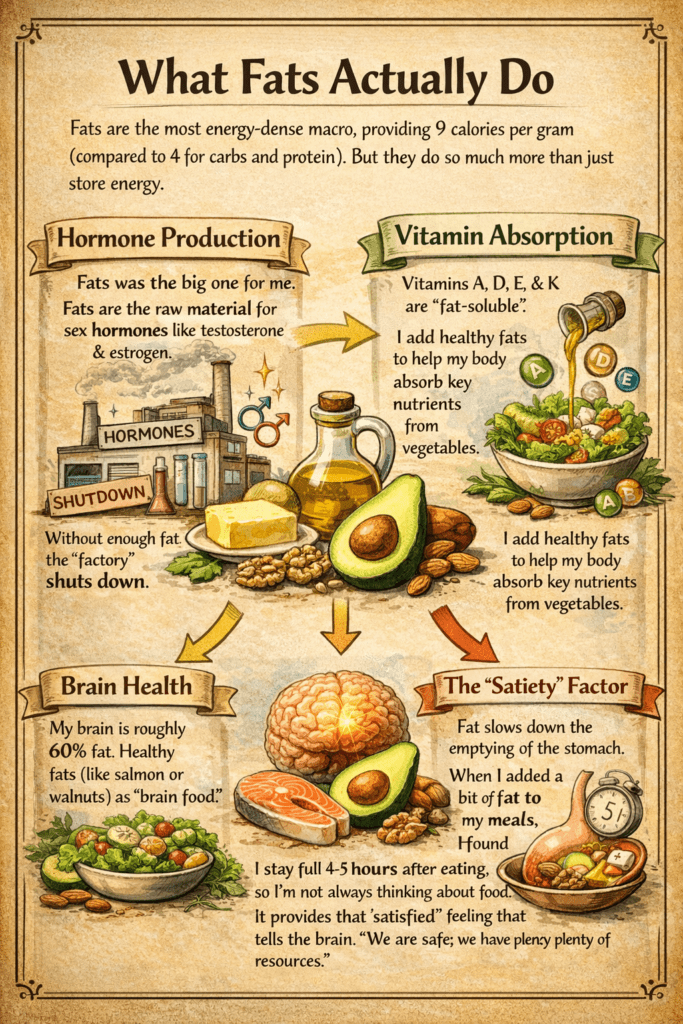
Fats are the most energy-dense macro, providing 9 calories per gram (compared to 4 for carbs and protein). But they do so much more than just store energy.
- Hormone Production: This was the big one for me. Fats are the raw material for sex hormones like testosterone and estrogen. Without enough fat, the “factory” shuts down.
- Vitamin Absorption: Vitamins A, D, E, and K are “fat-soluble.” If I eat a salad with no dressing, my body can’t actually absorb the nutrients in the vegetables. I started adding avocado or olive oil, and suddenly I felt the benefits of my greens.
- Brain Health: My brain is roughly 60% fat. I started thinking of healthy fats (like those in salmon or walnuts) as “brain food.”
The “Satiety” Factor
Fat slows down the emptying of the stomach. When I added a bit of fat to my meals, I found I could go 4 or 5 hours without thinking about food. It provides that “satisfied” feeling that tells the brain, “We are safe; we have plenty of resources.”
How I Balance the Three
I stopped looking for the “perfect” percentage and started looking at my activity level.
- If I’m sitting at my desk all day writing for Encycloblog, I don’t need as much high-octane “gas” (carbs), so I lean into more fats and protein.
- If I’m spending the weekend moving furniture or hiking, I crank up the carbs to keep the engine running.
The beauty of understanding macros is that I no longer feel guilty about food. I don’t see “good” or “bad” foods anymore; I see tools. Do I need to build? (Protein). Do I need to move? (Carbs). Do I need to sustain and protect? (Fats).
If you could only eat one “macro-heavy” meal for the rest of your life, would you choose Team Savory Fat (Avocados, Nuts, Ribeye) or Team Comfort Carb (Pasta, Potatoes, Fresh Fruit)?
Drop your thoughts in the comments below—let’s build a smarter community together!