

Table of Contents
I remember the morning I couldn’t get out of bed. It wasn’t because I was ill, and it wasn’t because I lacked motivation. It was because I had followed the traditional “rest day” rules to a fault. After a week of high-intensity training, I spent my entire Sunday on the couch, barely moving a muscle. I thought I was giving my body the gift of total repair. Instead, when Monday arrived, I felt like my joints had been filled with concrete. My muscles were stiff, my energy was non-existent, and my progress had stalled.
That was the moment I realized that complete stillness is often the enemy of healing. We are taught that “doing nothing” is the ultimate reward for hard work, but the human body is a machine built for motion. Through trial, error, and a deep dive into physiology, I discovered the science of active recovery. It changed the way I view fitness forever.
The Day My Perspective on Rest Shattered
For years, I believed that recovery was a passive event. I thought of it like charging a phone: you plug yourself into the wall (the bed) and wait for the percentage to climb back to 100. But the human body isn’t a lithium battery. It is a complex system of fluid dynamics, waste removal, and tissue remodeling.
When I pushed myself to the limit during a grueling mountain trek or a heavy lifting session, I was creating microscopic tears in my muscle fibers. This is a normal part of growth. However, the “soreness” we feel—often called Delayed Onset Muscle Soreness (DOMS)—isn’t just a sign of hard work. It is an inflammatory response. By choosing to stay completely still the next day, I was allowing metabolic waste products to pool in my limbs.
I learned the hard way that blood flow is the primary vehicle for repair. Without movement, that vehicle is parked in the driveway. The science of active recovery suggests that by engaging in low-intensity movement, we keep the engine running just enough to deliver oxygen and nutrients to the sites that need them most.
Understanding the Physiology of Flow
To truly understand why movement heals, we have to look at what happens under the skin. When I engage in active recovery—perhaps a light walk or a gentle swim—my heart rate rises slightly. This isn’t high enough to cause more stress, but it is enough to increase cardiac output.
This increased circulation does two vital things. First, it brings fresh, oxygenated blood to the damaged muscle tissues. Think of this as a delivery truck bringing bricks to a construction site. Second, it aids the lymphatic system. Unlike the circulatory system, the lymphatic system doesn’t have a pump. It relies on muscle contractions to move waste products out of the body.
When I sat still for twelve hours, my lymphatic system was stagnant. By moving, I was essentially “flushing the pipes.” This is a cornerstone of the science of active recovery. It is the difference between letting a wound fester and keeping it clean and bandaged.
Why Complete Stillness Can Be a Trap
I used to feel guilty if I wasn’t “grinding,” so I would compensate by doing absolutely nothing on my off days. I soon noticed a pattern: the more “nothing” I did, the more my mental health dipped.
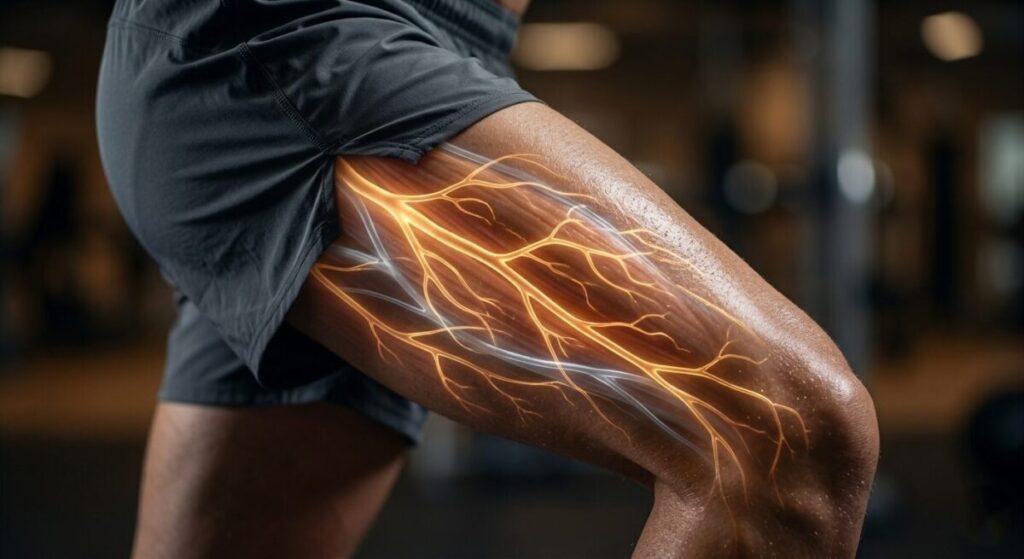
There is a neurological component to recovery that we often ignore. Passive rest can sometimes lead to a “crash” in dopamine and serotonin levels, especially if you are used to the high of a workout. I found that active recovery provided a bridge. It allowed me to maintain the routine of movement without the physical toll of high intensity.
Furthermore, “doing nothing” often leads to poor postural habits. I would spend my rest days hunched over a laptop or slumped on a sofa. This led to hip tightness and lower back pain that I would then carry into my next “real” workout. Active recovery forces us to move through a full range of motion, maintaining flexibility and joint health.
The Spectrum of Movement: My Active Recovery Toolkit
I don’t treat every recovery day the same. The science of active recovery is about nuance. If I’ve had a week focused on heavy strength training, my recovery looks different than if I’ve been training for a marathon.
- The Power of the Zone 1 Walk: This is my go-to. I aim for a pace where I can breathe comfortably through my nose. It’s not a “power walk”; it’s a stroll with intention. I’ve found that thirty minutes of walking can reduce my perceived muscle soreness by nearly half compared to total rest.
- Mobility and “Flow” States: I started incorporating 15 minutes of dynamic stretching. Instead of holding a static pose, I move through it. This keeps the fascia—the connective tissue surrounding the muscles—supple and hydrated.
- Water as a Tool: Swimming or even just treading water is a secret weapon. The hydrostatic pressure of the water acts like a gentle compression sleeve for the entire body, aiding in the reduction of swelling and inflammation.
The Mental Shift: Recovery as a Skill
One of the hardest things I had to learn was how to slow down. In our culture, we are taught that if you aren’t sweating, you aren’t working. But I had to reframe my mindset. I began to see active recovery as a specialized skill—a deliberate choice to invest in my future performance.
When I am out on a light recovery ride, I am not thinking about calories burned or miles covered. I am thinking about the science of active recovery. I am visualizing my muscle fibers receiving the nutrients they need. I am listening to my joints. This mindfulness has prevented more injuries than any warm-up routine ever could.
How to Implement Active Recovery Without Overdoing It
The biggest mistake I see—and one I’ve made myself—is turning a recovery day into another workout. If your heart rate enters Zone 3, you are no longer recovering; you are training.
The rule of thumb I follow is the “Talk Test.” If I can’t sing a song or hold a full conversation without gasping, I am going too hard. The goal of the science of active recovery is to leave the session feeling more energized than when you started. If you finish feeling “spent,” you’ve missed the point.
I recommend starting with one day a week where you replace your “couch day” with 45 minutes of very low-impact movement. Pay attention to how your body feels the following morning. For me, the “Monday stiffness” vanished almost immediately once I made this switch.
The Long-Term Gains of a “Moving” Rest
Since I embraced the science of active recovery, my consistency has skyrocketed. I no longer have those “dark weeks” where I’m too sore to move. My sleep has improved because my body isn’t fighting through massive amounts of stagnant inflammation every night.
More importantly, I’ve found a sustainable rhythm. Fitness is an evergreen journey. There will always be new gadgets and trending HIIT classes, but the way our bodies repair themselves doesn’t change. By working with my physiology instead of against it, I’ve unlocked a level of “optionality” in my physical life—I’m ready to move, ready to play, and ready to push, because I know exactly how to heal.