
Table of Contents
I remember a time when “vacation” was synonymous with baking on a beach until my skin felt like parchment and my brain turned to lukewarm soup. We would plan our entire lives around the midday sun, seeking out the hottest latitudes and the brightest shores. But standing on a jagged cliff in the Lofoten Islands at three in the morning, watching a sun that refused to set paint the sky in hues of bruised purple and electric gold, I realized the era of the “Sun Seeker” is over.
We have entered the age of the Noctourist.
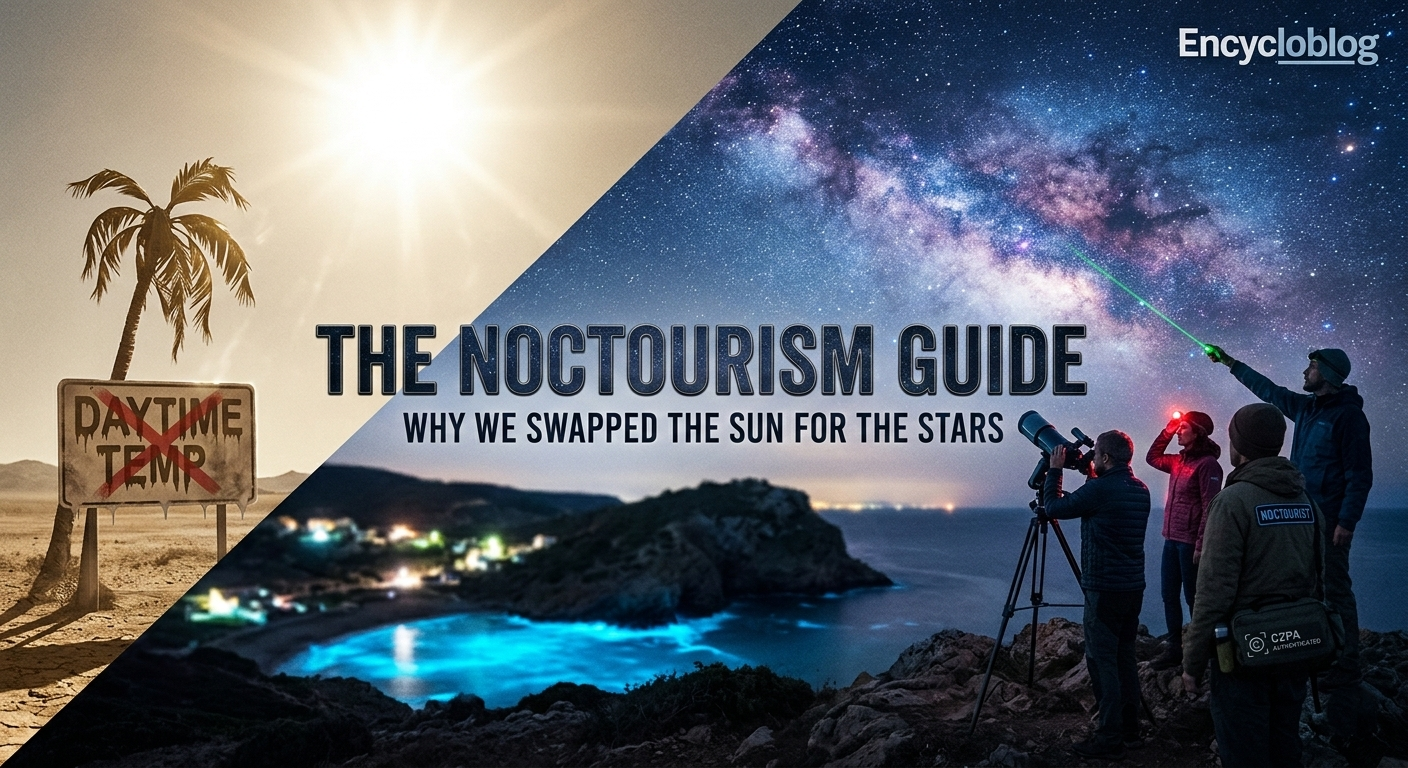
This month, a landmark report by National Geographic confirmed what many of us have felt on our skin: the world is getting too bright and too hot for the traditional 9-to-5 holiday. According to the data, 61% of travelers are now actively restructuring their itineraries to favor nighttime activities. We are fleeing the scorching “Wall of Heat” that defines the modern afternoon and seeking refuge in the “Coolcation.” From Dark Sky Safaris in the Namib Desert to bioluminescent kayaking in Puerto Rico, the traveler of today is a creature of the shadows.
The Rise of the ‘Coolcation’
The traditional summer holiday has become a gauntlet of survival. When the mercury hits record-breaking highs in February—a month that used to be defined by frost—the idea of walking through the ruins of Rome or the streets of Bangkok at noon feels less like leisure and more like an endurance test.
This has birthed the Coolcation. We are seeing a massive surge in bookings to Iceland, Scandinavia, and the Patagonia region. These destinations offer something that the Mediterranean no longer can: Thermal Peace.
- The Midnight Sun: In the high latitudes, the sun doesn’t set, but it also doesn’t burn. Travelers are hiking at 2:00 AM in a soft, ethereal light that allows for physical activity without the risk of heatstroke.
- The Dark Sky Safari: In places like the Aoraki Mackenzie International Dark Sky Reserve in New Zealand, the “sightseeing” doesn’t even begin until the sun goes down. People are paying a premium for total darkness—a rare luxury in our light-polluted world.
The Psychology of the Night
Why are we so obsessed with the night? It isn’t just about the temperature; it’s about a fundamental shift in our sensory awareness. During the day, we are bombarded by visual noise. Everything is sharp, loud, and demanding.
At night, the world softens. Our pupils dilate, our hearing sharpens, and our sense of “Deep Time” expands. When you look at the Andromeda Galaxy through a telescope in a remote desert, you aren’t just looking at stars; you are looking at the past. Noctourism is the ultimate “Soft Adventure”—it focuses on awe and contemplation rather than the adrenaline-fueled “conquering” of nature.
Sidebar: The Encyclopedia of Nocturnal Ecology
As we move our leisure hours into the night, we are stepping into a world that isn’t ours. The night belongs to the hunters, the pollinators, and the scavengers. This shift in human behavior is creating a new field of study: Nocturnal Ecology.
- Light Pollution and Disruption: Our “starlight tours” often require some form of artificial light—flashlights, headlamps, or vehicle high-beams. These disrupt the circadian rhythms of nocturnal insects and birds, leading to “ecological disorientation.”
- The Predator Shift: Animals that used to avoid humans by being active at night are now finding the “quiet hours” crowded with tourists. This is leading to increased human-wildlife conflict.
Current Alert: The Cape Fur Seal Crisis
Nowhere is the tension between tourism and nocturnal ecology more evident than in South Africa today. A trending global news alert has highlighted a disturbing shift in the behavior of Cape fur seals.
Authorities have reported a surge in aggressive behavior among seal populations, particularly in the Western Cape. Even more concerning is the confirmation of rabies within these colonies—a rare occurrence for marine mammals. As noctourists seek out “Night Dives” or “Moonlight Coastal Walks,” the risk of encountering an aggressive, infected animal has skyrocketed.
Travel Advisory: Travelers in coastal South Africa are urged to maintain a minimum distance of 50 meters from all seals and to avoid rocky outcrops during high-tide night walks where seals may feel cornered.
The Gear of the Noctourist
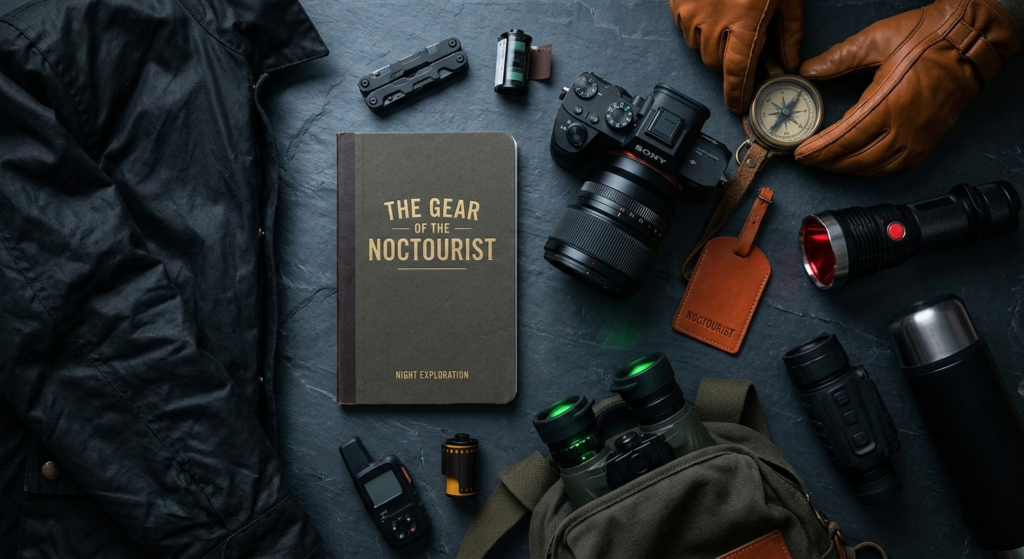
To survive and thrive in the night, the modern traveler has traded their sunglasses for high-tech optics. The “Noctourism Kit” is a far cry from the beach towel and flip-flops of the past.
- Thermal Imaging Monoculars: These allow travelers to see wildlife in total darkness without using disruptive white light. It’s like having “Predator Vision” for ethical wildlife watching.
- Red-Light Headlamps: Red light doesn’t ruin your night vision or attract as many insects as blue or white light. It’s the polite way to navigate the Dark Sky reserves.
- Smart-Telescopes: Devices like the Unistellar or Vaonis have revolutionized stargazing. They automatically plate-solve the sky, meaning even a novice can find a nebula in seconds, even with moderate light pollution.
Stargazing as the New ‘Bucket List’
We used to want to see the Eiffel Tower or the Great Wall. Now, we want to see the Zodiacal Light or the Gegenschein. These are subtle astronomical phenomena that require pristine conditions and a nocturnal mindset.
The “Bucket List” has been replaced by the “Dark List”:
- The Aurora Australis (Tasmania): The southern equivalent of the Northern Lights, offering a more remote and rugged experience.
- The Bioluminescent Bay (Vieques): Swimming in water that glows like liquid neon when disturbed—a sensory experience that only exists in the absence of sunlight.
- The Namib Desert: One of the oldest and driest deserts on Earth, where the silence is so profound you can hear your own heartbeat.
Why the Night is the Future
The move toward Noctourism is more than just a trend; it is an adaptation. As our planet changes, our “habitable hours” are shifting. We are learning to love the moon because the sun has become an overbearing landlord.
But there is a silver lining. By embracing the night, we are rediscovering a part of our world that we ignored for a century. We are learning to appreciate silence, shadow, and the vast, humbling scale of the universe. The Noctourist doesn’t return home with a tan; they return home with a sense of perspective.
When I finally climbed down from that cliff in Norway, the sun was just beginning to regain its heat. I saw the first “day-trippers” stepping out of their hotels, squinting against the glare, reaching for their sunscreen. I smiled, tucked my camera away, and went to bed. I had already seen the best part of the day, and it happened while they were asleep.
I’d love to know: Have you ever planned an activity specifically because it happened at night? Whether it was a moonlit hike or a stargazing session, did it change the way you felt about the destination?