

Table of Contents
I remember standing in the middle of a crowded subway station last November, my chest tightening as the world seemed to speed up around me. My heart was a frantic drum, and my breath was shallow, barely reaching my throat. It was that familiar, suffocating feeling of a nervous system stuck in “High Alert.”
Then, I did something that looked a bit odd to the commuters rushing past: I closed my eyes, hummed a low, vibrating note, and exhaled for a slow count of eight. Within thirty seconds, the “static” in my brain began to clear. My heart rate dropped. I could feel the tension leaving my jaw.
I wasn’t using magic; I was “Hacking the Wanderer” and I was manually activating my Vagus Nerve. In 2026, as we move away from hyper-tracking our steps and toward Neurowellness, understanding this single nerve has become the most important foundational skill for modern life.
The Wanderer: What is the Vagus Nerve?
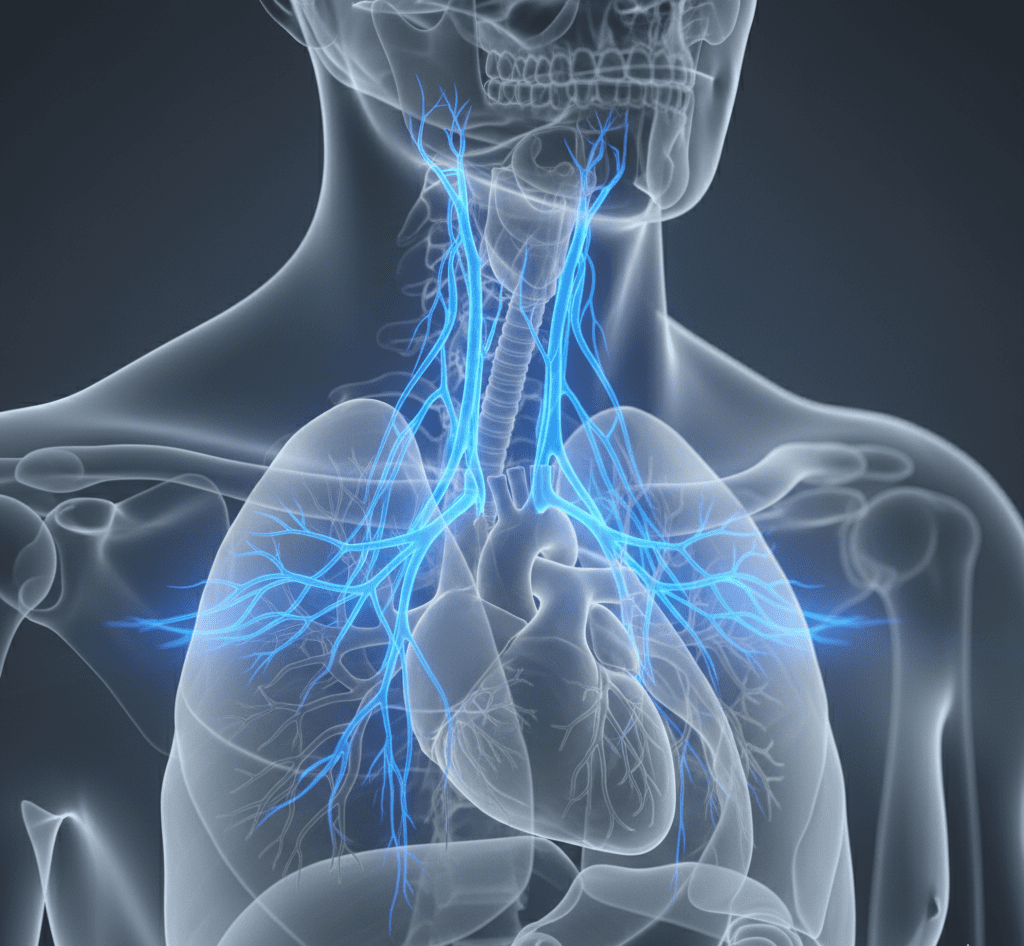
The word Vagus is Latin for “wandering,” a fitting name for the longest cranial nerve in your body. It starts at the base of your brain and wanders down through your neck, heart, and lungs, all the way into your gut.
Think of it as the main highway for your Parasympathetic Nervous System—the “Rest and Digest” crew. While your Sympathetic Nervous System is the “Gas Pedal” (Fight or Flight), the Vagus Nerve is the Brake Pedal. It tells your body when the danger has passed and it’s safe to heal, repair, and breathe.
The Science of “Vagal Tone”
In the world of Encycloblog, we don’t just want a calm moment; we want a resilient system. This is where “Vagal Tone” comes in.
- High Vagal Tone: Your body can switch from stress back to calm almost instantly. You have better emotional regulation and lower inflammation.
- Low Vagal Tone: You feel “stuck” in stress long after the meeting or the argument is over. You might experience brain fog, poor digestion, and chronic anxiety.
Neurowellness Tools: How to “Tone” Your Nerve
The beauty of the Vagus Nerve is that because it passes through your vocal cords and your diaphragm, you can stimulate it physically without any expensive tech.
1. The 4-7-8 Breath (The Manual Override)
This is the fastest way to signal “Safety” to your brain.
- The Method: Inhale for 4, hold for 7, and—crucially—exhale through pursed lips for 8.
- Why it works: The long, slow exhale creates backpressure in the lungs that the Vagus Nerve detects, triggering an immediate drop in heart rate. It is a biological impossibility to remain in a full panic attack while maintaining this breath pattern.
2. Sound Healing: Humming and Gargling
Ever wonder why monks chant or why we instinctively hum to a baby? The Vagus Nerve is connected to the muscles in the back of your throat.
- The Hack: Deep, guttural humming or even vigorous gargling with water for 30 seconds vibrates the nerve where it exits the skull. It’s like a massage for your internal “off switch.”
3. The Cold Plunge (The Diving Reflex)
Splashing ice-cold water on your face isn’t just for waking up. It triggers the Mammalian Diving Reflex.+1
- The Science: When your face hits cold water, the Vagus Nerve tells the heart to slow down to conserve oxygen. It’s an ancient survival reflex that we can use today to “reset” a spiraling mind.

Why This is the Future of Health
By 2026, we’ve realized that you cannot “think” your way out of a physiological stress response. You have to move your way out. Whether it’s through the emerging wearable VNS (Vagus Nerve Stimulation) devices or these simple, evergreen “Somatic” practices, the goal is the same: Felt Safety.
Wellness is no longer about how many miles you ran; it’s about how quickly you can return to a state of calm.