
Table of Contents
I remember the “Guilt of the Wilt.” It was a Sunday evening in 2024, and I was staring at a crisper drawer that had become a graveyard for expensive organic produce. A slimy bag of spinach, a bouquet of cilantro that looked like it had given up on life, and half a lemon shriveled into a yellow pebble.
As I scraped it all into the trash, I realized I wasn’t just throwing away food; I was throwing away money, energy, and the very resources I claimed to care about. In 2026, that “throw-away” culture has become a relic of the past. Today, we don’t just “cook”; we manage a Circular Kitchen.
The goal isn’t just to be “less wasteful”—it’s to realize that in nature, there is no such thing as “trash.” Everything is simply an ingredient for the next step. Welcome to the Encycloblog guide to the 30-day zero-waste cycle.
The “Circular” Philosophy: Every Scrap is an Asset
The biggest shift in 2026 isn’t a new gadget; it’s a change in perspective. Circular cooking means viewing every “by-product” as a “pre-product.”
- Stem-to-Root: We’ve learned that broccoli stalks are sweeter than the florets when peeled and sliced, and beet greens make a better pesto than basil.
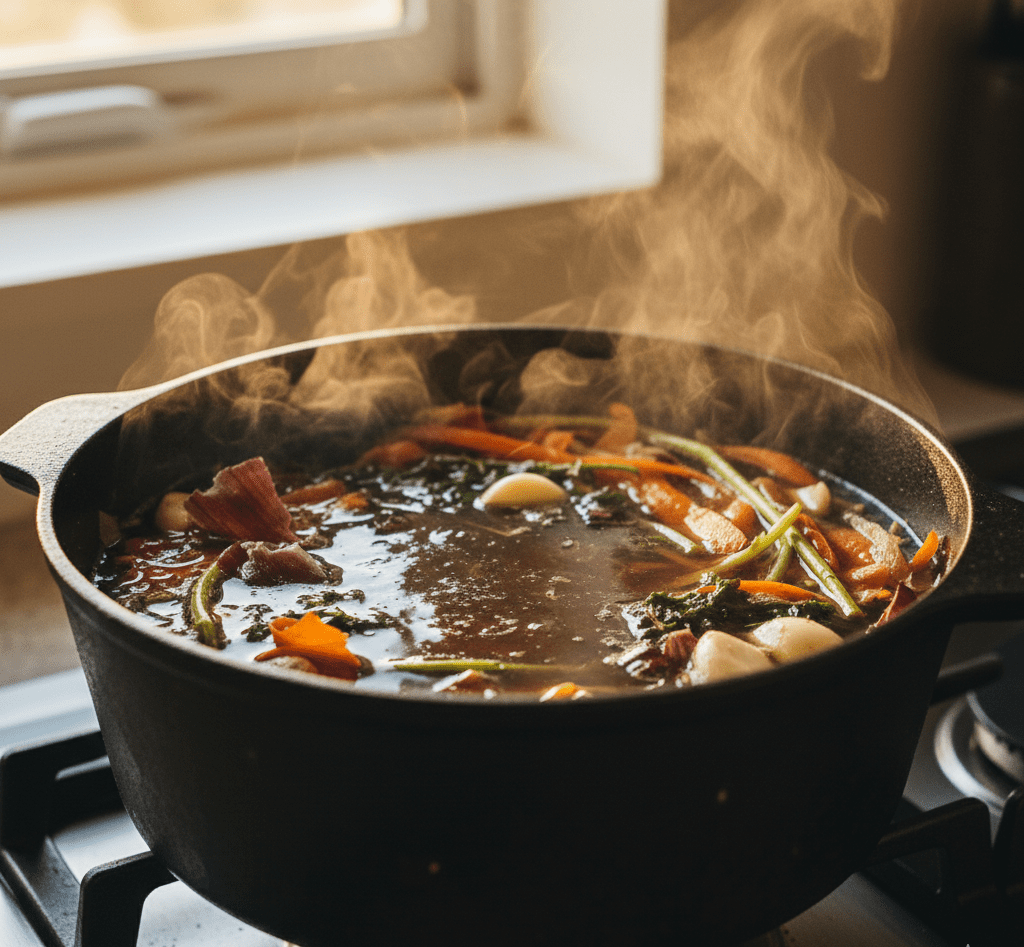
- The “Infinite” Stock: My freezer has a permanent “Scrap Bag.” Every onion skin, carrot peel, and herb stem goes in. Once a week, they hit a slow cooker with water. The result? A mineral-rich, zero-cost vegetable stock that beats any store-bought carton.
Master the “Big Three” Repurposing Hacks
1. The Bread Resurrection (Dehydration)
In a zero-waste kitchen, “stale” is just another word for “ready.”
- The Hack: Hardened sourdough isn’t trash; it’s the base for Pappa al Pomodoro or homemade breadcrumbs infused with garlic and lemon zest. If it’s truly rock-hard, grate it into soups to act as a thickener.
- The Science: By removing the final moisture, you’re concentrating the starches, making it a perfect tool for texture hacking.
2. The Citrus Salt & Vinegar (Extraction)
Never throw away a lemon or orange peel.
- The Kitchen Hack: Dehydrate peels and grind them with sea salt for a “Citrus Salt” that elevates any dish.
- The Cleaning Hack: Drop those same peels into a jar of white vinegar for two weeks. The limonene in the peels breaks down grease better than chemical sprays, and your kitchen will smell like an orchard, not a laboratory.
3. Regrowth: The Kitchen Windowsill Farm
Some vegetables are the gifts that keep on giving.
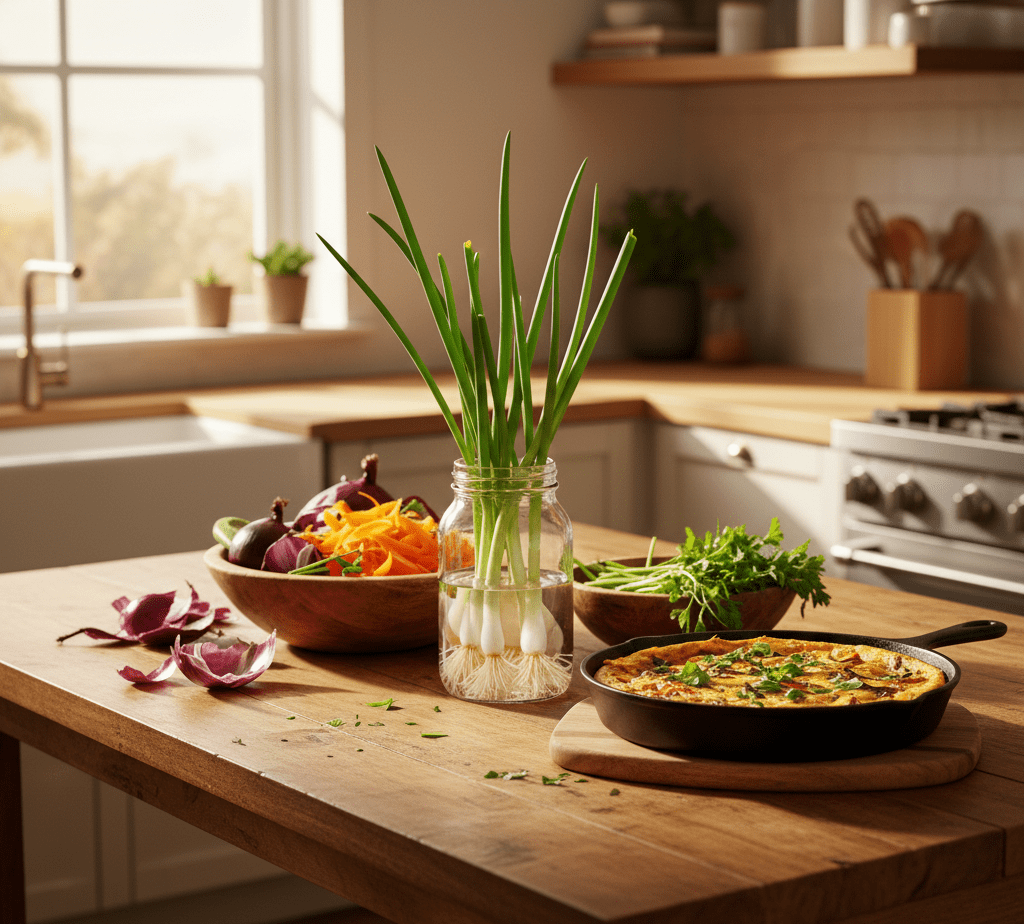
- The Method: Scallion bottoms, leeks, and even celery bases can be placed in a shallow dish of water. Within days, they begin to sprout new green growth.
- The Result: You’re essentially “printing” fresh garnishes from your own counter, closing the loop on your grocery bill.
The 30-Day Zero-Waste Protocol
If you want to achieve a month of zero-waste, you need a “Reverse Meal Plan.”
- Shop the Pantry First: Don’t ask “What do I want to eat?” Ask “What is about to expire?”
- The Friday “Fridge-Clear” Frittata: Make it a tradition. Every bit of leftover roasted veg, that last nub of cheese, and those lonely herbs go into a pan with eggs.
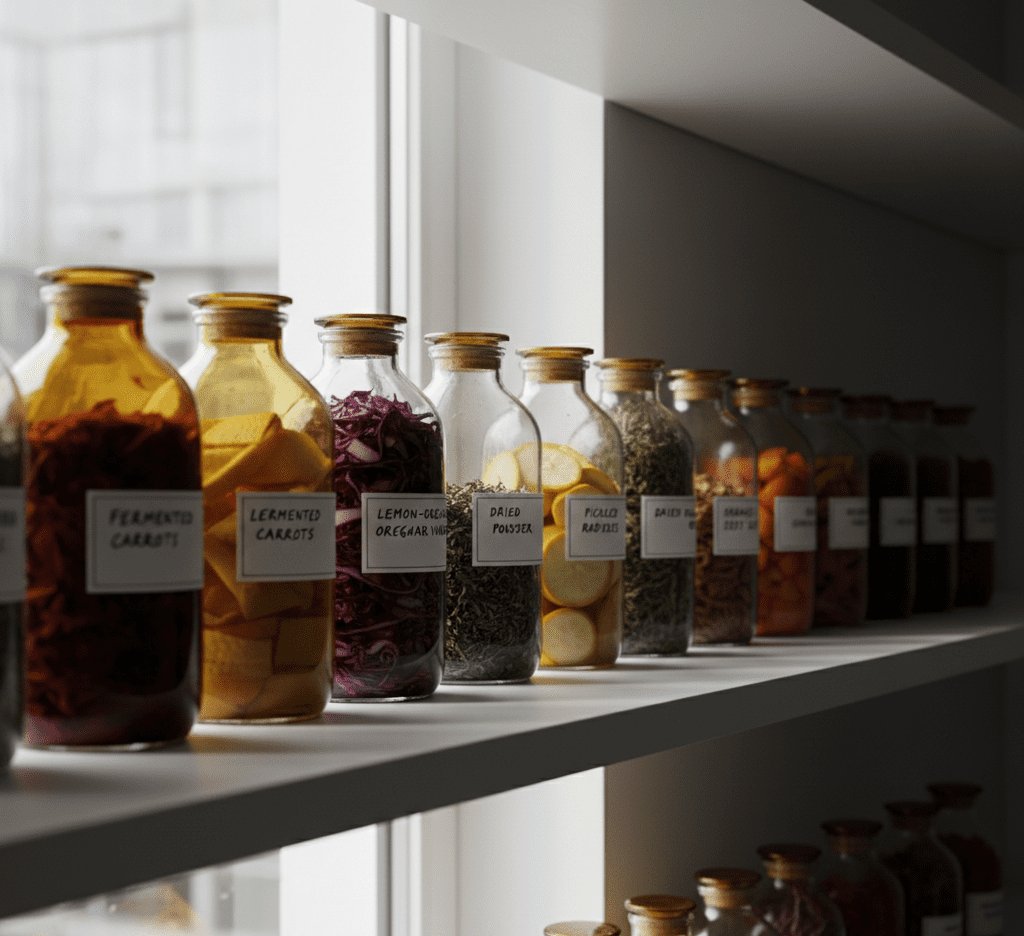
- Preserve the Peak: If you have too much of something, don’t wait for it to rot. Pickling, fermenting, or freezing in olive oil are the “save game” buttons of the culinary world.
Cooking without waste isn’t about restriction; it’s about creativity. It’s the ultimate flex of a modern chef to turn a pile of “scraps” into a five-star meal.