
Table of Contents
The Culinary Epiphany
I remember the first time I hesitated before the compost bin. I held a handful of vibrant purple beet greens and scarred carrot tops. Usually, these were “trash.” But as a chef, I saw untapped texture and hidden sugars. That moment changed my kitchen forever. Embracing upcycled ingredients and zero-waste cooking isn’t just a trend for me. It is a fundamental shift in how I respect the earth.
By adopting circular culinary practices, I discovered that flavor lives in the fringes. Those sustainable food scraps we toss away are often the most nutrient-dense parts of the plant. My kitchen transformed into a lab of regenerative kitchen techniques. I began to see every peel as a potential crisp and every bone as a golden elixir.
The Scarcity Mindset vs. Creative Abundance
Most home cooks view a vegetable stub as a dead end. I invite you to see it as a beginning. In my professional kitchen, we stopped measuring success by what we plated. Instead, we measured it by what we didn’t throw away. This mindset shift creates a deeper connection to our farmers.
When you use the whole plant, you honor the water and soil used to grow it. It feels different to eat a meal where nothing was wasted. The flavors are bolder and the satisfaction is deeper. You aren’t just cooking; you are participating in a rescue mission.
Why 2026 is the Year of the Upcycled Plate
We are living through a food revolution. Grocery prices are volatile, and our planet is tired. Using every inch of our produce is now a badge of culinary honor. I have watched high-end bistros swap caviar for dehydrated “dusts” made from leek roots.
Zero-waste cooking has moved from the fringe to the mainstream. It is no longer about being “thrifty.” It is about being a sophisticated, conscious eater. I will show you how to turn your bin into a goldmine. We will explore the science of flavor hidden in what others call waste.
The Anatomy of a Scrap
I used to view a bell pepper as just the flesh. The seeds and the pith were obstacles to be removed. Now, I see them as a concentrated source of peppery heat. This is the first rule of upcycled ingredients and zero-waste cooking. You must deconstruct your ingredients with a new lens.
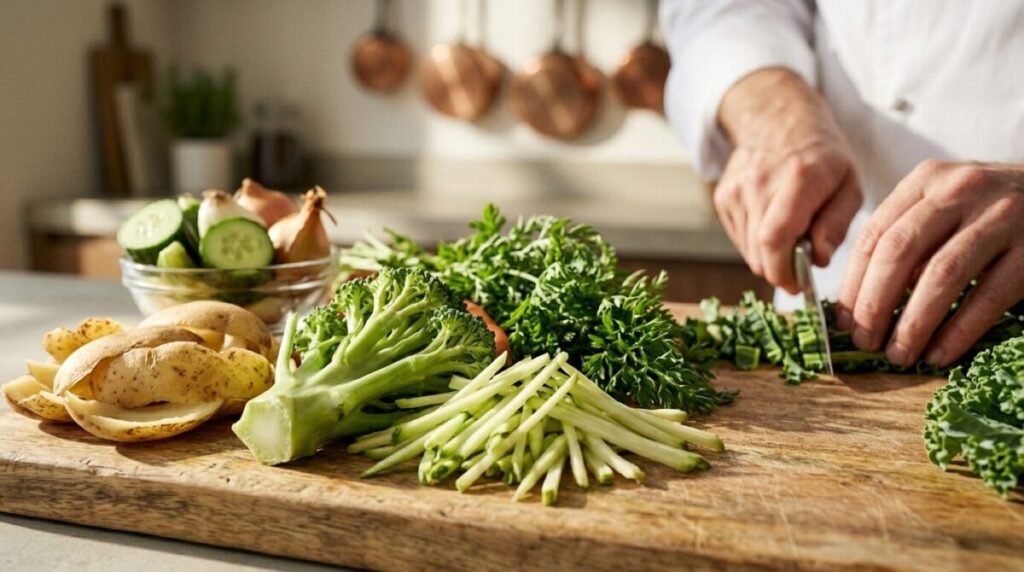
Every plant has a hidden map of flavors. When I process a head of cauliflower, I no longer toss the leaves. Those thick, green ribs have a nuttiness that rivals the florets. I began roasting them with a touch of miso. This turned a “waste product” into the most requested side dish in my kitchen.
Roots, Stems, and the Soul of the Vegetable
We have been conditioned to prefer the “clean” aesthetic of pre-cut produce. However, the soul of the plant often hides in the parts we trim. Take broccoli stems, for example. Once peeled, the interior is tender and sweet like a water chestnut. I julienne these for crunchy slaws or ferment them into tangy krauts.
Circular culinary practices require us to slow down. I spend an extra two minutes searching for the potential in a kale rib. If it’s too woody to sauté, it becomes a base for a vibrant pesto. If it’s too fibrous, it goes into the dehydrator. Nothing leaves my cutting board without a purpose.
The Liquid Gold: Saving Every Drop
It isn’t just about the solids. The liquid from canned chickpeas, known as aquafaba, is a miracle of sustainable food scraps. I remember the shock on my guests’ faces when I served a chocolate mousse made from “bean water.” It was light, airy, and indistinguishable from egg whites.
I also started saving the brine from my pickle jars. This “waste” liquid is a complex acid source. I use it to marinate chicken or to brighten a heavy sauce. These regenerative kitchen techniques save money while adding layers of professional-grade acidity. Your pantry is full of these hidden gems.
Peelings: The New Texture Frontier
Potato peels are not trash; they are the ultimate snack. I toss mine with olive oil and sea salt before air-frying them. They come out crispier than any store-bought chip. The same applies to apple skins. I dry them and grind them into a spicy fruit sugar for morning oats.
When you stop peeling away the flavor, your grocery bill shrinks. I noticed a 15% reduction in my weekly food spend once I committed to this. More importantly, my trash can stopped smelling like rot. It started smelling like a greenhouse. Every scrap is an opportunity for a new texture.
Master Techniques for the Zero-Waste Chef
Transforming a wilted carrot into a culinary masterpiece requires more than just intent. It requires technique. I remember my first failed attempt at “scrap soup.” It was a muddy, bitter mess because I hadn’t learned how to extract flavor properly. Mastering upcycled ingredients and zero-waste cooking is about chemistry, not just conservation.
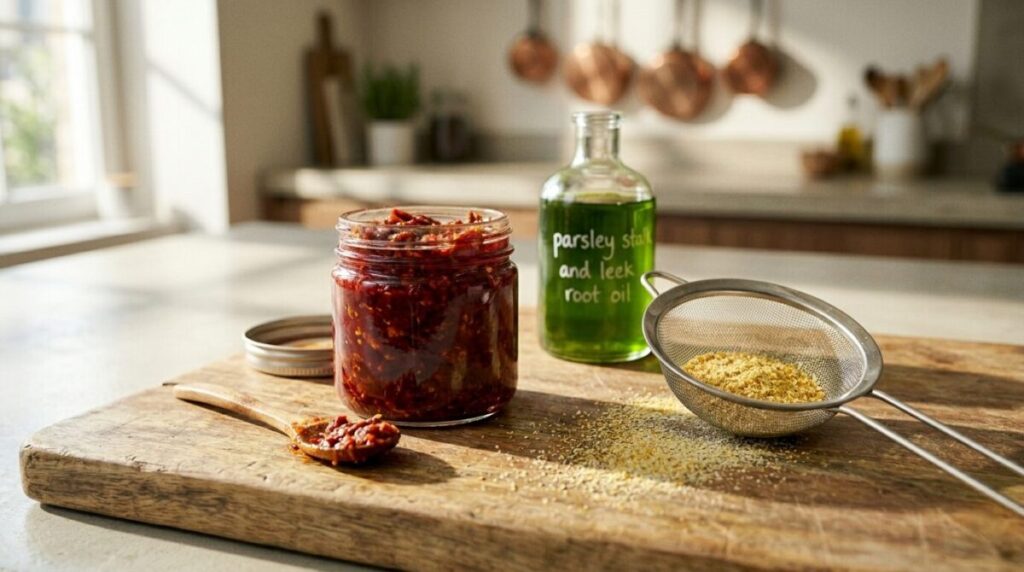
I started experimenting with high-heat roasting for all my sustainable food scraps. When you char an onion skin or a leek root, the sugars caramelize into a deep, smoky base. This is the secret to a rich, dark bouillon. These circular culinary practices turned my “trash” into a concentrated flavor bomb.
The Fermentation Revolution: Funk as a Tool
Fermentation is my favorite of all regenerative kitchen techniques. I began “nukazuke” style pickling using rice bran and vegetable peels. This process doesn’t just preserve; it creates new umami compounds. I took the tough outer leaves of a cabbage and transformed them into a spicy, probiotic kimchi.
The “funk” of fermentation adds a professional edge to home cooking. I found that a spoonful of fermented chili scraps can brighten a dull stew instantly. This is how you achieve “Goldilocks” seasoning—it’s just right. Your scraps aren’t decaying; they are evolving into something more complex.
Dehydration: Creating the “Dust” of Modernity
In 2026, the secret weapon of the elite chef is the dehydrator. I save all my herb stems and citrus peels to dry them out completely. Once brittle, I blitz them into a fine powder. This “citrus dust” is a concentrated hit of acidity without the moisture of juice.
I use these powders to rim cocktail glasses or to season roasted fish. It’s a way to give upcycled ingredients a second, more glamorous life. My guests often ask what that “secret spice” is. I just smile, knowing it’s the lemon peels they would have tossed.
Infusion: Capturing the Essence
Infusion is the gentlest way to honor an ingredient. I save my herb stalks—parsley, cilantro, and basil—and steep them in neutral oils. The result is a vibrant green oil that tastes like mid-summer. I do the same with shrimp shells and butter.
The shells from a single pound of shrimp can flavor enough butter for three meals. This is the essence of zero-waste luxury. You are capturing the aromatic molecules that usually end up in a landfill. My kitchen now smells like a perfumery, rich with the oils of a dozen different “scraps.”
The Modern Pantry
To truly master upcycled ingredients and zero-waste cooking, you must organize your kitchen like a biological laboratory. I used to lose my “scraps” in the back of the crisper drawer. They would turn into a soggy, forgotten mess. Now, I maintain a dedicated “Upcycle Station” in my freezer and pantry.
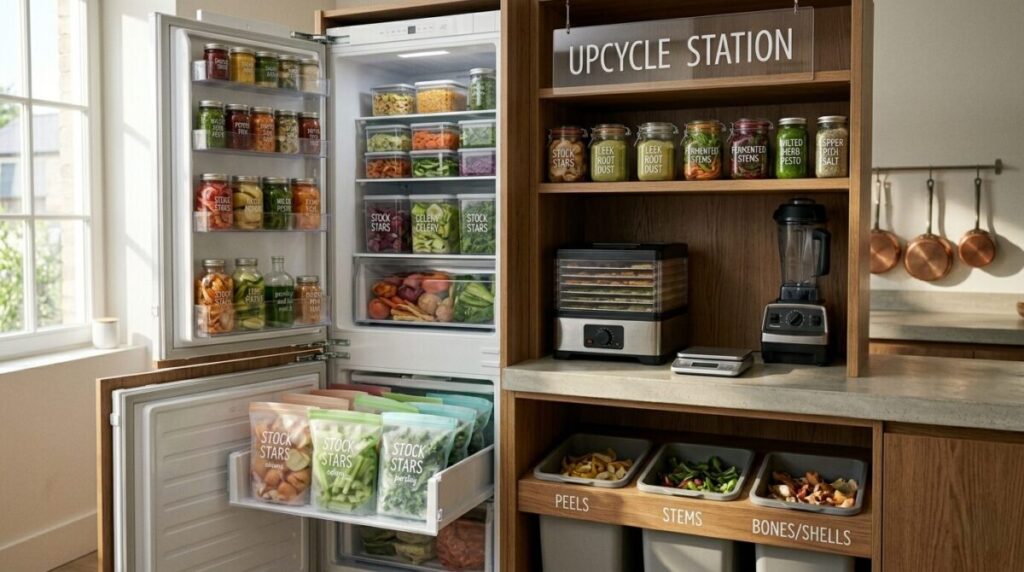
This station is the heart of my circular culinary practices. I keep a large silicone bag for “Stock Stars”—onion ends, celery hearts, and parsley stems. Another jar holds “Citrus Zest Dust” for quick seasoning. By categorizing these sustainable food scraps, I am always ready to add a layer of complexity to a weeknight meal.
The Toolkit of a Zero-Waste Architect
I found that the right tools make regenerative kitchen techniques effortless. A high-powered blender is essential for turning fibrous kale stems into a silky smooth emulsion. I also invested in a set of fine-mesh strainers. These are vital for clarifying my scrap-based broths into a crystal-clear consommé.
A digital scale also changed my perspective. I began weighing my waste each week. Seeing that number drop from three pounds to nearly zero was a massive psychological win. It turned my kitchen into a game of efficiency. I was no longer a consumer; I was a steward of resources.
Staples from Scraps: The New Essentials
My pantry staples look very different in 2026. I no longer buy vegetable bouillon cubes. Instead, I use my “Master Scrap Paste,” a concentrated reduction of roasted peels and stems. It has a depth of flavor that no store-bought product can match. This is the ultimate “Goldilocks” ingredient.
I also make my own “Breadcrumb Medley” from the ends of sourdough loaves. I toast them with garlic skins and dried herbs. These upcycled ingredients create a crust that is far superior to anything in a blue canister. My pantry is a living map of every meal I have cooked this month.
Preserving the Harvest: Pickling and Salt Curing
When I have an abundance of one scrap, I turn to salt. I started salt-curing my citrus rinds to create Moroccan-style preserved lemons. This technique transforms a bitter skin into a floral, salty condiment. It is a staple in my kitchen for brightening heavy stews and grain salads.
I also keep a “Forever Brine” in my fridge for quick-pickling random vegetable stubs. A few stray radishes or a lonely cucumber end can become a tangy garnish in just 24 hours. This ensures that nothing is ever “too small” to save. Every morsel has a place in the modern, zero-waste pantry.
The Global Impact
Standing in my kitchen today, I see a landscape of abundance where I once saw a bin of waste. My journey with upcycled ingredients and zero-waste cooking has taught me that true luxury is found in resourcefulness. We are moving toward a future where “circular” isn’t just a buzzword. It is the gold standard of professional and home cooking.
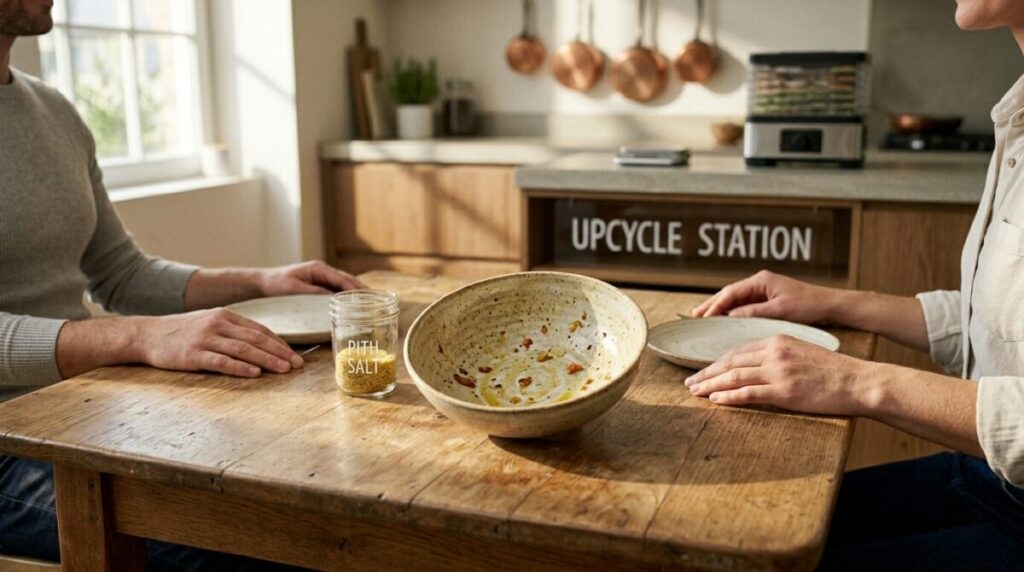
When we adopt circular culinary practices, we become part of a global movement. It is a quiet revolution that starts at the cutting board. These sustainable food scraps are a bridge between our current habits and a more resilient food system. I no longer cook to just feed myself; I cook to honor the entire lifecycle of my ingredients.
The Ripple Effect of a Regenerative Kitchen
Your personal kitchen choices have a massive impact on the wider world. By utilizing regenerative kitchen techniques, you are reducing the demand for over-production. I noticed that as my waste decreased, my appreciation for seasonal local produce soared. You stop looking for perfection in the supermarket and start looking for potential.
The culinary world is changing fast. In 2026, the most celebrated chefs are the ones who can do the most with the least. We are moving away from the era of excess and toward an era of ingenuity. This is the “Goldilocks” moment for our planet—a balance between flavor, nutrition, and responsibility.
Your Invitation to the Zero-Waste Table
I invite you to start small. Don’t try to save every single peel on your first day. Start with one vegetable, like a bunch of carrots or a head of broccoli. Feel the texture of the stems and smell the earthy aroma of the skins. This is where the magic happens.
Once you taste your first “scrap” pesto or “peel” chip, there is no going back. The flavors are simply too good to ignore. You are now the architect of your own sustainable food future. Welcome to the kitchen of the future, where every scrap is a masterpiece waiting to happen.