
Table of Contents
I remember the exact moment I realized my “healthy” diet was actually a metabolic disaster. I was deep into a strict, low-carb regimen, checking my blood sugar like a scientist and wondering why, despite the lack of pasta and bread, I felt like a drained battery by 3:00 PM every single day. My brain was foggy, my digestion had essentially gone on strike, and my “fitness” felt brittle. I was chasing the wrong ghost. I was obsessed with what to remove, and I had completely forgotten what to add.
Enter Fibermaxxing.
Over the last several months, the wellness world has undergone a quiet but violent revolution. We have collectively moved away from the restrictive, “elimination-at-all-costs” mindset of the Keto and Paleo eras. The new gold standard isn’t about how few calories you can consume or how many food groups you can banish. It’s about Gut Optimization. We’ve realized that the gut microbiome isn’t just a digestion center; it’s the lead conductor of our entire metabolic orchestra.
If you want the energy of a teenager, the mental clarity of a chess master, and a metabolism that handles a slice of birthday cake without a three-day “sugar hangover,” you don’t need a complex app. You need one simple, biological ratio: The 1:5:1 Rule.
The Architecture of the 1:5:1 Rule
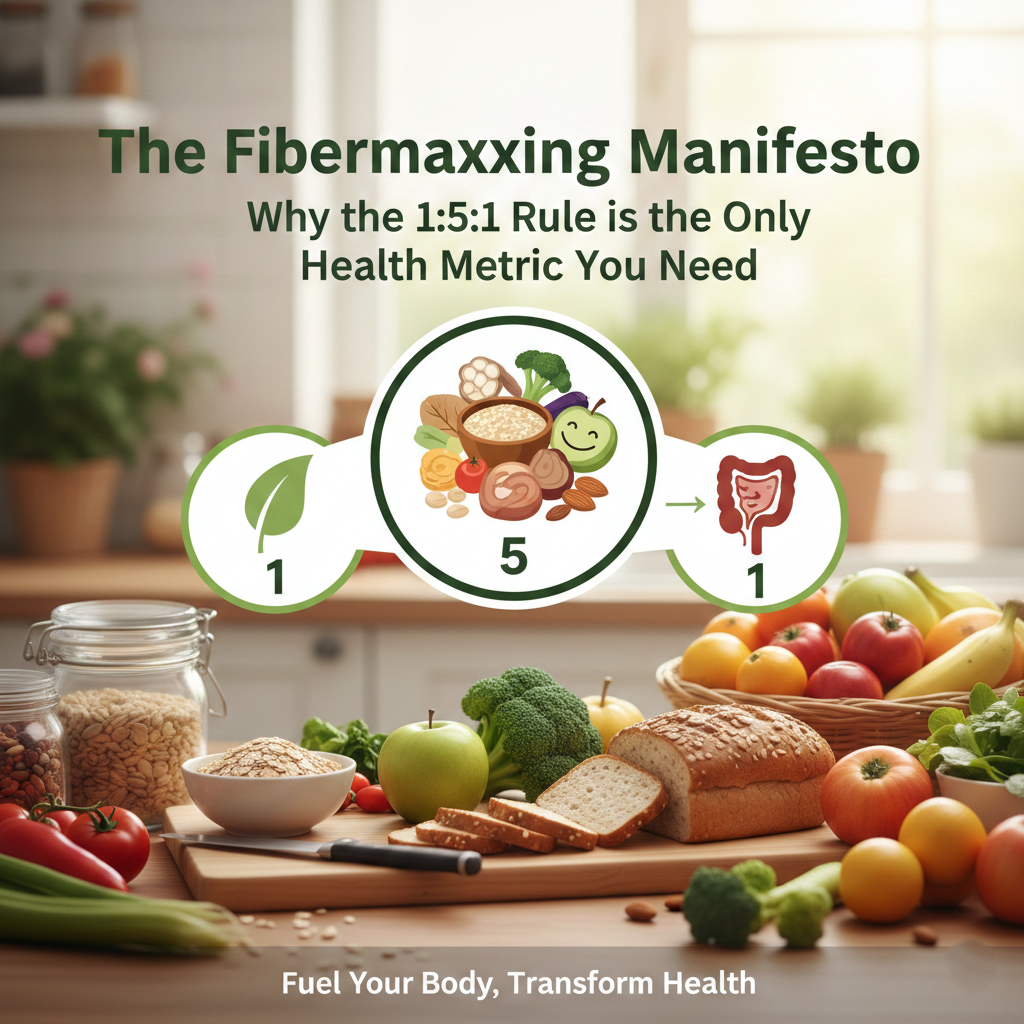
Most people treat “fiber” like an afterthought—a bit of roughage to keep things moving. But in the Fibermaxxing era, we view fiber as a metabolic stabilizer. The 1:5:1 Rule is a ratio designed to ensure that every gram of fuel you put into your body is accompanied by the necessary tools to process it efficiently.
{1g Fiber} : {5g Carbs} : {1g Protein}
This isn’t just a random set of numbers; it’s a blueprint for Glycemic Control.
- The 5g Carbs: Carbohydrates are your body’s primary high-octane fuel. But high-octane fuel is dangerous without a regulator.
- The 1g Fiber: Fiber acts as that regulator. By maintaining a 1:5 ratio of fiber to carbs, you are creating a “gel matrix” in your gut. This slows down the absorption of sugar, preventing the massive insulin spikes that lead to fat storage and mid-afternoon crashes.
- The 1g Protein: Protein provides the structural building blocks and triggers the satiety hormones (like GLP-1) that tell your brain you’re full.
The Science of Metabolic Flexibility
The ultimate goal of Fibermaxxing isn’t just “good digestion”—it’s Metabolic Flexibility. This is the body’s ability to switch seamlessly between burning carbohydrates and burning fat.
When you eat a low-fiber, high-carb diet, your body becomes “insulin-locked.” Your blood sugar spikes, insulin stays high, and your body loses the ability to access its own fat stores for energy. You become a slave to your next snack.
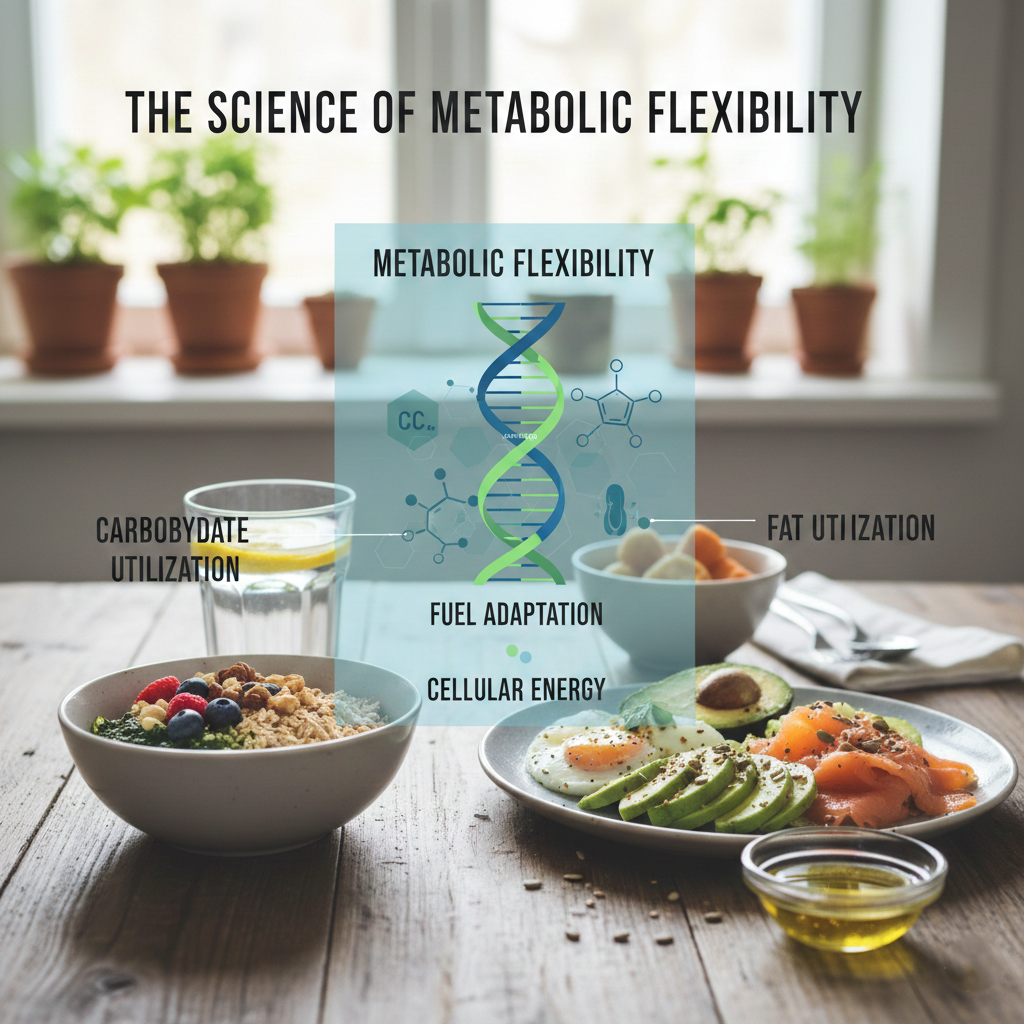
By following the 1:5:1 Rule, you are training your metabolism to be resilient.
- The Microbial Feast: When you “max” your fiber, you are feeding specific bacteria (like Bifidobacterium and Faecalibacterium) that produce Short-Chain Fatty Acids (SCFAs) like butyrate.
- The Butyrate Benefit: Butyrate is a miracle molecule. It repairs your gut lining, reduces systemic inflammation, and actually signals your mitochondria to burn fuel more efficiently.
- The Result: You stop having “hangry” episodes. Your energy becomes a steady, rolling wave rather than a series of jagged peaks and valleys.
Beyond the Grain: Diversifying Your Fiber Portfolio
One of the biggest mistakes newcomers make is thinking that “fiber” just means eating more whole-wheat bread. In the Fibermaxxing manifesto, we prioritize Diversity. Your gut microbiome is an ecosystem, and different microbes eat different things.
| Fiber Source | Primary Benefit | 1:5:1 Hack |
| Legumes (Lentils, Black Beans) | High protein + High Insoluble Fiber | Use as a base instead of white rice. |
| Seeds (Chia, Flax, Pumpkin) | Omega-3s + Mucilaginous Fiber | Add 2 tablespoons to every smoothie. |
| Tubers (Sweet Potatoes, Jicama) | Prebiotic Starches | Cold-cooked potatoes increase “Resistant Starch.” |
| Cruciferous (Broccoli, Brussels) | Sulforaphane + Structural Fiber | Roast them to make the fiber easier to digest. |
How to Transition Without the ‘Bloom’ Bloat
If you go from 10 grams of fiber a day to 50 grams overnight, your gut will let you know—loudly. We call this the “Microbiome Bloom.” As your dormant, fiber-loving bacteria suddenly wake up and start feasting, they produce gas.
To avoid the discomfort, follow the “Slow and Low” protocol:
- Week 1: Focus on the 1:5:1 ratio for just one meal a day (ideally breakfast).
- The Hydration Factor: Fiber is a sponge. If you increase fiber without increasing water, you’re basically making “gut cement.” You must increase your water intake by at least 20 ounces for every 10g of added fiber.
- The Fermentation Supplement: Support the transition with a daily serving of fermented foods (kimchi, sauerkraut, or kefir). These provide the “active workers” that help break down the new influx of fiber.
The Longevity Hook: Fiber as a Time Machine
Why has Fibermaxxing officially dethroned every other diet trend? Because it addresses the “Permanent Science” of aging. Inflammation is the primary driver of almost every age-related disease, from cognitive decline to heart disease.
By maintaining a high-fiber, 1:5:1 lifestyle, you are effectively putting an “anti-inflammatory shield” around your cells. You are keeping your blood vessels supple, your brain fueled, and your gut-brain axis clear. This isn’t a “summer body” diet; this is a “century-long life” manifesto.
We’ve stopped counting calories because calories are a poor measurement of how a body actually functions. We’ve started counting the 1:5:1 ratio because it measures Harmony. When you give your gut the fiber it needs to regulate the carbs you want, you stop fighting your biology and start working with it.
I’d love to hear from you: What is the most high-fiber food currently in your kitchen? Are you a “Legume Legend” or a “Seed Specialist”?