
Table of Contents
I remember the first time my banking app sent me a “nudge” that felt personal. It wasn’t about a late payment or a low balance. It was a small, green notification that popped up after I bought a steak dinner: “This transaction increased your monthly carbon tally by 12kg. Would you like to offset this with a 0.50c contribution to the Amazon Reforestation Fund?”
Five years ago, I would have ignored it. But today, standing in the middle of a 2026 economy, that notification isn’t just a suggestion—it’s a data point in my Sustainable Credit Score.
Finance has undergone a silent revolution. We’ve moved past the “niche” era where sustainable investing was something only billionaires did to feel better about their private jets. Now, sustainability is the backbone of everyday banking. I’ve had to learn how to manage my “Green Ledger” just as carefully as my savings account. If you’ve noticed your bank talking more about footprints than interest rates lately, here is exactly what is happening and why it’s the new “Economics 101.”
The Rise of the ‘Personal Carbon Ledger’
When I opened my first bank account, I was only looking for low fees. Now, when I look at my dashboard, I see two numbers: my cash balance and my Live Carbon Impact.
Most major banks have now integrated AI-driven tracking that categorizes every purchase based on its environmental cost. When I buy gas, the ledger goes red. When I shop at the local farmer’s market or pay my renewable energy bill, it glows a soft teal.
This isn’t just for show. I’ve noticed that my bank has started offering “Carbon-Neutral Cash Back.” Instead of earning points for travel, I earn “Carbon Credits” that I can use to lower my interest rate on my home loan. It’s a closed-loop system where being “green” literally makes me “richer.”
Understanding the ‘Sustainable Credit Score’
This was the biggest shock for me this year. I went to apply for a car loan (an EV, naturally), and the loan officer didn’t just pull my traditional credit report. They pulled my S-Score (Sustainability Score).
We are seeing a shift where your financial reliability is being linked to your climate resilience. The logic is simple: in 2026, companies and individuals who are heavily reliant on high-carbon lifestyles are considered “high-risk.” If the government passes a new carbon tax, can you still afford your lifestyle?
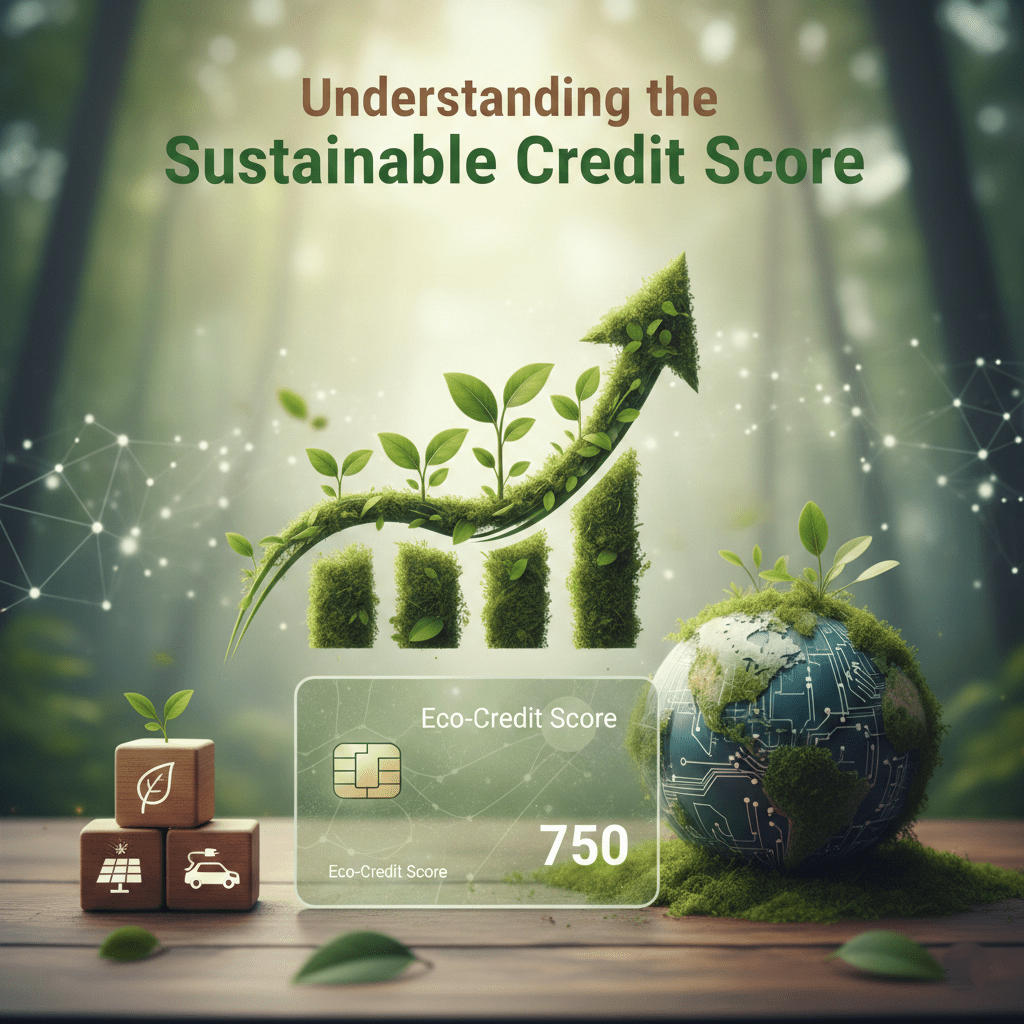
My S-Score is calculated based on:
- My Energy Consumption: Is my home insulated? Am I on a green grid?
- My Portfolio: Are my small investments in “Dirty Energy” or “Climate Tech”?
- My Spending Habits: Do I support circular economy brands or fast-fashion?
It felt invasive at first. I’ll be honest, I felt like I was being judged for my morning latte. But then I realized the upside: because my S-Score was in the top 10%, my interest rate was 1.5% lower than the standard market rate. Sustainable finance isn’t a tax; it’s a discount for the prepared.
Carbon Credits: From Corporate Jargon to Your Pocket
I used to think “Carbon Credits” were things airlines bought to pretend they weren’t polluting. Now, I trade them.
In the 2026 banking ecosystem, personal carbon trading has become a hobby for many, including me. Each month, I am “allocated” a carbon budget based on national climate goals. If I live under that budget—say, by biking to work or choosing a plant-based diet—I have “surplus” credits.
My banking app allows me to sell those surplus credits on a peer-to-peer marketplace. Last month, I sold my extra credits to a neighbor who needed to fly for a family emergency. The money went straight into my savings. It turns out that “living green” is the ultimate side hustle.
The New Investment Landscape: ‘Impact First’
I spent yesterday reviewing my retirement fund, and I noticed something interesting. The “Green Tiers” weren’t just the ethical choice—they were the top performers.
Sustainable finance is no longer about “charity.” It’s about the fact that renewable energy, battery tech, and carbon-capture startups are the “Big Tech” of the mid-2020s. Investors are fleeing “stranded assets”—infrastructure like oil pipelines that might be illegal or useless in twenty years.
I’ve shifted my own “Green Ledger” to focus on Regenerative Finance (ReFi). This is a model where the money I invest actually heals the ecosystem while generating a return. I’m currently invested in a decentralized fund that provides micro-loans to farmers transitioning to regenerative agriculture. I get a steady 5% return, and I get to see satellite photos of the soil health improving in real-time.
How to Manage Your Own Green Ledger: A 2026 Strategy
If you’re feeling overwhelmed by this new financial language, don’t worry. I had to learn it one step at a time. Here is the strategy I use to keep my Green Ledger in the black:
- The Weekly Audit: Every Sunday, I check my app’s “Impact” tab. I look for “Carbon Spikes.” Last week, it was a fast-shipping order from overseas. Now I know to consolidate my orders to reduce the shipping footprint.
- Switch Your ‘Primary’ Account: If your current bank doesn’t offer a carbon tracker, move your money. In 2026, a bank that doesn’t track impact is like a bank that doesn’t have an app—it’s obsolete.
- Automate Your Offsets: I’ve set my account to “Round Up for the Planet.” Every time I spend $4.50, the 50 cents is rounded up and invested in a high-quality carbon-removal project. It’s “set it and forget it” ethics.
Why This is Permanent
I often hear people ask if this is just a “trend” that will disappear when the next economic cycle hits. I don’t think so. The reason is simple: Insurance.
Insurance companies are the true drivers of sustainable finance. They are the ones paying for the floods and the fires. They have made it clear that if we don’t move to a climate-first economic model, the cost of insuring our lives and homes will become impossible.
The Green Ledger isn’t just a banking feature; it’s a survival mechanism. It’s the way we finally bridge the gap between “what we value” and “what we spend.” When I look at my app now, I don’t just see numbers. I see a future where my prosperity is directly linked to the health of the world around me. And for the first time in my life, banking feels… hopeful.
I’d love to hear from you: If your bank started showing you your “Live Carbon Impact” today, what do you think would be the biggest “red” item on your ledger? For me, it was definitely my obsession with overnight shipping!