
Table of Contents
I’ll never forget the “Wall of Heat” I hit during a trail run last summer. It wasn’t just a warm day; it was the kind of thick, oppressive air that makes you feel like you’re breathing through a warm, damp towel. By the third mile, my heart was hammering against my ribs, and I could feel that familiar, dangerous fog of “heat brain” starting to settle in. My skin was soaked, but I wasn’t cooling down. My body’s radiator had simply given up.
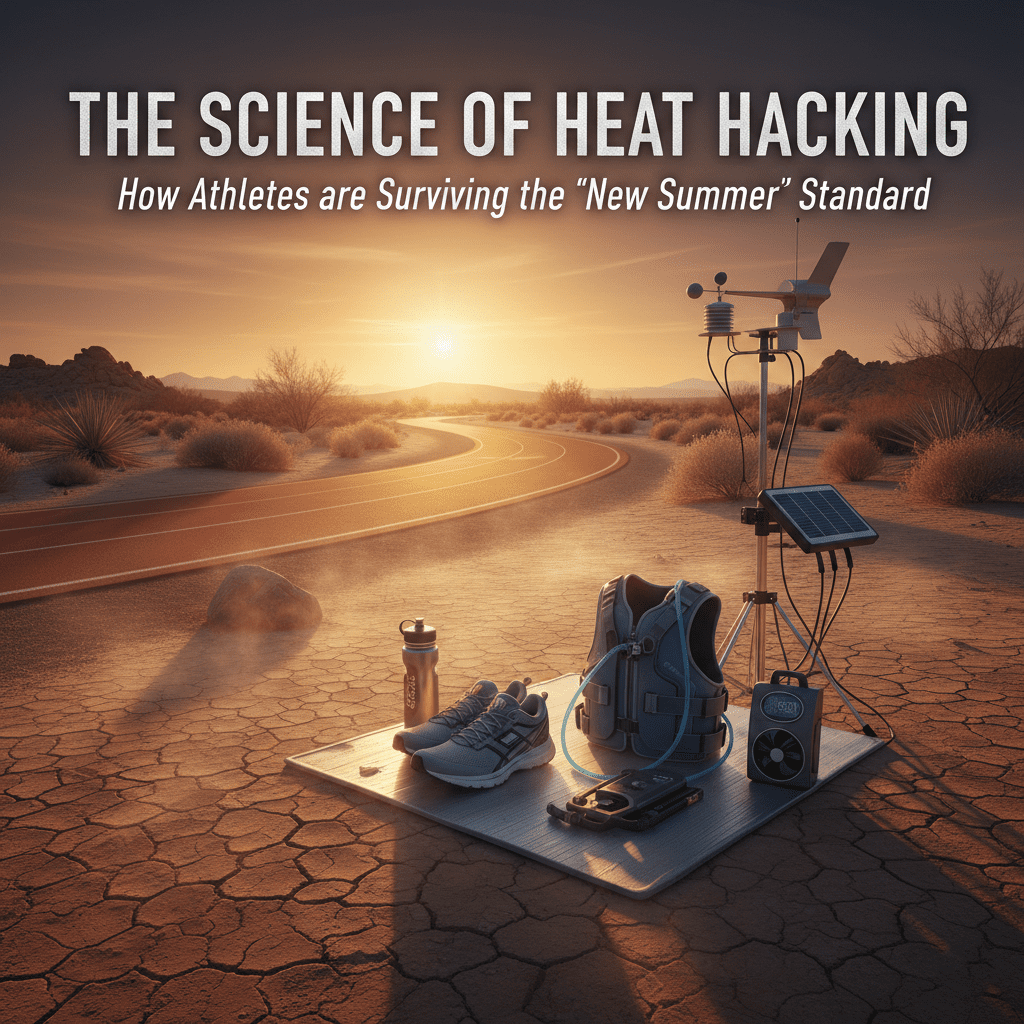
In 2026, we’ve had to stop treating the heat as an inconvenience and start treating it as a physics problem. The “New Summer” isn’t just about sweating more; it’s about a fundamental shift in how we manage our internal thermostats. I’ve spent the last six months testing the gear that is currently dominating the outdoor sports world—what the pro community calls “Heat Hacking.” We are moving away from the old-school “wicking” fabrics that just move moisture around. Instead, we are entering the era of active thermal management. From “Phase-Change” materials that act like biological batteries to the strange science of cooling your body through your palms, here is my handbook on how to hack your own micro-climate and keep moving when the world is simmering.
The Evolution of Cool: Beyond Moisture Wicking
For decades, we were told that “moisture-wicking” was the gold standard. The idea was simple: pull sweat away from the skin so it can evaporate. But as temperatures have climbed, evaporation alone isn’t enough. When the humidity is 90% and the air is 38°C, your sweat has nowhere to go. It just sits there, trapped between you and your shirt.
This year, I made the switch to Phase-Change Materials (PCMs). These aren’t just fabrics; they are thermal storage units. I remember the first time I put on a PCM-lined jersey. It felt oddly cool to the touch, almost like it had been sitting in a refrigerator.
- The Physics: PCMs use micro-encapsulated waxes that transition from solid to liquid as your skin temperature rises. This transition absorbs a massive amount of “latent heat”—essentially pulling the heat out of your body and storing it in the fabric.+1
- The Result: It creates a “buffer zone” against your skin. Instead of my temperature spiking the moment I hit a sunny stretch of trail, the fabric absorbed the surge. It’s like wearing a passive air conditioning unit that works with physics instead of batteries.
The Palm Cooling Revolution: Your Body’s Natural Radiator
The most “aha!” moment of my heat-hacking journey came from a tip I got from an elite marathoner. “Stop trying to cool your neck,” she told me. “Cool your palms.”
It sounded ridiculous until I dug into the anatomy. Our palms, the soles of our feet, and the bridge of our nose contain a special type of blood vessel called Arteriovenous Anastomoses (AVAs). These are essentially high-volume “radiators” designed specifically for heat exchange.+1
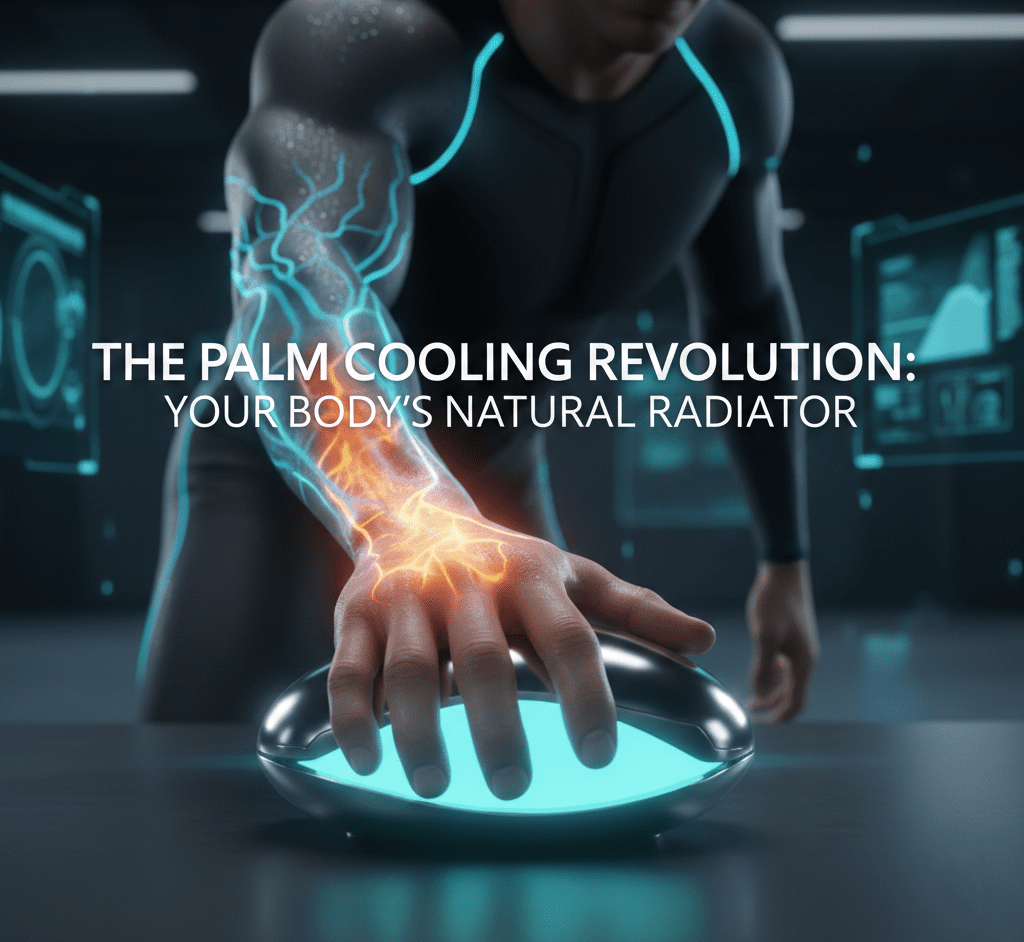
I started using a Palm Cooling Device during my rest intervals. It looks like a small, ergonomic handle filled with a specialized cooling gel.
- The Science: You don’t want it to be ice cold. If it’s too cold, your blood vessels will constrict (vasoconstriction), which actually traps the heat inside. The sweet spot is around 13-15°C (55°F).
- The Breakthrough: By holding this device for just two minutes during a break, I noticed my heart rate dropped significantly faster than usual. By cooling the blood in my palms, I was sending “chilled” blood straight back to my core. It’s the closest thing to a “cheat code” for performance I’ve ever experienced.
Aero-Gel Hydration: The Space-Age Insulation
We’ve all been there: you’re ten miles into a hike, you reach for your hydration tube, and the water is as warm as tea. Not only is it unrefreshing, but warm water actually forces your body to work harder to regulate its temperature.
In 2026, the elite hydration packs are being insulated with Silica Aero-Gel. This is the same material NASA uses to insulate Mars rovers. It is 99% air, incredibly light, and has the lowest thermal conductivity of any solid on earth.
I’ve been using an Aero-Gel sleeve for my 3-liter reservoir. I can fill it with ice at 6:00 AM, and even after five hours of exposure to direct sunlight, the water is still crisp.
- Internal Cooling: Drinking cold water isn’t just about thirst; it’s an internal “heat sink.” It pulls heat directly from your core through your digestive system.
- The Aero-Gel Advantage: Because the material is so thin, my pack doesn’t feel like a bulky cooler. I get the insulation of a thick foam box in a layer that’s only 2mm thick.
Managing the ‘Micro-Climate’: My Heat-Hacking Strategy
Surviving the “New Summer” isn’t about one piece of gear; it’s about a layered strategy. Here is the routine I now follow for every high-output activity in the heat:
- The Pre-Cool (30 mins before): I drink a slushy-consistency electrolyte drink. This “internal icing” lowers my core temperature before I even start, giving me a larger “thermal window” before I hit the danger zone.
- The Active Layer: I wear a PCM-integrated base layer. I make sure it’s skin-tight; for Phase-Change materials to work, they must have direct contact with your skin to pull the heat away.
- The Glabrous “Dump”: During every 15-minute break, I use my palm cooling device or even just splash cool water specifically on my palms and face.
- The External Mist: I use a small “aero-mist” bottle filled with a menthol-infused solution. Menthol doesn’t actually lower your temperature, but it tricks your “TRPM8” receptors into feeling cold, which reduces your perceived exertion and keeps you from panicking in the heat.
Why This is the Permanent Standard
I used to think of heat management as something only “pros” did. But as our summers become longer and more intense, “Heat Hacking” is becoming a basic survival skill for anyone who wants to stay active.
The physics of performance hasn’t changed, but our environment has. We are no longer just fighting our own fatigue; we are fighting a climate that is actively trying to shut us down. By understanding how to manage our internal radiators and using materials that work with thermodynamics rather than against it, we can keep the “New Summer” from being a season of staying indoors.
When I finished that trail run last week—the same one that almost broke me a year ago—I didn’t feel like dry toast. I felt tired, sure, but I felt contained. My micro-climate was under control. I had hacked the heat, and the heat didn’t win.
I’d love to hear from you: What’s the hottest environment you’ve ever had to perform in? Did you have a specific trick to stay cool, or did you find yourself hitting that “Heat Wall”?