
Table of Contents
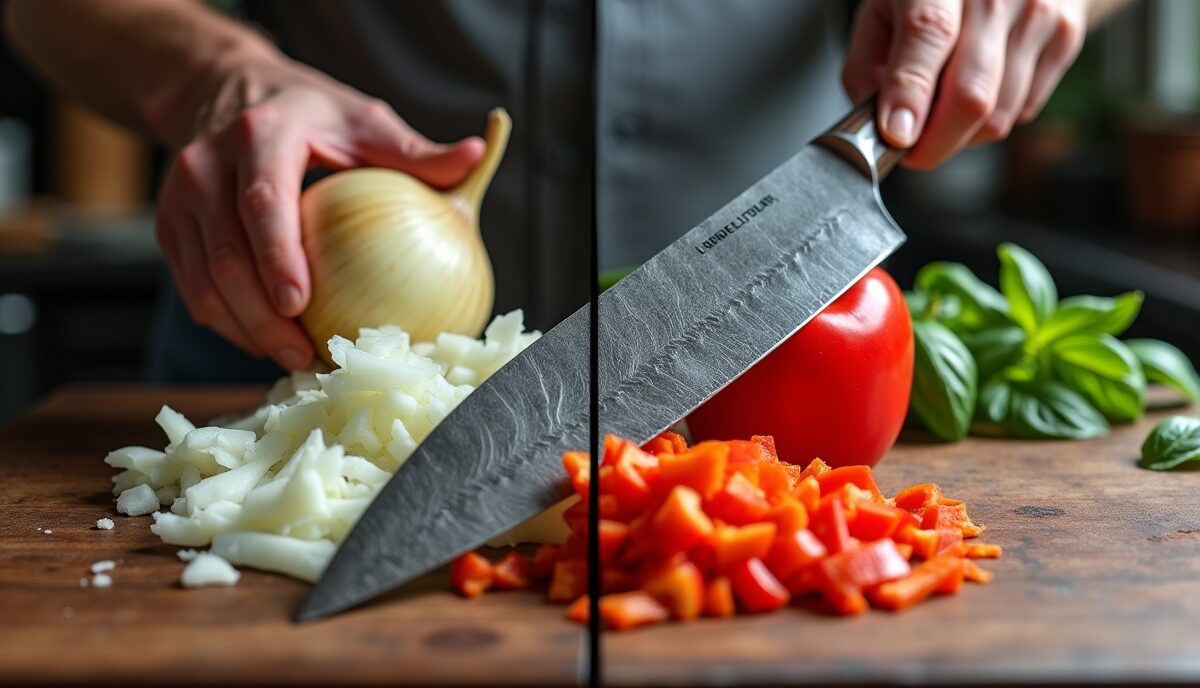
Knife skills mastery was once a distant dream for me, something I only saw on television while I struggled with dull blades and mangled vegetables in my own cramped kitchen. For years, I approached the cutting board with a mixture of boredom and subtle fear. I viewed meal prep as a chore—a slow, tedious process of hacking through onions and bruising delicate herbs. My carrots were uneven, my garlic was smashed rather than minced, and my fingertips were far too close to the edge of the blade for comfort.
Everything changed on a rainy Tuesday afternoon when I finally decided to stop hacking and start learning. I realized that the difference between a frustrated cook and a confident chef isn’t the quality of their ingredients; it’s the relationship they have with their knife. Over the next year, I dedicated myself to specific drills, corrected my grip, and learned the physics of the blade. Today, I want to share that journey with you, so you can achieve your own version of culinary excellence.
The Foundation of Knife Skills Mastery
Before I could move fast, I had to understand the anatomy of my tool. I used to hold my knife like a tennis racket, with my fingers wrapped tightly around the handle. This felt “safe,” but it was actually the reason I had so little control. My hand would tire quickly, and the blade would often wobble as it hit the skin of a bell pepper.
The Pinch Grip: A Revelation in Control
The first thing I learned was the “Pinch Grip.” Instead of clutching the handle, I learned to choke up on the blade. I placed my thumb and the side of my index finger directly onto the “bolster”—the thick part where the metal meets the handle.
Consequently, the knife became an extension of my arm. This grip allows the weight of the knife to do the work. When I first tried this, it felt strange. However, within twenty minutes, I noticed that my cuts were significantly more vertical. I wasn’t fighting the knife anymore; I was guiding it.
The “Claw” Grip: Protecting My Fingertips
The most terrifying part of learning knife skills mastery was the fear of a slip. We have all been there—trying to dice a rolling potato while our fingers are spread flat. To solve this, I practiced the “Claw.”
I learned to tuck my fingertips inward, using my knuckles as a guide for the blade. By keeping the side of the knife in constant contact with my knuckles, I created a physical barrier between the sharp edge and my skin. Now, even if I look away for a second, I know exactly where that blade is. It turned my kitchen from a “danger zone” into a place of rhythmic safety.
Choosing the Right Steel
During my journey, I discovered that you cannot achieve knife skills mastery with a dull, flimsy blade. I spent years using a cheap “mystery metal” knife that I had never sharpened. It was like trying to perform surgery with a spoon.
The Weight of Quality
I eventually invested in a high-carbon stainless steel chef’s knife. The first time I held it, I felt the “heft.” A good knife should feel balanced; if you rest the bolster on your finger, it shouldn’t tip too far forward or backward. This balance reduces wrist fatigue during long prep sessions.
The Sensory Experience of a Sharp Blade
There is a specific sound a truly sharp knife makes as it passes through an onion—a crisp, clean snick. When my knife was dull, it made a heavy thud. Furthermore, a sharp knife doesn’t crush the cells of the onion, which means fewer tears. I learned that sharpening isn’t an occasional chore; it’s a vital part of the craft. I now use a whetstone once a month, feeling the grit of the stone and the vibration of the steel as I hone the edge to a razor-sharp finish.
Daily Drills for Knife Skills Mastery
You don’t become a master by reading; you become a master by doing. I turned my weekly grocery haul into a training camp. If you want to improve your speed and precision, I recommend focusing on these three specific drills.
1. The Onion: The Architect of Precision
The onion is the ultimate test. It is layered, slippery, and round.
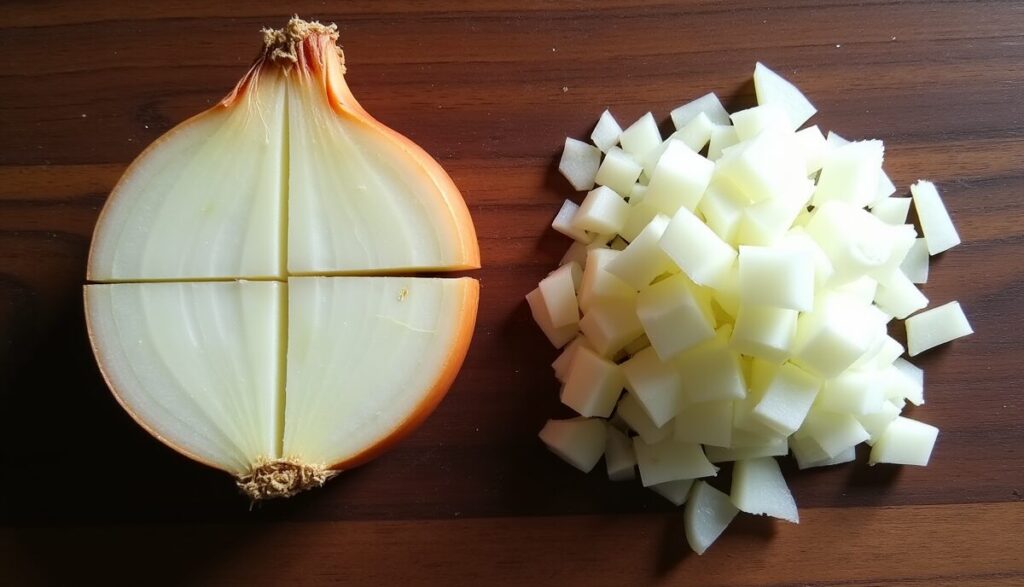
- The Vertical Cut: I learned to cut the onion in half through the root, leaving the root intact to hold the layers together.
- The Horizontal Slice: Carefully, I made two horizontal cuts toward the root.
- The Final Dice: Then, I sliced vertically. The result? A pile of perfectly uniform cubes. Seeing that pile for the first time gave me a surge of pride. It wasn’t just food; it was geometry.
2. The Carrot: Mastering the Baton
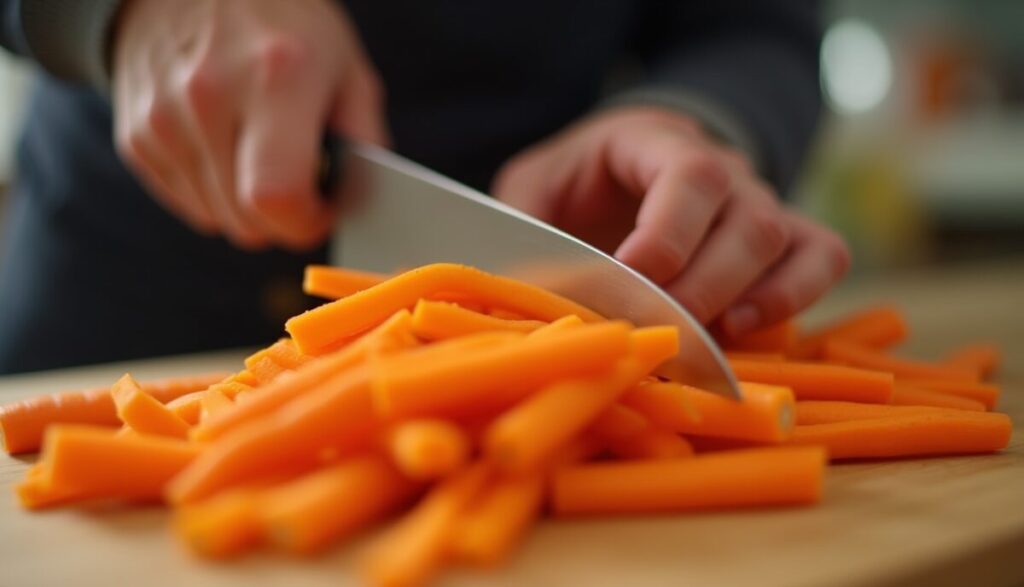
Carrots are hard and prone to rolling. To master them, I practiced the “Julienne.” I would cut the carrot into manageable two-inch planks, then slice those planks into thin matchsticks. Because carrots are so consistent in density, they are perfect for practicing your “rocking motion.” I would focus on keeping the tip of the knife on the board at all times, moving the heel of the knife up and down like a sewing machine needle.
3. The Herb Chiffonade: The Art of the Gentle Touch
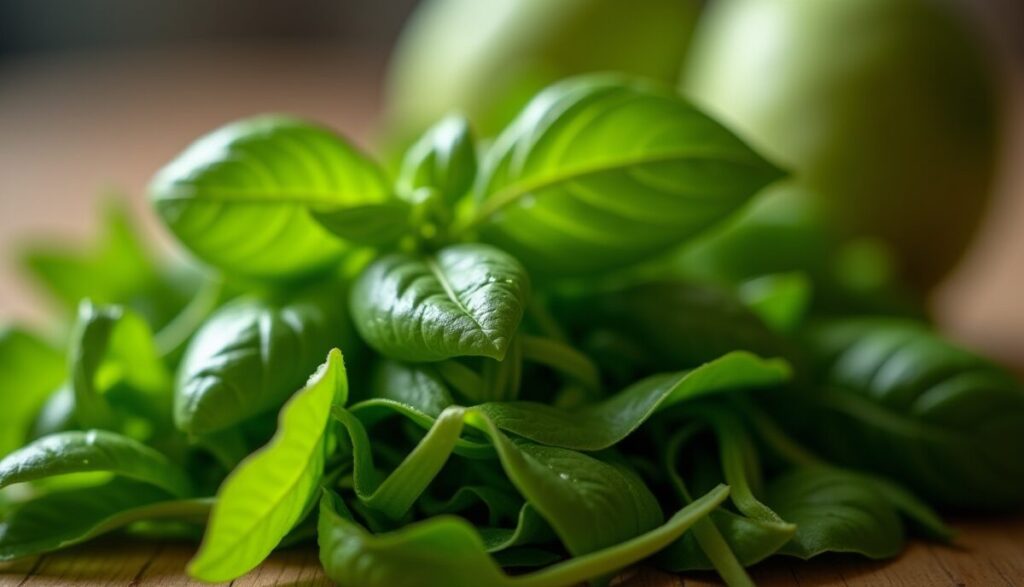
Herbs like basil and mint are delicate. I used to chop them until they turned into a dark, bruised mush. Knife skills mastery taught me the “Chiffonade.” I stack the leaves, roll them into a tight cigar, and use a long, sweeping motion to create thin ribbons. The smell of fresh basil hitting the air as the blade glides through is one of the greatest sensory rewards of the kitchen.
Speed is a Product of Smoothness
One of the biggest mistakes I made early on was trying to go fast. I wanted to look like the chefs on TV, with blades moving in a blur. However, I quickly learned a valuable lesson: Slow is smooth, and smooth is fast.
If you focus on precision and the “rhythm” of the cut, speed will naturally follow. I spent months cutting slowly, focusing on making every dice exactly the same size. One day, I realized I was through a pile of potatoes in half the time it used to take me. I hadn’t tried to go faster; my body had simply learned the efficiency of the movement.
Maintaining the Edge: The Whetstone Ritual
I cannot talk about knife skills mastery without mentioning the whetstone. Honing steels are great for realigning the edge between cuts, but for true sharpness, you need water and stone.
I remember the first time I sat down with my dual-grit whetstone, I felt the cool water on my fingers as I soaked the stone. I learned to hold the knife at a consistent 20-degree angle—about the width of two pennies stacked together. As I pushed the blade across the stone, a gray “slurry” began to form. This slurry is actually microscopic bits of stone and metal working together to sharpen the edge.
When I finally felt the “burr”—that tiny lip of metal that indicates a sharp edge—I knew I had crossed a threshold. Testing the blade on a piece of paper and watching it slide through without a single snag was an incredibly satisfying moment.
The Mental Shift: Prep as Meditation
Perhaps the most surprising part of this journey was the mental change. Meal prep used to be the “boring” part of cooking. I would rush through it to get to the “real” work of sautéing or roasting.
Now, the prep is my favorite part. There is a meditative quality to the repetitive motion of the blade. The sound of the knife hitting the wood, the vibrant colors of the freshly cut vegetables, and the physical connection to the food make me feel grounded. I no longer feel rushed. I feel in control.
Conclusion: Your Journey Starts with One Cut
If you are currently struggling with dull knives and uneven cuts, don’t be discouraged. I was there for years. Knife skills mastery isn’t an overnight achievement; it’s a lifelong practice. Start by correcting your grip. Slow down your movement. Respect your tools.
Eventually, you will find that cooking becomes easier, safer, and infinitely more enjoyable. When you can fly through an onion without thinking about it, you open up a whole new world of culinary possibilities. You aren’t just a cook anymore; you are a craftsman.
I never thought I’d say this, but prep day has become my therapy. There is something deeply grounding about that rhythmic snick-snick-snick of a sharp blade against wood. It’s no longer a chore I rush through; it’s a moment of focus that sets the tone for the entire meal. Once you achieve knife skills mastery, the kitchen stops feeling like a place of “work” and starts feeling like a studio.
The “Villain” Vegetable: What is the one ingredient that still makes you nervous at the cutting board? For me, it was always the rolling butternut squash, but maybe for you, it’s the slippery tomato!