
Table of Contents
I remember standing over a massive pot of beef stew, my heart sinking. I had spent four hours browning the meat, chopping the mirepoix, and simmering it with a bottle of expensive red wine. On paper, it was a masterpiece. But when I lifted the wooden spoon to my mouth for that final taste, it was… flat. It was heavy, dull, and honestly, a bit boring. It tasted like “brown.”
In the past, I would have panicked. I would have added more salt until it was a briny mess, or worse, I would have served it to my guests with a side of apologies. But that was before I understood that cooking isn’t a series of rigid instructions—it’s a delicate balance of four specific elements.
I grabbed a lemon from the counter, squeezed a generous amount of juice into the pot, and stirred. I tasted it again. Suddenly, the flavors exploded. The “heaviness” vanished, the richness of the beef finally stood out, and the whole dish felt “bright.” I hadn’t just fixed a meal; I had mastered the philosophy of flavor.
The Mental Shift: From Following to Creating
For years, I was a “recipe follower.” If a book told me to add a teaspoon of salt, I added exactly a teaspoon. I didn’t trust my own tongue. But the truth is, a recipe can’t know how juicy your tomatoes are or how much moisture is in your salt. Mastering Salt, Fat, Acid, and Heat is about learning to listen to what the food is telling you.
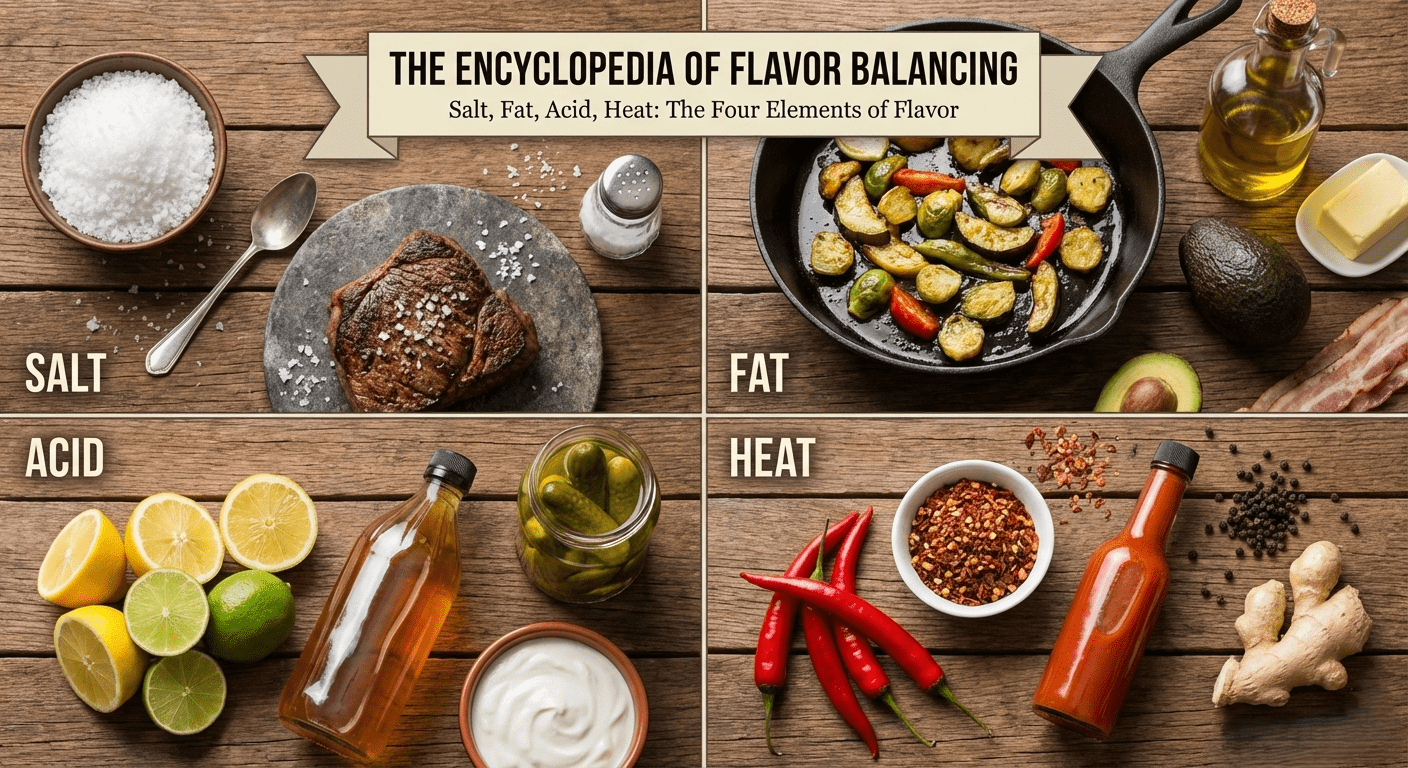
When a dish tastes “off,” it’s usually because one of these four pillars is missing or out of proportion. Here is the breakdown of how I use these elements to transform my cooking every single day.
1. Salt: The Volume Knob
Most people think salt makes things “salty.” In reality, salt is the volume knob for flavor. It suppresses bitterness and enhances the natural aromas of your ingredients. If your food tastes “weak” or “thin,” your first instinct should be salt.
I’ve learned to salt in layers—a pinch on the onions as they sauté, a pinch on the meat before it hits the pan, and a final adjustment at the end.
How I Fix Salt Mistakes:
- The “Flat” Dish: If the flavor is there but it feels “far away,” add a pinch of salt. It brings the flavors to the front of your tongue.
- The Over-Salted Disaster: You can’t physically “remove” salt, but you can dilute it. I’ve saved soups by adding more unsalted stock or water.
- The Distraction Technique: Contrary to the old myth, a potato won’t “soak up” all the salt. The best way to fix over-salting is actually to add Acid or Sugar. They distract your palate and balance the profile so the saltiness isn’t the only thing you taste.
2. Fat: The Carrier of Flavor
Fat is what makes food feel “luxurious.” It coats the tongue and allows flavors to linger longer. Think of fat as the vehicle that carries flavor to your taste buds. Without fat, food tastes “sharp” and unsatisfying.
I used to be afraid of fat, but I realized that a drizzle of high-quality olive oil or a pat of cold butter at the end of a sauce can transform a dish from “cafeteria food” to “fine dining.”
How I Use Fat to Balance:
- Smoothing the Edges: If a sauce feels too aggressive or acidic, fat will round it out. I often add a splash of heavy cream or a dollop of yogurt to spicy curries to make them more approachable.
- The “Mouthfeel” Fix: If a soup feels like “flavored water,” it needs fat. A swirl of pesto or even a bit of toasted nut oil adds the depth you’re looking for.
3. Acid: The Spark of Brightness
Acid is the most neglected element in the home kitchen. It’s the “spark” that cuts through fat and wakes up the taste buds. If a dish tastes “muddy,” “heavy,” or just “too rich,” it almost always needs acid.
I keep a “library” of acids in my pantry: lemons, limes, apple cider vinegar, balsamic, red wine vinegar, and even pickles.
The Magic of the Acid Fix:
- Cutting the Grease: If you’re eating something fried or very fatty (like pork belly), a squeeze of lime acts like a reset button for your palate.
- Rescuing the “Boring” Soup: I’ve had many lentil soups that tasted like dirt (literally). A tablespoon of red wine vinegar at the very end makes the lentils taste “meaty” and vibrant.
- Over-Acidified? If you’ve added too much vinegar and your eyes are watering, balance it with Fat or a tiny pinch of Sugar or Baking Soda. Baking soda is a base; it physically neutralizes the acid and stops the “zing.”
4. Heat: The Transformer
Heat is more than just a stove setting; it’s the element that changes the physical structure of food. It creates the Maillard reaction—that beautiful, flavorful brown crust on a seared steak.
But “Heat” also refers to spice. A tiny bit of chili flake, black pepper, or hot sauce doesn’t just add “burn”; it creates a physical sensation that makes the other flavors feel more intense.
Balancing with Heat:
- Waking up the Palate: If a dish is “too sweet” (like a honey-glazed chicken), a hit of cayenne pepper or ginger will balance that sweetness perfectly.
- Too Much Spice? If you’ve gone overboard with the habanero, remember that capsaicin (the heat in peppers) is fat-soluble. Reach for Fat. This is why we serve spicy wings with blue cheese dressing or spicy tacos with sour cream. The fat literally washes the heat off your tongue.
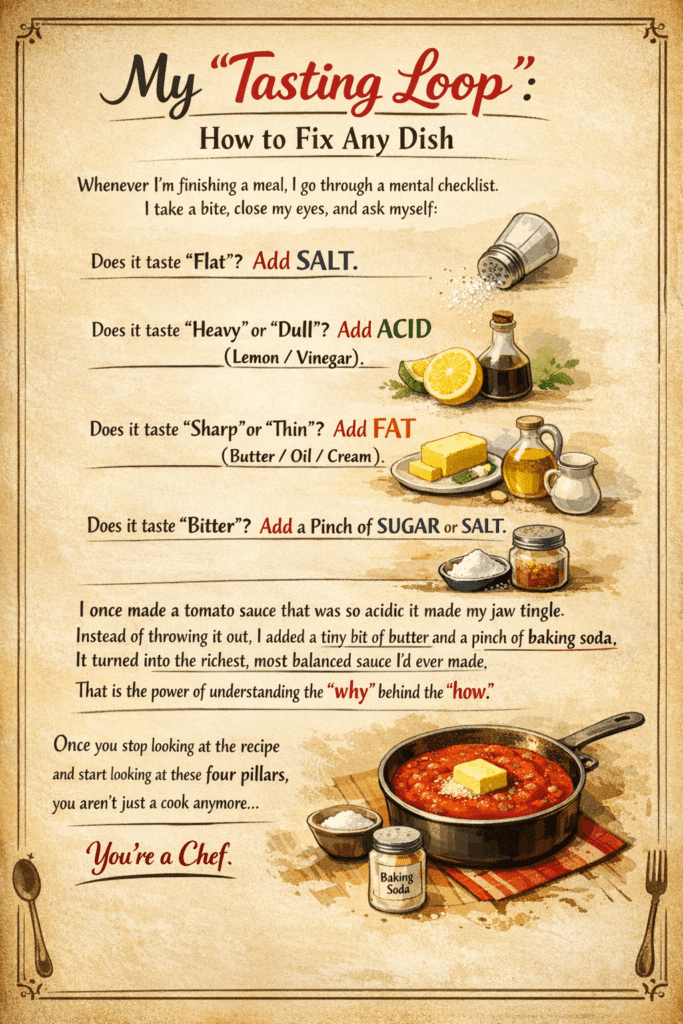
My “Tasting Loop”: How to Fix Any Dish
Whenever I’m finishing a meal, I go through a mental checklist. I take a bite, close my eyes, and ask myself:
- Does it taste “flat”? Add Salt.
- Does it taste “heavy” or “dull”? Add Acid (Lemon/Vinegar).
- Does it taste “sharp” or “thin”? Add Fat (Butter/Oil/Cream).
- Does it taste “bitter”? Add a tiny pinch of Sugar or Salt.
I once made a tomato sauce that was so acidic it made my jaw tingle. Instead of throwing it out, I added a tiny bit of butter and a pinch of baking soda. It turned into the richest, most balanced sauce I’d ever made. That is the power of understanding the “why” behind the “how.”
Once you stop looking at the recipe and start looking at these four pillars, you aren’t just a cook anymore. You’re a chef.
I used to be a slave to the recipe card. If it said “1/2 teaspoon of salt,” I did exactly that—even if the dish still tasted like nothing. Now, I trust my tongue more than the paper. Learning to balance flavors changed my relationship with the kitchen forever; it turned a chore into a creative outlet.
Now, I want to hear from you:
- What was the “disaster” dish that you managed to save at the last minute? What did you add to fix it?
- Which of the four elements do you struggle with the most? (For a long time, I was terrified of adding enough salt!)
What is your “Secret Weapon” acid in the kitchen? Are you Team Lemon Juice or Team Vinegar?
Let me know your flavor-saving tips in the comments below!