

Table of Contents
The “Inbox Zero” philosophy is the only reason I am still sane in an age where my digital life is constantly screaming for my attention. I remember the exact moment I realized my digital clutter was costing me more than just storage space—it was costing me my mental clarity. I was sitting at my desk, staring at a screen filled with open tabs, unread notifications, and a chaotic desktop, feeling an invisible weight pressing down on my chest. I couldn’t focus on a single task because I felt like I was drowning in a sea of digital noise. That afternoon, I decided to stop merely “managing” my files and emails and started architecting a system that would sustain my productivity for years to come.
Why Digital Clutter is a Cognitive Tax
When I talk about the Inbox Zero philosophy, I am not just talking about having an empty folder; I am talking about reclaiming your headspace. Every unread email or unorganized file is an open loop in your brain. Research suggests that our brains are not designed to hold onto dozens of unfinished tasks simultaneously. When I finally cleared my digital workspace, I felt a physical shift. It was as if I had opened a window in a stuffy room. By implementing strict workflows for how I handle information, I stopped the constant anxiety of “what did I forget to do?” and replaced it with a calm, methodical approach to my workday.
Think of your digital environment like your physical office. If you had papers scattered across your floor, half-finished projects on your chair, and a pile of mail blocking your door, would you feel creative? Probably not. You would feel stressed, frantic, and disorganized. Yet, we treat our digital spaces with far less respect. We let thousands of emails sit in our inbox as if they are ghosts haunting our potential. Embracing the Inbox Zero philosophy means acknowledging that digital clutter is a cognitive tax. It drains your battery before you even start your real work.
The Foundation: Sorting Your Digital Chaos
The first step in my journey toward a cleaner digital existence was realizing that I needed to categorize everything. I started by creating a hierarchy that made sense to my specific way of thinking. I separated my active projects from my archive and my reference material. It wasn’t about finding the “perfect” app; it was about building a reliable system. Whether you are using a simple folder structure on your hard drive or a more complex cloud-based project management tool, the logic remains the same. You need a destination for every piece of data that enters your life, and that destination needs to be intuitive.
I began by creating a “Root” folder. Inside, I have four primary categories:
- Active: Things I am working on right now.
- Archive: Things that are completed but might be needed for reference.
- Resources: Templates, guides, and tools I use frequently.
- Waiting: Emails or tasks where I am waiting for someone else to reply.
By forcing every file into one of these buckets, I removed the guesswork. When I download a file, I don’t ask myself “where should this go?” I know exactly where it goes. This simple shift in my workflow has saved me countless hours of searching for lost documents.
Mastering the Inbox Zero Workflow
Achieving Inbox Zero is not about being a perfectionist; it is about making quick, decisive actions. Whenever an email lands in my inbox, I follow a simple rule: delete, delegate, respond, or defer. If it takes less than two minutes, I do it immediately. If it requires more time, I move it to a specific “To-Do” folder. By treating my inbox as a transit hub rather than a storage locker, I ensured that nothing ever got lost in the shuffle.
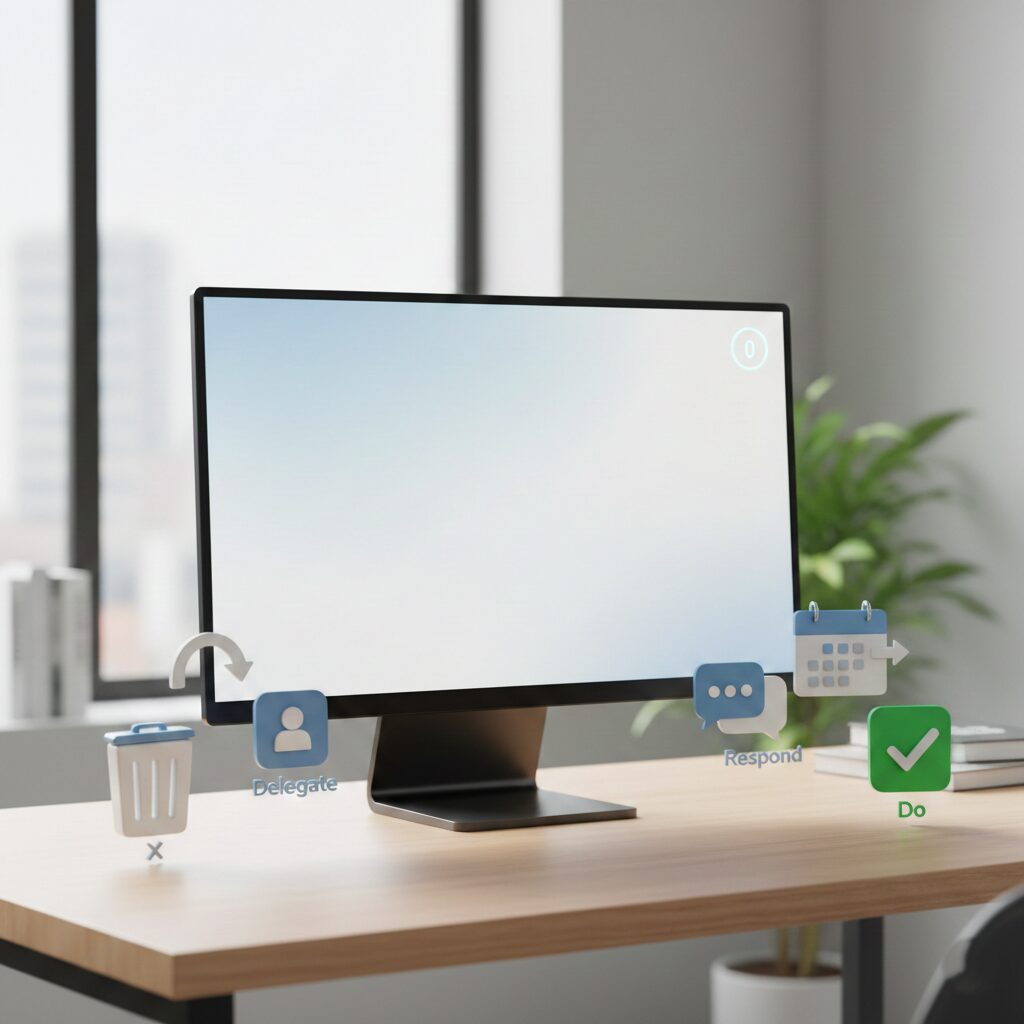
This process requires bravery. You have to be comfortable hitting the delete key. Most of the things in our inbox do not need our attention; they are remnants of past conversations or automated notifications that we no longer need. I started by unsubscribing from every newsletter that didn’t bring me joy or professional value. If it wasn’t a “hell yes,” it was a “goodbye.” My inbox transformed from a source of stress into a clean, empty canvas that I could control.
The Art of Notification Management
Another layer of my digital architecture involves the way I interact with notifications. I used to be a slave to the “ping.” Every time a message appeared, I would lose my focus. I finally decided to turn off almost all notifications on my desktop and mobile devices. If a message is truly urgent, someone will call me. Otherwise, it can wait until I am ready to batch-check my communications.
By batching my email time—checking at 10:00 AM, 1:00 PM, and 4:30 PM—I reclaimed hours of deep work time. I stopped being reactive and started being proactive. My brain stopped jumping between tasks, allowing me to enter a flow state much faster. This is the secret to getting more done with less effort. You aren’t working harder; you are working with clearer intentions.
Architecting Your Digital Future
You don’t need the latest software to master your digital life; you need a consistent philosophy. As I look back on how much more I have accomplished since adopting these habits, I realize that the tools are secondary to the intent. By creating systems that handle the incoming flow of information, you create the space you need to produce your best work.
If you find yourself overwhelmed, start small. Clear your desktop. Unsubscribe from the newsletters you haven’t read in weeks. Build your digital architecture one step at a time, and watch as your stress begins to dissipate. Remember, your digital life should serve you, not the other way around. You are the architect of your own focus. Take back control, keep your space clean, and watch your productivity soar.
Maintaining the System Over Time
Systems break down if they aren’t maintained. I have a “Weekly Review” every Friday afternoon. During this time, I clear out my downloads folder, archive completed projects, and ensure my inbox is ready for the following week. This ritual is essential. It prevents the slow creep of clutter from returning. It is a moment for me to look back at what I accomplished and prepare for the road ahead.
You might feel that this takes too much time, but I assure you, it takes far less time than the hours wasted looking for lost files or re-reading the same emails over and over. By investing thirty minutes a week into your digital infrastructure, you save yourself countless hours of frustration.
Why This is the Ultimate Productivity Hack
We live in an era of constant distraction. The Inbox Zero philosophy is my anchor in the storm. By limiting the number of inputs I allow into my life, I protect my most valuable asset: my attention. When you have a clear digital workspace, you have a clear mind. When you have a clear mind, you can solve bigger problems, be more creative, and live a more meaningful life.
I challenge you to start today. Pick one folder. Clear it out. Delete the junk. Organize the rest. Feel the relief of having control over your digital environment. It isn’t about the technology; it is about the peace of mind you gain when you finally take charge of your digital life.
We’ve talked about the big picture, but let’s get granular. If you could delete or automate just ONE thing in your digital workspace by the end of today, what would it be? Tell me your target, and check back in a few hours to tell us if you actually did it!