Table of Contents
I used to treat sleep like a chore—an inconvenient pause button I had to press before I could get back to my “real” life. I’d stay up late, blue-light hitting my retinas, wondering why I felt like a zombie by noon the next day. It wasn’t until I hit a wall of burnout that I realized the truth: you spend a third of your life asleep, yet most of us have no idea how to optimize that time. Fixing my sleep wasn’t just about feeling rested; it was about fixing my entire life. When I finally treated my sleep cycle as a non-negotiable performance pillar, everything else—my focus, my mood, and my energy levels—transformed. perfect sleep.
The Biology of the Sleep-Wake Cycle
To understand why you’re tired, you have to understand your internal clock. Your body runs on a circadian rhythm—a roughly 24-hour cycle that dictates when you feel alert and when you feel drowsy. Think of this rhythm as a finely tuned orchestra that requires a conductor. That conductor is light. The moment light hits your eyes in the morning, your body begins a complex cascade of hormonal signaling. It suppresses melatonin (the sleep hormone) and initiates cortisol (the alertness hormone). When we mess with this signaling by staying in dark rooms or staring at screens late at night, we confuse the conductor. The orchestra plays out of tune, and you pay the price in grogginess.
The Pillars of Circadian Health
The science of perfect sleep rests on three pillars: light, temperature, and consistency.
First, Light: You need bright, natural light within the first hour of waking up. This is the “circadian anchor.” It tells your brain exactly when the day begins.
Second, Temperature: Your body needs to drop its core temperature to initiate deep sleep. This is why a cool room is essential. If your bedroom is too warm, your body fights to stay awake, fragmenting your rest.
Third, Consistency: This is the one most people hate to hear, but it is the most important. Your body craves a predictable schedule. Going to bed at the same time—even on weekends—trains your brain to anticipate sleep, making it easier to drift off without the struggle.
Architecting Your Nightly Routine
I’ve spent years refining my own routine, and it isn’t about expensive gadgets. It’s about building a transition period. I call this my “buffer zone.” One hour before I intend to be asleep, I begin the process of shutting down my system. I dim the lights, put my phone in another room, and engage in “low-arousal” activities. I might read a physical book, perform some light stretching, or journal. This buffer zone signals to my nervous system that the high-stress demands of the day are over.
By the time I hit the pillow, my heart rate has lowered, my mind has quieted, and my body is naturally ready to drift off. It is the antithesis of the typical modern habit of scrolling through social media until your eyes sting.
Why Sleep Quality Impacts Every Facet of Life
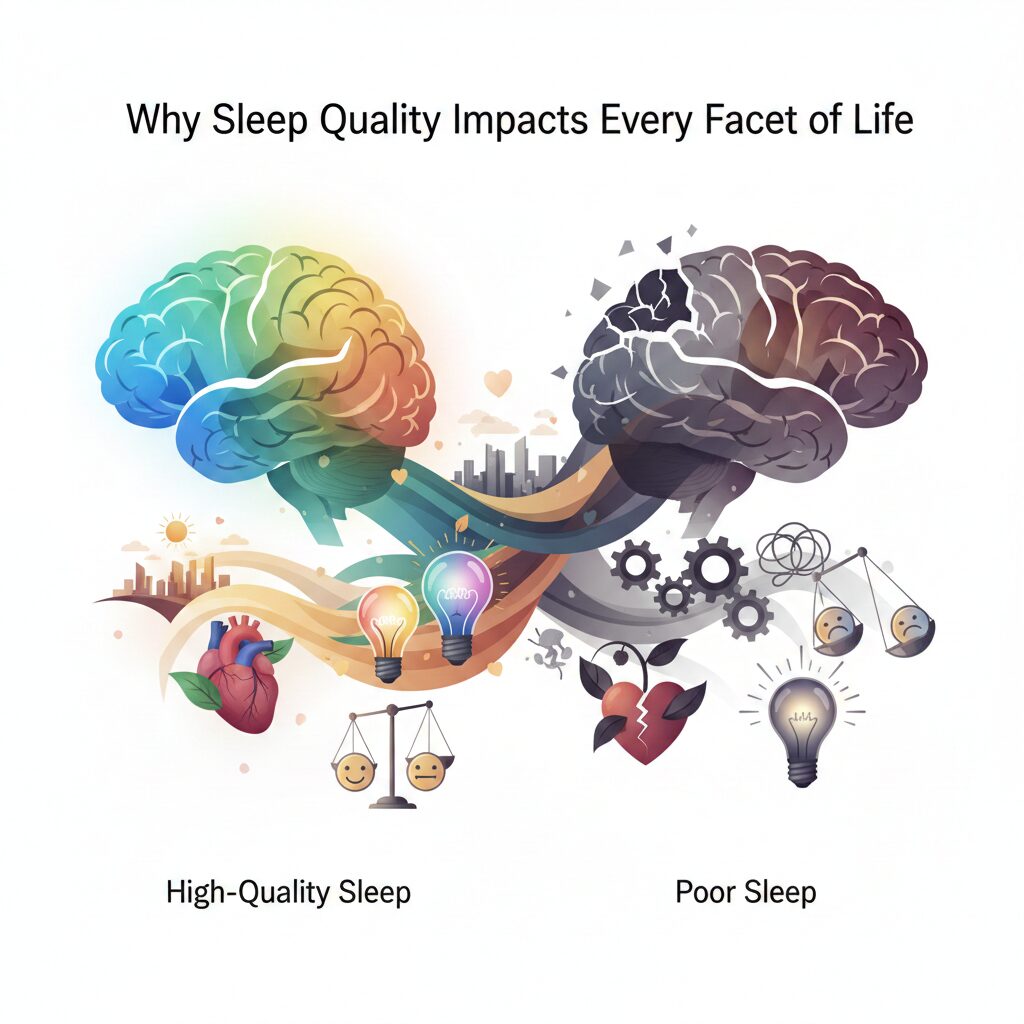
When you sleep well, your brain performs a biological “housekeeping” routine. It clears out metabolic waste products that build up during the day. This is why sleep is the ultimate performance enhancer. I noticed that when I optimized my sleep, my decision-making became sharper, my emotional regulation improved, and my physical recovery from exercise accelerated. You aren’t just sleeping; you are actively repairing your cellular health.
Overcoming the Common Sleep Thieves
We all face sleep thieves. For me, it was caffeine intake after 2:00 PM. I didn’t realize that caffeine has a half-life that stays in your system long into the night, preventing you from entering the deep, restorative stages of REM sleep. Alcohol is another deceptive thief; it might help you fall asleep, but it ruins the quality of your sleep, leading to that mid-morning crash. Addressing these habits was the turning point in my journey toward consistent, high-quality rest.
The Long-Term Impact of Rest
This isn’t about a single “good night’s sleep.” This is about building a lifestyle that supports your biology for decades. By respecting your internal clock, you aren’t just avoiding burnout—you are extending your cognitive longevity. I feel more vibrant, focused, and capable today than I did a decade ago, simply because I stopped treating sleep as an afterthought. You have the power to architect your own recovery. Start tonight. Anchor your rhythm, cool your room, and reclaim the third of your life you’ve been ignoring.