Table of Contents
The Scream of Gezani and the Shift in Aid
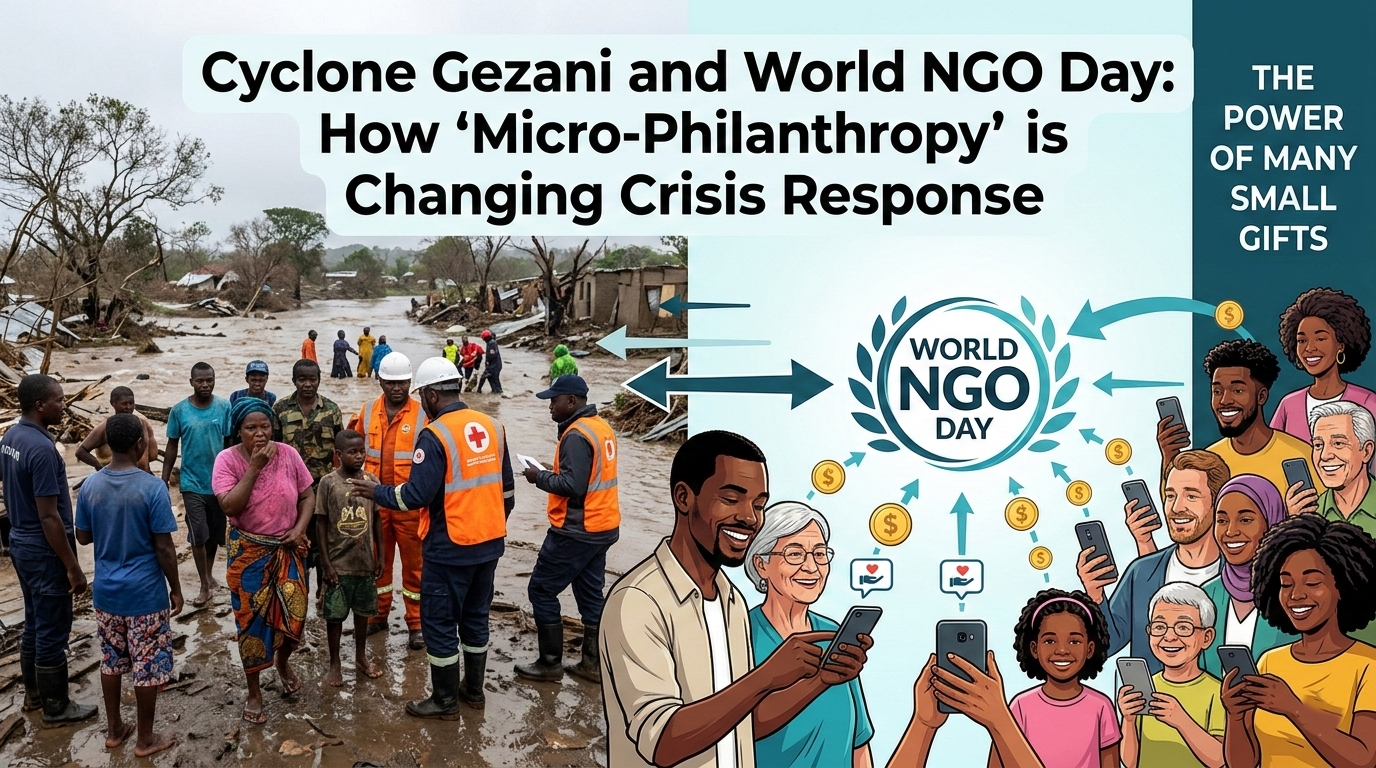
The wind didn’t just howl; it screamed. On February 10, 2026, I watched the barometer in our coastal office plunge like a stone. Outside, Intense Tropical Cyclone Gezani transformed the Indian Ocean into a lethal weapon. This wasn’t just another storm; it was a monster that flattened 75% of Toamasina’s buildings in a single night. As I huddled under a reinforced beam, I realized that the old way of helping was dead. We could no longer wait weeks for a slow-moving global agency to ship crates from a warehouse in Dubai. Consequently, we needed micro-philanthropy in crisis response that moved at the speed of the wind itself.
The Speed of Decentralized Relief
By the time the eye passed, our roads had turned into rivers. In the old days, I would have spent the “Golden Hour” filling out paperwork for a central committee. Instead, my phone started buzzing. While the rain still lashed the roof, decentralized disaster relief protocols were already moving digital tokens into our local wallets. We bypassed the suits and the bureaucracy entirely. Furthermore, this was the first time I felt the power of peer-to-peer aid networks in my own hands. We weren’t just victims waiting for a “check in the mail” that might never come.
I saw a neighbor, a local doctor, receive a notification on his cracked screen while he was still bandaging a child’s arm. A donor in Seoul had sent fifty dollars. Within minutes, that digital credit let him buy a crate of clean water from a local supplier who had a generator running. Specifically, this wasn’t a “Black Box” donation lost in administrative fees. This was survival happening in real-time, right in the mud.
The Death of the ‘Black Box’ NGO
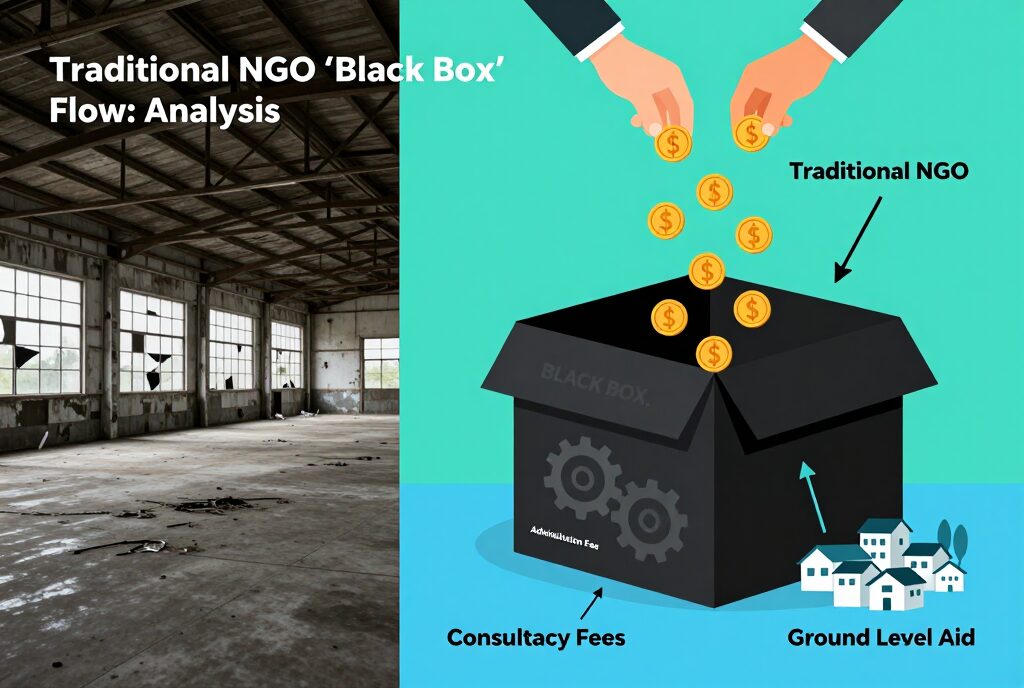
For years, I’ve sat in community meetings where the frustration was thick enough to taste. People here in Madagascar are tired of the “Black Box.” You know the model—those massive global NGOs where you drop a donation into a dark hole and hope for the best. I’ve seen the reports where $0.80 of every dollar gets chewed up by “consultancy fees” and slick marketing in London. When the roof of your clinic is lying in a rice paddy, you don’t care about a billboard in Times Square. Specifically, you care about the bag of cement that never arrives.
This crisis of trust is why things felt different when Gezani hit. We’ve hit a breaking point with the old model. I watched my friends stop giving because they were tired of the “misinformation” and the lack of proof. They wanted to know if their $50 was buying a bag of rice in Toamasina or just paying for a CEO’s business class flight. Therefore, radical transparency in NGOs isn’t just a buzzword anymore—it’s the only way we survived this storm.
Building Trust Through Radical Transparency
We now operate like a glass house. I stood in the mud and showed a local farmer how to track a transaction on a basic smartphone. We are turning every cent into a data point that anyone can see on a public ledger. Consequently, this isn’t just about being “honest”; it’s about staying alive. In a world where people don’t know what to believe, we chose to show them everything. When the donor sees the receipt for the solar lanterns I just handed out, the “Black Box” finally stays buried in the debris.
How Disaster DAOs Empower Local Leaders
The most “2020s” part of the Gezani response wasn’t a helicopter. It was a DAO—a Decentralized Autonomous Organization. Imagine a relief fund that doesn’t have a mahogany boardroom in Geneva. Instead, it’s a set of “Smart Contracts” living on a blockchain. This is how the Gezani Relief DAO kept us moving when the power lines were down. It feels like a living, breathing thing that reacts as fast as the storm surge.
When a donor in Seoul sends a few dollars, that money doesn’t sit in a holding account for three weeks. It doesn’t wait for a committee to get back from lunch. Instead, it flips instantly into stable-tokens. These digital coins don’t care if our local currency is crashing or if the banks are underwater. This instant fluidity is the heartbeat of our survival right now. I’ve seen it happen on a mobile screen in a tent—money moving across the world in the time it takes to boil a pot of water.
Direct Support for Local Markets
The “Members” of this DAO aren’t suits; they are us. They are the doctors I know, the community leaders, and the local guys with the trucks. We are the verified local actors. Instead of waiting for a shipping container of generic blankets we don’t need, the DAO sends digital value straight to our phones. We then go to the local markets that are still standing and buy what actually helps. Ultimately, this keeps our own shops in business instead of crushing them with “dumped” foreign goods.
To get the next round of funding, we simply show the work. We upload a time-stamped, geolocated photo of the medicine or the food being handed out. A donor halfway across the globe gets a ping on their phone: “Your $20 just bought 10 liters of clean water in Toamasina.” They see the photo. They see the map. This “Digital Hive Mind” of empathy is a peer-to-peer network of human survival that never sleeps. It’s not charity anymore; it’s a partnership.
The ‘Toamasina Corridor’ Case Study
On February 10, 2026, I saw the skyline of Toamasina literally dissolve. Cyclone Gezani hit us as a Category 4 monster with gusts screaming at 250 km/h. By the time I could safely step outside the next morning, 75% of the city’s infrastructure was gone. The hospital roof was shredded, and our main port was a graveyard of twisted metal. In the old world, this is where the silence begins—the long, agonizing wait for a central committee five thousand miles away to “approve” a budget.
But this time, the “Toamasina Corridor” didn’t wait. Because we had already set up decentralized disaster relief protocols, the first wave of aid wasn’t a ship; it was a data stream. While the RN2—our only main road—was blocked by downed power poles and ancient uprooted trees, our local responders were already “funded.” I watched a logistics lead use his phone to secure a private boat from a nearby unaffected village. He didn’t need to call a headquarters in Europe; the peer-to-peer aid network gave him the digital tokens to act instantly.
Real-Time Impact in the Golden Hour
This is the “Golden Hour” in action. By the time the official high-level delegations arrived on February 12, we had already cleared the hospital helipad and secured fuel for the emergency generators. We did it using micro-philanthropy in crisis response. Small, $5 donations from people who saw our live updates were hitting our wallets in real-time. Consequently, it felt like the world was finally plugged directly into our survival, cutting out the middleman when every second literally meant a life saved in the wreckage.
Agentic AI and the ‘Zero-Margin’ Future
As I look past the immediate wreckage of Gezani, my focus has shifted to the “Zero-Margin Aid” model. I am tired of seeing good money evaporate in the heat of a crisis. My goal for this next decade is simple: strip every ounce of waste from the machine. We are now using “Agentic AI” to handle the heavy administrative lifting that used to require massive, air-conditioned offices. This isn’t just about robots; it’s about making sure your help actually reaches the person who is bleeding.
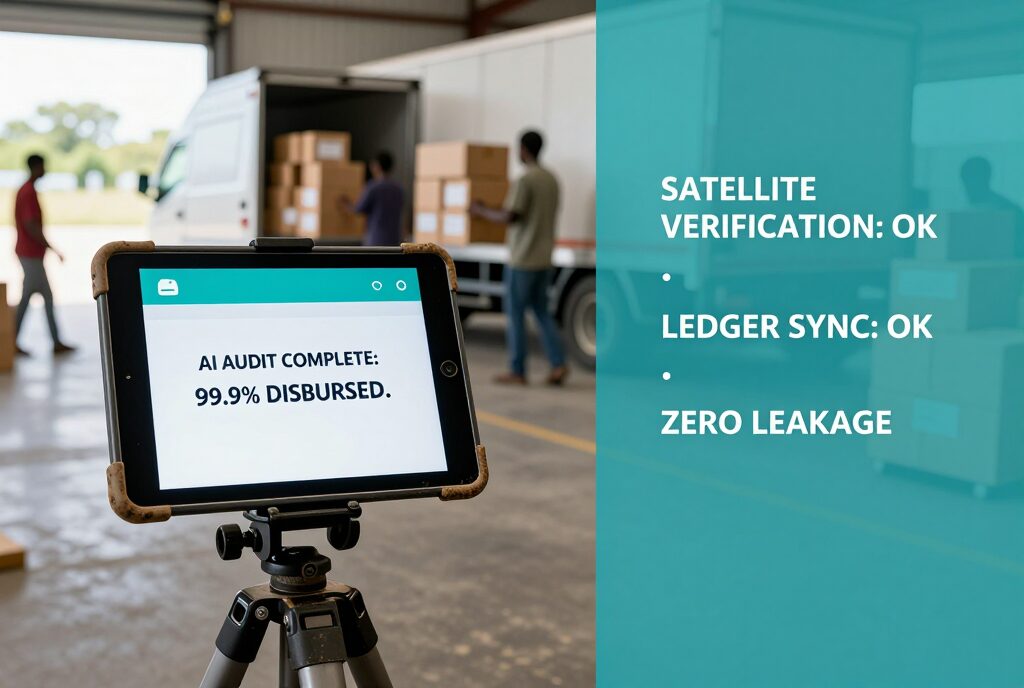
By automating our accounting and logistics mapping, we are cutting overhead to the bone. I want to build a world where 99.9% of your dollar gets to the mud. In this vision, autonomous AI agents handle the “proof-of-delivery” by cross-referencing satellite imagery with the geolocated photos our local teams upload. I watched one of these agents verify a shipment of medical tents in seconds—a process that used to take a human auditor three days and four signatures.
Starving the Scammers with Data
This radical transparency in NGOs isn’t a tech flex; it is a shield for us. It starves the scammers who always crawl out of the woodwork after a storm. When you can see the exact ledger entry for a shipment of antibiotics, “blind faith” becomes “verified impact.” We are building a global “Immune System” where the response is as fast as the internet. We aren’t just reacting anymore; we are outrunning the disaster.
Sovereignty and the New Immune System
This shift isn’t just about the tech in our pockets; it’s about Sovereignty. For too long, I saw disaster relief treated like a top-down “gift” that left us feeling like passive recipients of someone else’s pity. The new model of micro-philanthropy in crisis response treats the survivor as the lead architect. We are finally trusting the people of Madagascar to know their own needs better than someone sitting in a boardroom five thousand miles away.
Whether it is solar lanterns or simple plywood, the choice stays right here on the ground. This is the true spirit of World NGO Day 2026: recognizing that the most effective “Organization” is the one that already exists within the community. We are just the boots on the ground, empowered by a global network of human hearts and high-speed data.
A Triumph of Human Ingenuity
Cyclone Gezani was a tragedy that took at least 73 lives and left thousands of my neighbors without a roof. But the response I saw was a triumph. We aren’t just celebrating an institution today; we are celebrating a global, decentralized act of love. We are building an immune system for the planet, and for the first time, it feels like it’s actually working.