
Table of Contents
The Quiet Revolution
In a world that demands 24/7 connectivity and high-speed performance, the most radical thing you can do is sit down, turn off the notifications, and spend an hour tending a virtual garden. We are witnessing a “quiet revolution” in gaming. While the industry continues to push the boundaries of hyper-realistic action and high-stakes competition, a parallel movement has taken root: the rise of Cozy Culture.
Cozy gaming isn’t just about cute graphics or farming simulators. It is an intentional act of resistance against the “hustle culture” that defines so much of our digital lives. By prioritizing calm, creativity, and connection over aggression and winning, cozy games have become an essential tool for mental health in 2026. They are the digital equivalent of a Sunday afternoon walk or a warm cup of tea—a necessary space to reset, decompress, and simply be.
Why Our Brains Crave “Cozy”
In 2026, the science is clear: our brains are not designed for the constant “fight-or-flight” state triggered by modern digital life. When we are bombarded with notifications, high-stakes deadlines, and the relentless pace of social media, our nervous systems remain in a state of chronic activation. Cozy gaming offers a potent, research-backed antidote to this overload.
The “Nervous System Exhale”
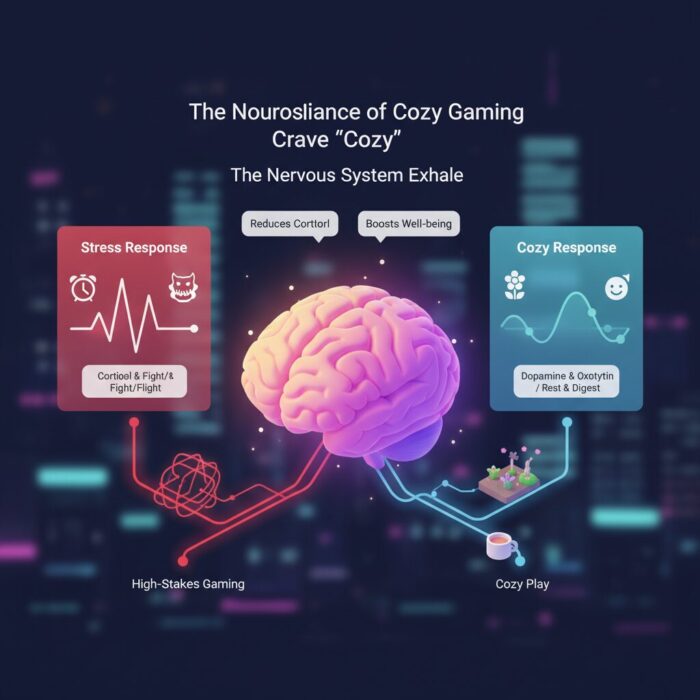
Cozy games are effectively “digital sanctuaries.” Research consistently shows that engaging in low-stakes, repetitive, and pleasant tasks—like organizing a virtual inventory or tending to a garden—can lower heart rates and reduce cortisol levels, sometimes as effectively as 20 minutes of formal mindfulness meditation.
When you play a game where the world responds gently to your efforts, you activate your brain’s reward system in a healthy, controlled way. It’s a “nervous system exhale.” You are moving from a state of reactive stress to a state of calm, intentional engagement.
Key Psychological Drivers of Cozy Play
- The Power of Agency: In our daily lives, many of us feel like we are constantly reacting to external demands. Cozy games flip the script, giving players complete control over their environment and pace. This sense of autonomy is a core pillar of psychological well-being.
- Tactile Grounding: Even in a digital space, the “tactile” nature of these games—the rhythmic clicking of a controller, the satisfying visual feedback of a completed task, or the ambient soundscapes—acts as a grounding technique. It pulls your focus away from abstract, looping worries and anchors you in the immediate, pleasant present.
- Predictable Structure: Many cozy games provide a gentle, predictable routine. For many people—especially those navigating neurodivergence like ADHD or autism—this predictability offers a rare, safe space to practice habits and self-regulation without the judgment or high-stakes failure modes found in traditional games.
The goal of cozy gaming isn’t just “distraction.” It is about giving yourself permission to enter a state of playful presence. You aren’t just “killing time”; you are actively curating your mental environment to allow for rest, healing, and creativity. By lowering the stakes, these games paradoxically raise the benefits, proving that often, the smallest, gentlest actions have the most profound impact on our long-term resilience.
The Anatomy of a Cozy Game
If you’ve ever wondered why tending to a virtual garden feels like a deep exhale, you’re experiencing the deliberate architecture of a “cozy game.” These titles aren’t just accidental havens; they are meticulously engineered to minimize friction and maximize emotional safety.
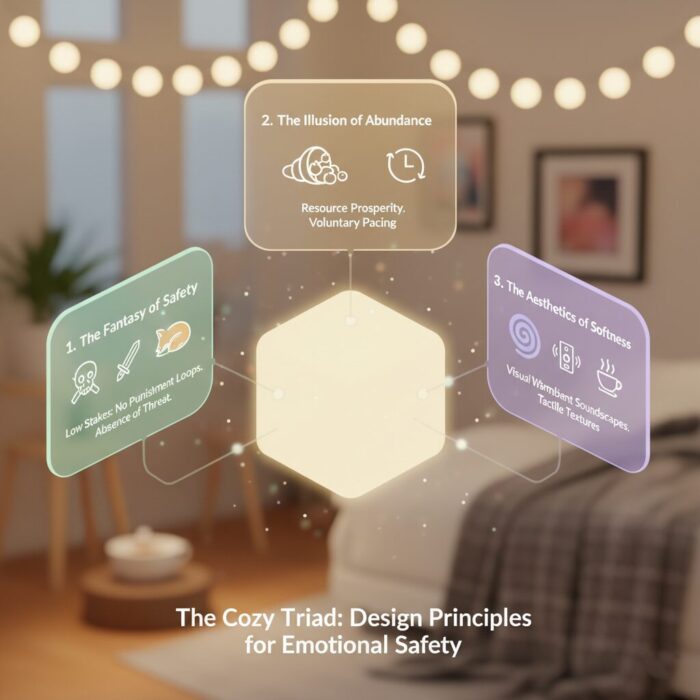
In 2026, designers have codified the “Cozy Triad”—three core pillars that transform code into comfort.
1. The Fantasy of Safety
At the heart of every cozy game is the removal of the “punishment loop.” Traditional games often rely on high-stakes failure—death, losing progress, or being blocked by insurmountable difficulty. Cozy games reject this.
- Low Stakes: If you forget to water your crops, they simply pause in growth rather than wither. If you fall, you’re placed gently back on the path.
- The Absence of Threat: You won’t find sudden jump scares or time-limited “survive or die” scenarios. The world is designed to be a refuge where you are the protagonist of your own comfort, not a target for digital adversaries.
2. The Illusion of Abundance
Cozy games are fundamentally about “having enough.” They tap into a psychological sense of security by ensuring that nothing is pressing, lacking, or imminent.
- Resource Prosperity: Whether it’s a bountiful harvest, an overflowing inventory of beautiful items, or simply the luxury of time, the world provides.
- Voluntary Pacing: These games allow for efficiency if you want to be efficient, but they never force it. You can finish the game in a week or a year; the world waits for you. This lack of pressure shifts the focus from “beating the game” to “experiencing the world.”
3. The Aesthetics of Softness
This is the “sensory hug” of the genre. Softness is a deliberate design choice that lowers the player’s physiological arousal, moving the brain into a state of calm alertness rather than frantic reactivity.
- Visual Warmth: Designers favor low-contrast palettes, gentle color gradients, and tactile, nature-inspired environments that feel hand-crafted.
- Ambient Soundscapes: Music and diegetic sounds—the rustle of leaves, the crackle of a campfire, or soft piano keys—are designed to ground the player, transforming a digital device into a space of intimacy.
These design choices aren’t just about making things “cute.” They are about lowering the barrier to entry, welcoming players of all skill levels, and providing a space where human creativity and nurturing instincts can flourish without the “noise” of traditional, aggressive game loops.
Creating Your Own Cozy Haven
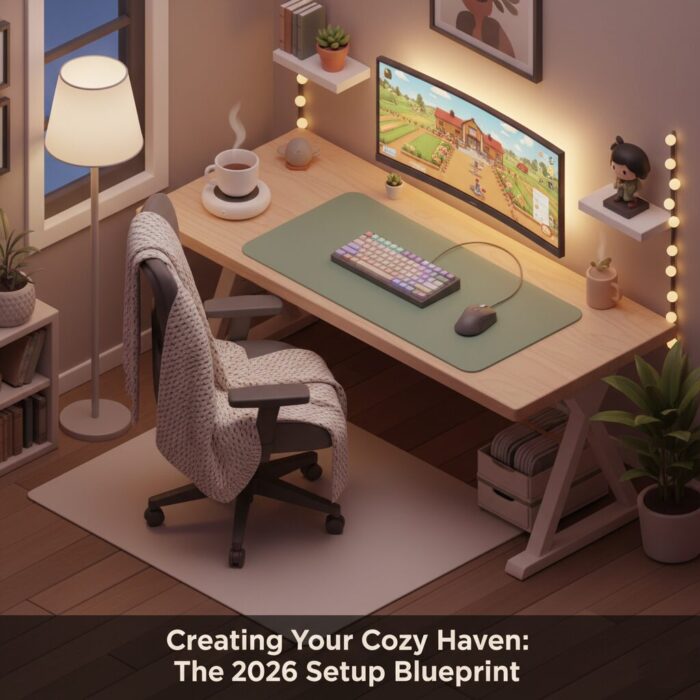
In 2026, a “Cozy Haven” is more than just a desk with a few fairy lights—it is a carefully curated ecosystem designed to minimize physical strain and maximize emotional restoration. The goal is to create a space that feels like a physical extension of your own calm.
The Foundation: Ergonomics for Longevity
You cannot fully embrace “slow gaming” if you are physically uncomfortable. Ergonomics is the invisible layer that makes your haven sustainable.
- The “90-Degree” Rule: Your chair, desk, and monitor height should be calibrated so your elbows rest at a 90-degree angle, your feet are flat on the floor, and your monitor sits at eye level. This prevents the “tech-neck” and wrist fatigue that often cut gaming sessions short.
- Invest in Support: A high-quality chair with adjustable lumbar support is the most important piece of “cozy” gear. If a traditional gaming chair feels too rigid, look for high-end ergonomic office chairs that provide the same support with a more inviting, fabric-focused design.
Sensory Design: Layering the Atmosphere
A cozy space should engage the senses in a way that signals “rest” to your brain.
- Ambient “Zoning”: Instead of one harsh overhead light, use “zones” of light. Use bias lighting (strips behind your monitor) to reduce eye strain, a warm-toned desk lamp for focused tasks, and soft floor lighting to ground the space.
- Tactile Textures: Integrate materials that invite touch—a soft, oversized desk mat, a knitted blanket draped over your chair, or a plush seat cushion. These textures break up the sterile look of cold plastic and metal hardware.
- Curated Clutter: A “cozy” room isn’t an empty one. Personalize your space with items that bring you joy—shelves filled with collectibles, a small plant, or art that reflects your aesthetic. The key is balance; keep your high-traffic surface areas (like the mouse/keyboard zone) clean, while using your peripheral space to add personality.
Essential “Cozy Tech”
- Quiet Peripherals: Swap clicky, loud mechanical switches for “silent” or “tactile-quiet” switches. The difference in sound—from a sharp “clack” to a soft “thump”—is profound for maintaining a peaceful environment.
- Cable Management: Nothing disrupts a cozy mood faster than a tangle of cords. Use under-desk trays and velcro sleeves to tuck cables away, creating a “clean” look that reduces visual noise.
- The “Warm” Factor: Accessories like a mug warmer (to keep your tea or cocoa at the perfect temperature) or a small, quiet humidifier can subtly elevate the comfort level of your gaming sessions.
The Social Side of Slow Gaming
In the early days of gaming, “social” meant competing on a leaderboard or shouting over a headset in a high-intensity shooter. In 2026, the social landscape of gaming has undergone a paradigm shift. We’ve traded the dopamine hit of “winning” for the oxytocin hit of collaborative creation.
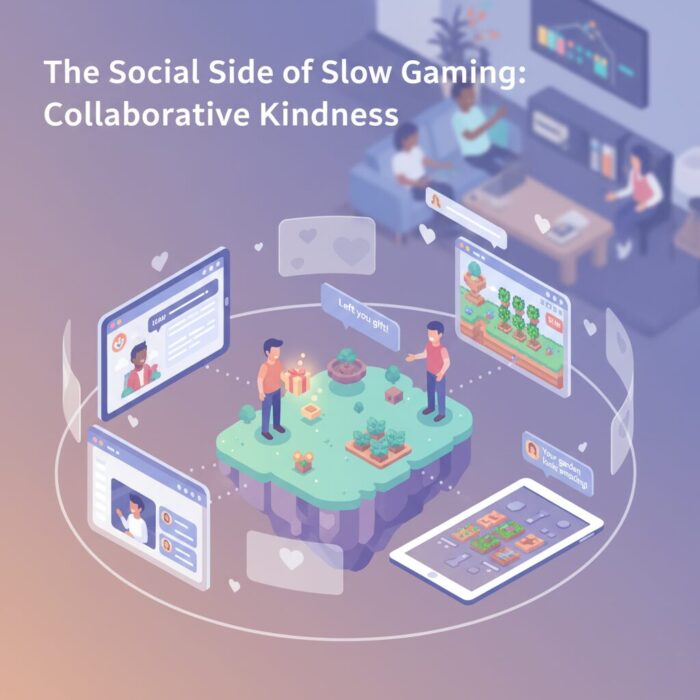
The social side of “slow gaming” isn’t about proving your skill; it’s about sharing your space.
The Rise of “Kindness Communities”
Cozy games have become the foundation for a new type of digital community. Platforms like Discord and dedicated in-game social hubs are no longer dominated by trash-talking; instead, they are archives of shared tips, island tours, and gift-giving.
- Asynchronous Connection: One of the most beautiful aspects of these communities is that you don’t need to be online at the same time to connect. Leaving a gift on a friend’s virtual porch or helping them water their digital crops creates a bond based on mutual care rather than direct conflict.
- Creative Collaboration: Many cozy games now function as “digital canvases.” Players use them to host virtual book clubs, movie nights, or collaborative art projects. We aren’t just playing games anymore; we are co-authoring digital experiences.
Why “Kindness” is the New Competitive Advantage
These communities thrive because they lack the “coordination tax” of competitive gaming. There is no anxiety about losing rank or letting your team down. When the pressure to perform is removed, social interaction becomes genuine.
- Mentorship over Competition: In these spaces, experienced players don’t gatekeep; they curate resources. They create “getting started” guides for newcomers, share rare crafting recipes, and host events that celebrate the milestones of others.
- Emotional Support Networks: It sounds surprising, but these low-stress environments often become the most reliable social support networks for players. Because the games themselves encourage empathy and patience, those traits naturally bleed into the community interactions.
Navigating the “Digital Loneliness” Epidemic
In 2026, digital loneliness is a pervasive challenge. Slow gaming provides a “low-friction” social experience—a way to be with others without the taxing social performance required by traditional social media or high-stakes multiplayer games. It is the digital equivalent of a “third place”—a neutral, welcoming ground where you can interact at your own pace and feel a genuine sense of belonging.
The 2026 “Cozy Radar” and Building Your Library
In 2026, the challenge isn’t finding a cozy game—it’s curating a library that actually restores you, rather than just adding to your digital backlog. As we’ve seen, the genre has expanded from simple farming sims to complex, narrative-driven experiences that prioritize emotional depth.
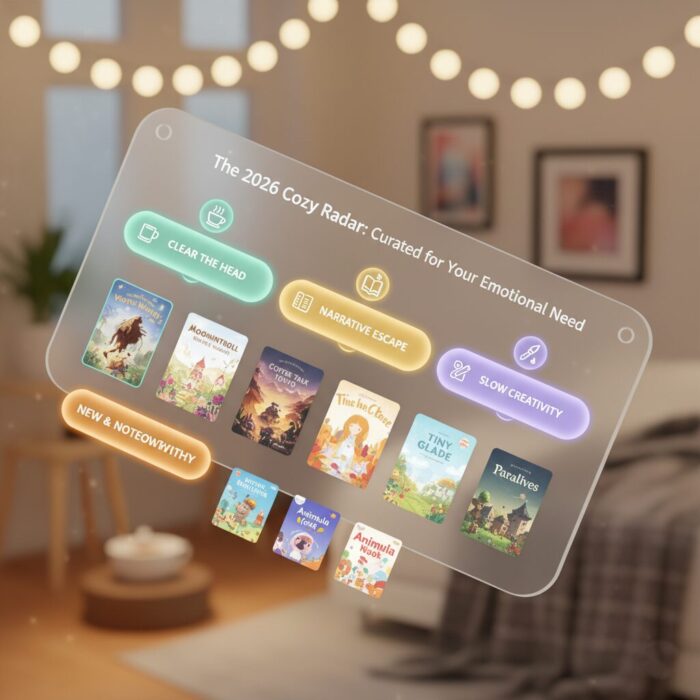
Building a library that serves your mental health requires shifting from “collector mode” to “curator mode.” Here is your 2026 blueprint.
Curating for Your “Emotional Need”
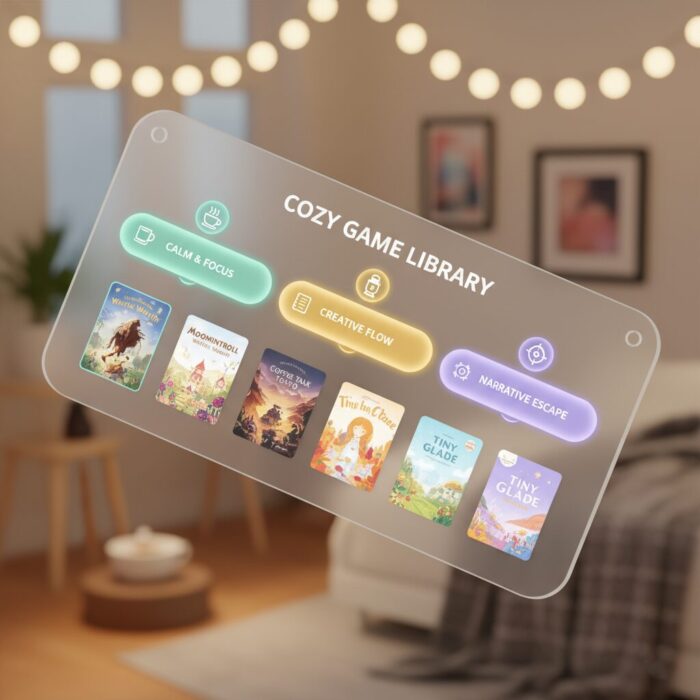
Stop buying games based on hype. Instead, organize your library by the “emotional reset” they provide:
- The “Clear the Head” Tier: Games like PowerWash Simulator 2 or Bento Blocks. Use these when you have excess mental energy and need to focus on a tactile, satisfying, and repetitive task.
- The “Narrative Escape” Tier: Games like Moomintroll: Winter’s Warmth or Coffee Talk Tokyo. Use these when you’re craving connection, storytelling, and a gentle atmosphere to lose yourself in.
- The “Slow Creativity” Tier: Games like Tiny Glade or Paralives. Use these when you have the energy to build, design, and express yourself without the pressure of “winning.”
The 2026 “Cozy Radar”: What’s Shaking Up the Scene?
If you’re looking to refresh your library, these are the standout titles defining the 2026 landscape:
| Game Title | Genre | Why It’s “Cozy” |
| Moomintroll: Winter’s Warmth | Narrative Adventure | A beautiful, story-driven world inspired by Tove Jansson’s iconic stories—pure calm. |
| Coffee Talk Tokyo | Visual Novel / Sim | The franchise is a staple, and this Tokyo-based entry brings deep, comforting atmosphere. |
| Animula Nook | Tiny Adventure / Sim | Explore and build homes in a miniature, “upside-down” world—an adorable, imaginative escape. |
| Hela | Co-op Adventure | A lush, Scandinavia-inspired tale perfect for a shared, gentle experience. |
| Witchbrook | Life Sim | A whimsical witch-in-training experience with changing seasons and focus on social connection. |
The “Curator’s Manifesto” for 2026
- Prioritize Demos: Never buy a cozy game without playing the demo. Does the feeling of the controls, the sound design, and the pacing actually make you feel better? If not, skip it, no matter how cute the screenshots look.
- Finish Before Starting: Before purchasing a new title, commit to finishing the current storyline of one you already own. Many cozy games are open-ended, but if there is a core narrative, experience it to completion to get that sense of closure.
- Respect Your Time: If a game starts to feel like a “chore” (e.g., you’re looking up efficiency guides to maximize your virtual farm profits), stop playing. You are allowed to be “bad” at your cozy game. If the routine stops bringing you joy, it’s no longer a haven—it’s just another job.