
Table of Contents
The Mindset Shift
I used to think that traveling sustainably meant paying a premium for luxury eco-resorts. I assumed that being an “eco-conscious traveler” was a luxury hobby for the affluent. I was wrong. In 2026, sustainable travel is more accessible than ever, and it often costs less than the standard tourist path.
When you practice sustainable travel on a budget, you are not just saving the planet; you are actively enriching your own experience. It is a shift from being a passive consumer to an intentional participant. By slowing down and choosing local alternatives, you discover hidden gems that the typical rush-through tourist never sees.
This guide is your roadmap to meaningful, eco-friendly tourism that respects your wallet. We will explore how to make responsible travel choices that reduce your carbon footprint while stretching your savings further. Are you ready to change the way you see the world?
Pre-Trip Planning
The foundation of any low-cost, low-impact trip happens months before you board a flight. If you want to practice sustainable travel on a budget, your planning process must focus on minimizing waste and maximizing efficiency. I’ve found that the secret is treating my resources—both money and environment—as finite assets.

Rethinking Your Transportation Strategy
Flights are often the biggest line item in your budget and your carbon footprint. I always start by researching train routes instead of regional flights. In 2026, high-speed rail networks across Europe and parts of Asia have become significantly more affordable. If you book early, a sleeper train is often cheaper than a budget flight plus a night in a hotel.
If you must fly, prioritize direct flights. Most of an airplane’s emissions occur during takeoff and landing. By choosing a non-stop path, you reduce your impact and save precious vacation time. Always pack light, too. A lighter suitcase means the plane burns less fuel, and it saves you those annoying baggage fees.
Gear That Lasts and Saves
Stop buying disposable travel gear. Those cheap, plastic items you buy at the airport usually break before you reach your destination. Instead, invest in high-quality, durable essentials that will last for years. I carry a stainless-steel water bottle and a reusable cutlery set everywhere I go.
These items pay for themselves within a week by preventing the need for single-use plastic purchases. Look for second-hand outdoor gear sites before buying new; you can often find top-tier, eco-friendly equipment for a fraction of the retail price. Sustainable preparation is about choosing longevity over immediate convenience.
Sustainable Stays on a Budget
Finding accommodation that aligns with your values without draining your bank account requires a shift in how you search. I’ve learned to move beyond standard booking engines, which often prioritize the highest bidder over the greenest operator.
The Eco-Hostel Advantage
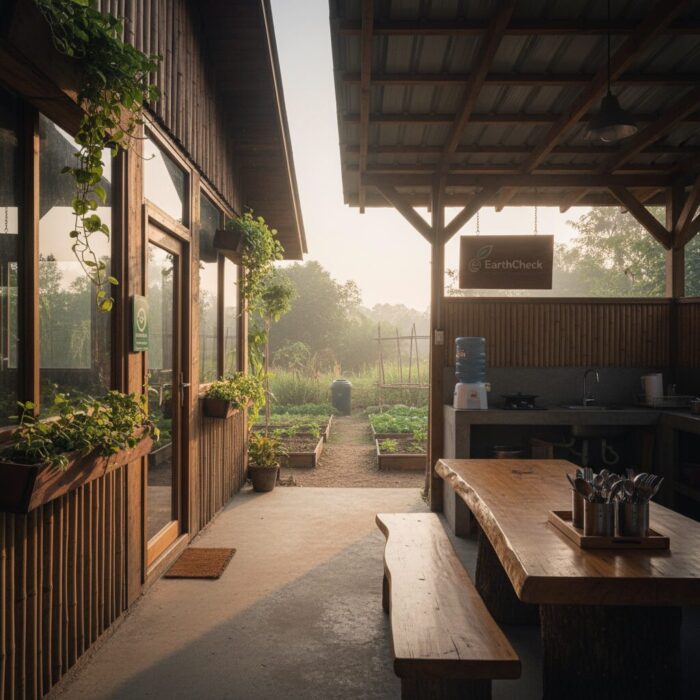
If you want to save money, hostels are already your best friend. But many modern hostels now go a step further by integrating sustainability into their core operations. I specifically look for “eco-hostels.” These spots typically feature recycling programs, energy-efficient lighting, and water-saving shower timers.
Because hostels operate on shared facilities, they are inherently more sustainable than hotels. By sharing one large room, we use significantly less energy and water per person than if we each occupied individual hotel rooms. Plus, many eco-hostels offer shared kitchens, allowing me to save even more by cooking my own meals.
The Power of House-Sitting
My favorite “pro” strategy for long-term sustainable travel is house-sitting. In exchange for caring for a home and a pet while the owners are away, I get a rent-free stay. This arrangement is arguably the most ethical and eco-friendly option available.
House-sitting doesn’t displace locals like some short-term rentals can. You are simply stepping into a resident’s life for a few weeks, reducing your carbon footprint compared to a hotel that runs 24/7. Plus, you have access to a full kitchen, which drastically cuts down on food packaging and waste.
Decoding Certifications
Don’t be fooled by “greenwashing.” Just because a hotel says it’s “eco-friendly” doesn’t mean it is. When I search, I look for reputable, third-party certifications. Keep an eye out for these labels:
- Green Key: Focuses on energy, waste, and water conservation.
- EarthCheck: A rigorous, science-backed standard for operational sustainability.
- LEED Certification: Indicates the building itself was constructed with sustainability in mind.
If you don’t see these, check the property’s website for a sustainability report. A truly committed business will be proud to share their specific waste-reduction or energy-saving figures. If they only mention “reusing your towels,” they likely aren’t doing the real work.
Local Consumption & Community Engagement
When I arrive in a new city, my first stop isn’t a museum or a famous landmark; it’s the local market. Eating at independent, neighborhood eateries and shopping at small, family-owned stores is the most direct way to ensure my money stays in the community. It’s also where the best stories are found.

Taste the Culture, Save the Planet
Mass-market chain restaurants are convenient, but they are often disconnected from the local landscape. By choosing to eat local, you’re not just avoiding the generic options you have back home. You are also reducing the “food miles” associated with your meals.
When you order from a menu that uses seasonal, regional ingredients, you support the farmers and producers who actually live in the area. Often, these local meals are cheaper than tourist-focused dining, especially if you skip the big-name venues. I always ask locals, “Where do you eat when you’re celebrating?” and follow their lead.
Etiquette and Genuine Connection
Being a responsible guest goes beyond spending habits. It’s about how we show up in someone else’s home. Before I travel, I learn a few basic phrases in the local language. Even a simple “hello” or “thank you” in the native tongue opens doors to warmer, more authentic interactions.
Also, be mindful of photography. It is easy to treat people as scenery, but they are neighbors, parents, and workers. Always ask before taking portraits, and respect their privacy. Real connection is quiet and mutual. It doesn’t need to be broadcast on social media to be meaningful.
Supporting Local Beyond the Plate
Beyond food, consider how your daily spending choices impact the area. I prioritize hiring local guides for walking tours. They offer a depth of knowledge you won’t find in any guidebook. Plus, you’re paying for a human’s expertise, not a multinational corporation’s marketing budget.
If you want to leave a positive impact, look for community-led projects or social enterprises. Whether it’s a craft workshop or a local conservation group, these experiences create a direct, positive ripple effect. You’re trading a superficial “tourist moment” for a genuine memory that supports a community’s future.
Activity & Wildlife Ethics
When we choose how to explore, we define our relationship with the wild. In 2026, the gold standard for adventure is “observer status.” It is the practice of seeing wildlife in its natural habitat without interfering, stressing, or commodifying the animal. My rule is simple: if the activity requires the animal to change its behavior for my entertainment, I walk away.

The “No-Touch” Rule
If an operator promises a “guaranteed” selfie with a tiger cub, a ride on an elephant, or a close-up swim with captive dolphins, it is a red flag. These experiences almost always rely on coercion or drugging. True ethical wildlife encounters are never guaranteed. They require patience, silence, and often a bit of luck.
Use binoculars or high-zoom lenses to capture your memories. When I am on a safari or a hike, I treat the animals like neighbors I’ve been invited to visit. I stay quiet, keep my distance, and move slowly. If an animal adjusts its movement or looks stressed because of my presence, I am too close.
Avoiding “Greenwashed” Attractions
Many tour companies use buzzwords like “eco-conscious” or “natural sanctuary” to lure tourists. Before booking, look for evidence. Does the operator have a third-party certification from a reputable group? Do they prioritize habitat protection over visitor volume? If they offer direct physical contact or “feeding” sessions, it is almost certainly greenwashing.
Genuine sanctuaries focus on rehabilitation and release, not public spectacles. They limit human interaction to protect the animals from disease and behavioral issues. By supporting only science-led, non-extractive projects, we ensure our money actively funds conservation rather than exploitation.
Long-term Impact & Conclusion
When I look back on my travels, the memories that stick aren’t the ones where I spent the most money. They are the moments where I felt connected to a place, its people, and its rhythms. True sustainable travel isn’t about restriction; it’s about shifting your focus from “how much can I consume” to “how much can I contribute.”
The Ripple Effect of Your Choices
Every dollar you spend abroad is a vote for the world you want to see. When you skip the international chain hotel to stay at a family-run guesthouse, you keep that money in the local economy. When you choose a train over a short-haul flight, you signal a demand for greener transport infrastructure.
Your choices matter more than you realize. They ripple through the communities you visit and influence the standards for future travelers. By adopting these habits, you become an advocate for a healthier way of exploring our planet.
Start Your Journey Today
You don’t need to be perfect to start practicing sustainable travel on a budget. You just need to be intentional. Pick one habit from this guide—maybe it’s packing a reusable water bottle or choosing a local market over a tourist trap—and start there.
Travel is a privilege, and the way we steward that privilege defines the legacy we leave behind. Keep it slow, stay curious, and always tread lightly. Your next great adventure is waiting, and with these tools, you can ensure it’s as kind to the planet as it is memorable for you.