
Table of Contents
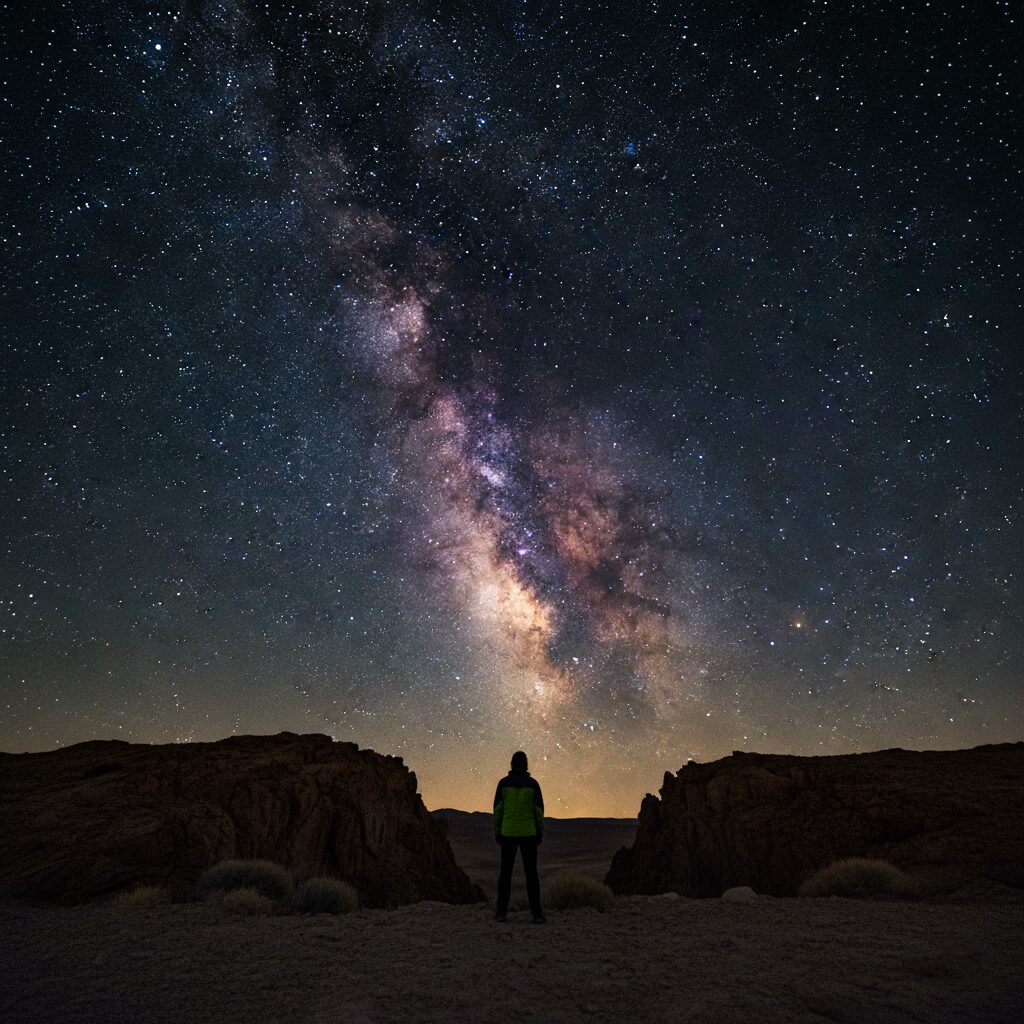
Astrotourism is the only way I have found to truly feel small in a way that makes me feel whole. I remember standing on a high-desert plateau in the middle of a moonless night, the air so cold it felt brittle, and looking up. For the first time in my life, I didn’t just see stars; I saw the Great Rift of the Milky Way, a celestial river of dust and light so thick it looked like I could reach out and touch it. It was a profound realization that for most of my life, I had been living under a veil.
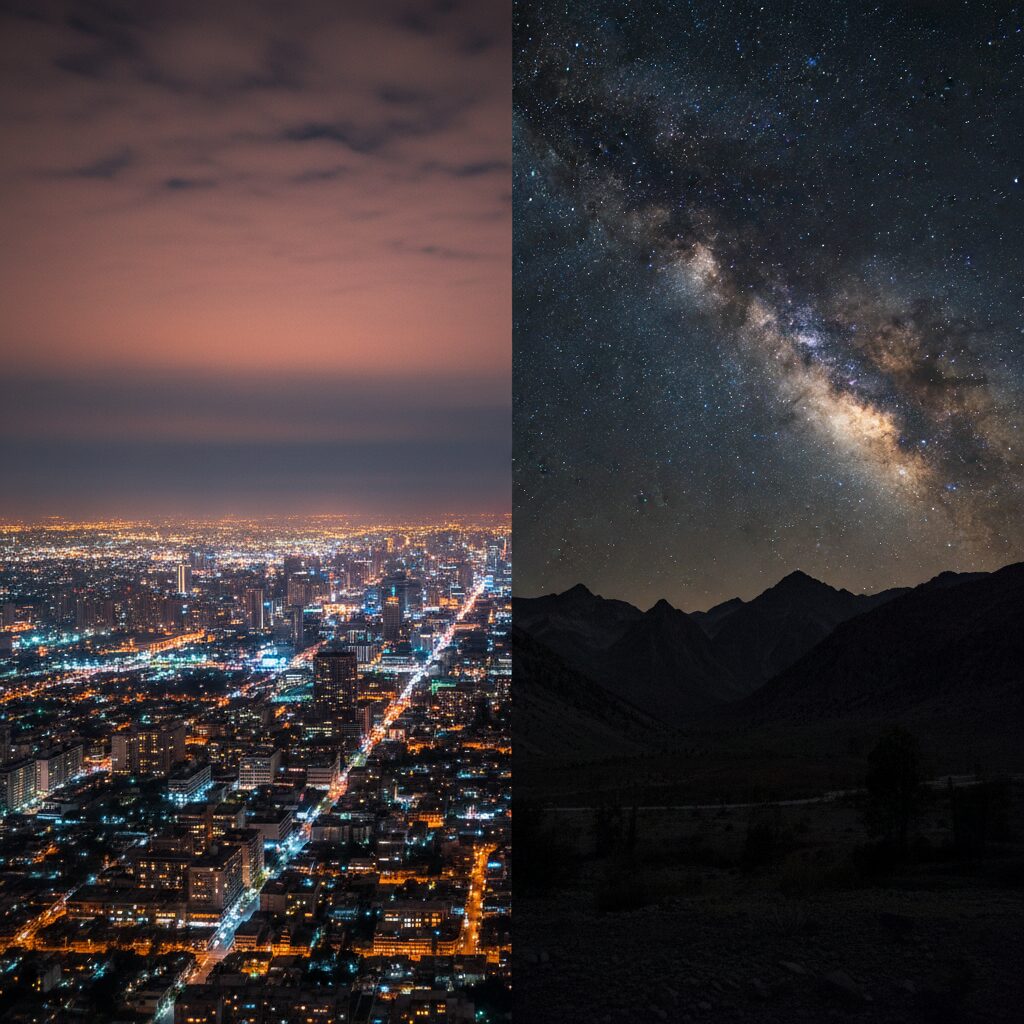
Today, nearly 80% of the world lives under the orange-gray haze of light pollution. For the majority of us, the stars aren’t a nightly occurrence; they are a distant memory or a flick on a screen. This reality has birthed a new travel philosophy: Astrotourism. This movement isn’t just about telescopes and expensive cameras; it is a primal search for true darkness and a reconnection with the cosmos that our ancestors took for granted.
The Vanishing Night and the Need for Dark Skies
I spent years living in a city where the sky was never truly black. It was a perpetual, muddy violet, washed out by streetlights and office towers. When I finally traveled to a designated International Dark Sky Park, the transition was jarring. My eyes took nearly thirty minutes to fully adjust to the shadows, but once they did, the universe opened up.
The rise of astrotourism is a direct response to the “Great Dimming” of our natural heritage. Light pollution is growing at an average rate of about 10% per year. We are losing our view of the heavens at a staggering speed. When we talk about searching for true darkness, we are talking about finding places where the Bortle Scale—a measure of night sky brightness—hits a Level 1 or 2. In these sanctuaries, the starlight is actually bright enough to cast a shadow on the ground.
Why We Travel to the Edge of the Map
Why do we pack our bags and drive hours away from civilization just to look at the sky? In my experience, it is because celestial travel offers a sense of perspective that no city break can provide. When you sit under a dark sky, you aren’t just a tourist; you are a witness to deep time. The light hitting your retina from the Andromeda Galaxy has been traveling for 2.5 million years.
This “magical” and aspirational quality is what makes astrotourism so magnetic. It appeals to the part of us that wants to unplug from the digital noise. In the silence of a dark sky reserve, there is no 5G, no notifications, and no blue light—only the ancient, steady glow of distant suns. It is the ultimate digital detox.
The Pillars of the Astrotourism Experience
To truly engage in this travel philosophy, I’ve learned that it requires more than just showing up. It requires a shift in how we perceive our environment.
- Patience and Adaptation: Your eyes need time. I’ve seen many travelers arrive at a dark site and immediately pull out their phones, ruining their night vision instantly. True darkness requires a commitment to the shadows.
- The Right Equipment: While a pair of high-quality binoculars is often better for beginners than a complex telescope, the most important tool I ever brought with me was a simple red-light flashlight. It preserves your ability to see the faint nebula while you navigate the terrain.
- Location Scouting: From the Atacama Desert in Chile to the Aoraki Mackenzie International Dark Sky Reserve in New Zealand, the locations are as diverse as they are remote. The search for true darkness often leads you to the most beautiful, untouched corners of our planet.
Environmental Preservation: The Heart of the Movement
As I’ve deepened my involvement in astrotourism, I’ve realized it isn’t just a hobby; it’s a form of environmental advocacy. Dark sky tourism encourages local governments to implement “night-friendly” lighting. This doesn’t mean living in the dark; it means using shielded fixtures that point light downward where it’s needed, rather than scattering it into the atmosphere.
Protecting our night skies is an evergreen mission. It affects migratory patterns of birds, the nesting habits of sea turtles, and even human circadian rhythms. When I support a dark sky hotel or a remote observatory, I am voting for a world where future generations can still wonder at the stars. It is a sustainable way to travel that gives back to the earth by demanding less of it.
Mastering the Art of Star-Hopping
One of my favorite memories is teaching a friend how to find the North Star for the first time without an app. We used the “pointer stars” of the Big Dipper, tracing a line through the void until Polaris appeared. There is a specific kind of joy in navigating the night sky manually.
Star-hopping—using known constellations to find hidden gems like the Pleiades or the Orion Nebula—is a skill that turns a simple vacation into an exploration. It connects you to the sailors and explorers of old. In the search for true darkness, you find that the sky is not a static ceiling, but a living, moving map of our history.
The Future of Celestial Travel
We are seeing a massive surge in “Starlight Hotels” and “Astro-Glamping” sites. People are willing to pay a premium for a glass-roofed cabin where the Milky Way is their only entertainment. This isn’t a trend that will fade; as our cities grow brighter, the value of darkness will only increase.
For me, the search for true darkness is a lifelong journey. Every time I find a new spot where the horizon is clean and the stars go all the way down to the earth, I feel a sense of peace that is hard to replicate. Astrotourism reminds us that we are part of something vast, ancient, and incredibly beautiful.
If you haven’t yet seen the Milky Way with your own eyes, I urge you to make it your next destination. Leave the lights behind. Drive until the map goes blank. Look up. The universe is waiting for you to notice it.
If you could escape to any corner of the earth for one night under a perfect, light-pollution-free sky, which constellation or celestial object would you want to find first?