
Table of Contents
I spent most of yesterday staring at a glowing screen, tweaking lines of code and managing digital assets. By 5:00 PM, I felt… thin. Like my senses had been flattened into two dimensions. I looked at my hands and realized I hadn’t actually touched anything unrefined or raw in days.
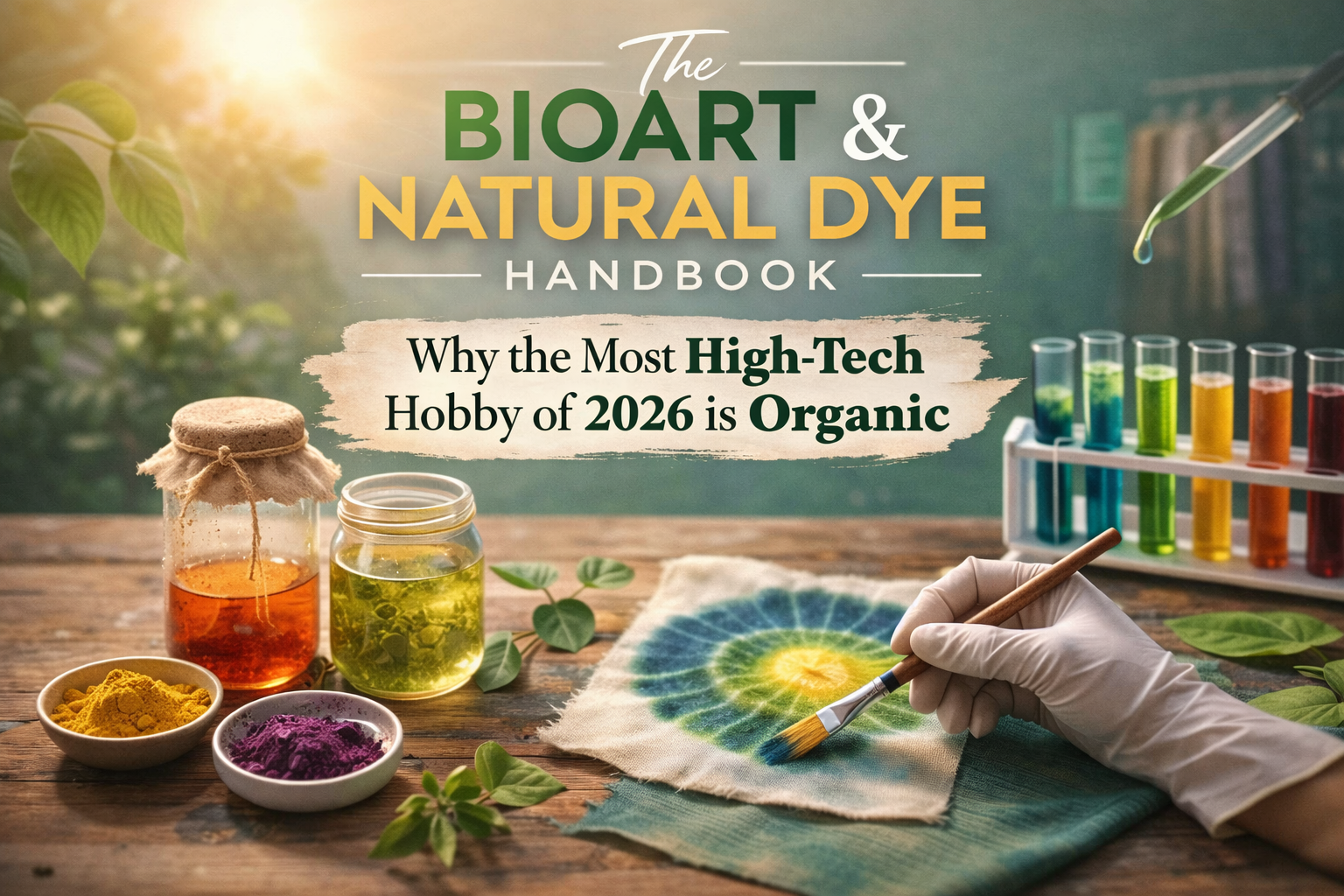
That’s when I headed to my “Bio-Lab”—which is really just a sturdy wooden table in my sunroom—and plunged my hands into a vat of fermented indigo. The smell was sharp, earthy, and unmistakably alive. As the fabric emerged from the liquid, transitioning from a pale yellow to a deep, vibrating blue right before my eyes, I felt a connection to the world that no high-resolution display could ever replicate.
In 2026, we are surrounded by perfect, AI-generated imagery. It’s beautiful, but it’s sterile. That’s why so many of us are turning to Bioart. We aren’t just making “crafts”; we are collaborating with biology. We are using roots, fungi, and bacteria to create “living” art that breathes, ages, and eventually returns to the earth. If you’re feeling that digital fatigue, here is my personal handbook on how to start your own organic revolution.
What is Bioart? (The “Collaboration” Mindset)
When I first started, I thought Bioart was just a fancy word for painting with mud. I was wrong. Bioart is the practice of using living tissues, bacteria, or organic processes as your medium.
In my studio, I don’t “control” the paint. I provide a habitat for it. I’ve grown “lace” patterns using mycelium (the root structure of mushrooms) and dyed silk using the metabolic waste of specific bacteria. It sounds high-tech—and in some ways, it is—but it’s also the oldest form of human expression. It’s about stepping back and letting nature take the lead.
Foraging for Color: My Personal Pigment Map
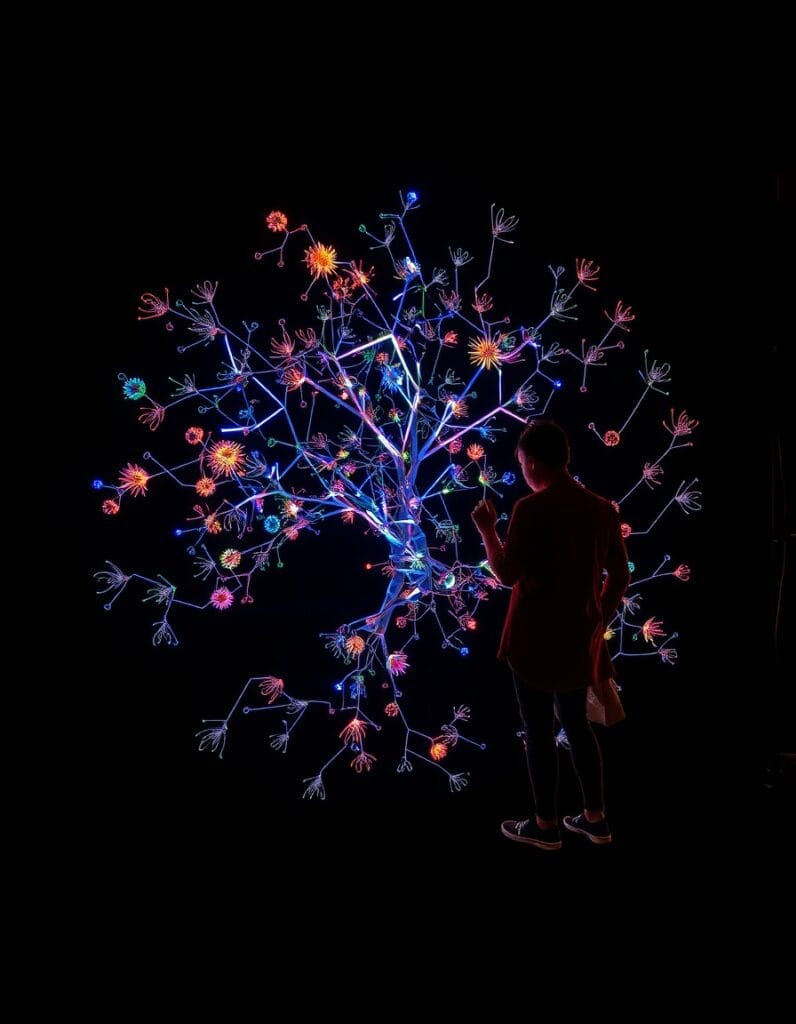
The most grounding part of this hobby is the “hunt.” I no longer walk through the park or the woods just for exercise; I’m looking for a palette. Last week, I spent two hours in a damp creek bed looking for Rubia tinctorum (Madder root).
If you want to start today, you don’t need a lab. You just need a basket and a bit of curiosity. Here is what I look for in my local environment:
- The Yellows: Goldenrod and Onion skins. I’ve found that even the “trash” from my kitchen can produce a sun-soaked yellow that is remarkably light-fast.
- The Reds: Madder root and Cochineal (if you’re okay with using insects). Digging up madder is a meditative process; the roots look like ordinary brown sticks until you snap them to reveal the fiery orange-red core.
- The Blues: This is the holy grail. Indigo and Woad. Indigo doesn’t just “dye” fabric; it requires a fermentation process. It’s a living vat that you have to “feed” with sugar or fruit to keep the bacteria happy.
The “Living” Art Tutorial: Creating Your First Bio-Print
I want to share a simple technique I use to create “Eco-Prints.” It’s the perfect entry point because it requires zero chemicals—just heat, pressure, and time.
- The Preparation: I start with a piece of natural fiber (silk, wool, or cotton). I soak it in a mixture of water and soy milk—a “mordant” that helps the color stick to the fibers.
- The Layout: I lay the damp fabric flat and scatter my foraged finds. I’ve found that eucalyptus leaves, rusted iron nails, and rose petals create the most dramatic “ghost” images.
- The Roll: This is the crucial part. I roll the fabric tightly around a wooden dowel, securing it with twine. It has to be tight enough that the plants are crushed against the fibers.
- The Steam: I place the roll in a steamer for about 90 minutes. As the steam penetrates the layers, the cell walls of the plants break down, releasing their “bio-ink” directly into the cloth.
The best part is the “unveiling.” I always wait 24 hours for it to cool before unrolling. It’s like developing a photograph from the earth itself. Every print is a one-of-a-kind record of a specific place and time.
Why This Matters in 2026
I often get asked why I spend hours boiling roots when I could buy a perfect bottle of synthetic dye for five dollars. My answer is always the same: Friction.
In a world where everything is “instant” and “frictionless,” we lose our sense of accomplishment. When I wear a scarf that I dyed with berries I picked myself, I feel the weight of the seasons. I remember the scratch of the brambles and the way the air smelled that afternoon.
Bioart isn’t just about the final product. It’s a “grounding hobby” that forces you to slow down to the speed of a growing plant. It teaches us that nature isn’t a resource to be used; it’s a partner to be respected.
Starting Your Bioart Journey
If you’re ready to get your hands dirty, my advice is to start small. Don’t worry about “perfect” results. In Bioart, the “mistakes”—the uneven colors, the unexpected spots of mold, the way a dye shifts from purple to green—are the most beautiful parts. That’s the biology talking.
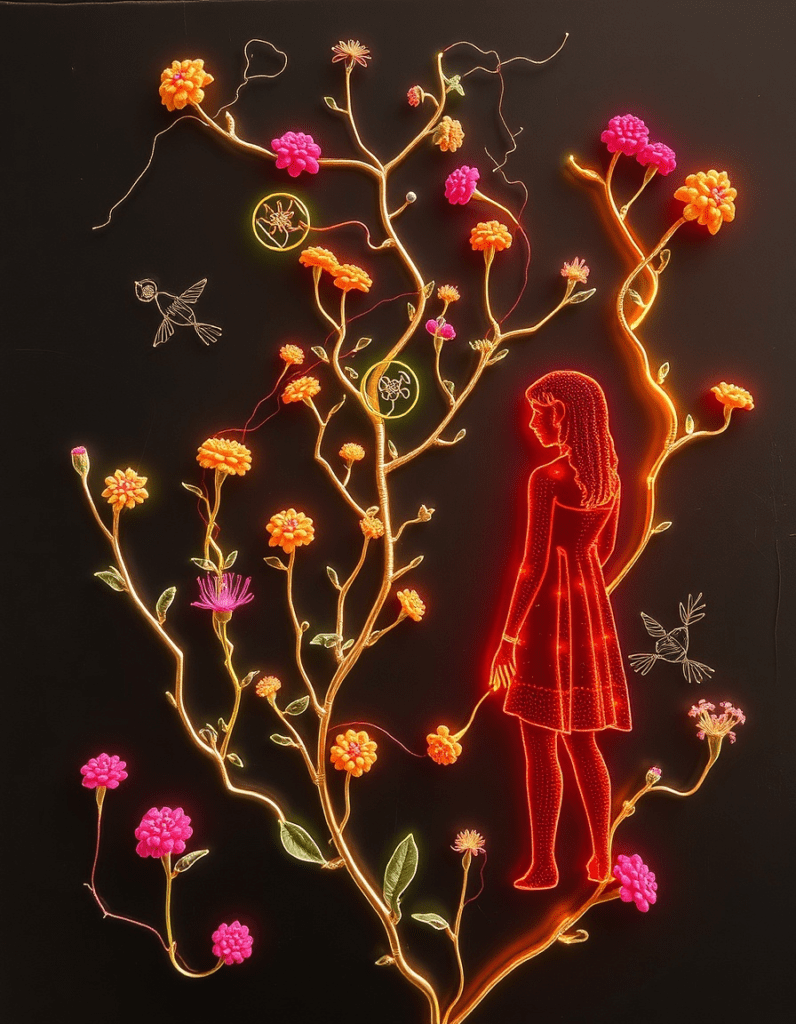
There is something deeply satisfying about seeing a color emerge from a plant you found in your own backyard. It makes the world feel a little bit more magical and a lot more connected.
I’d love to know: Have you ever tried making something from scratch using only what you found in nature? What was the result?