
Table of Contents
There is a specific, teeth-gritting frustration known only to the early-season angler. You stand on the bank of a crystalline river in the pre-dawn chill, the air hovering just above freezing, while the water—fed by high-altitude snowmelt—is a numbing 4. You make your first cast, expecting the elegant, unrolling loop that defines the sport. Instead, your fly line shoots out of the guides and immediately collapses into a series of tight, intractable rings.
In the industry, we call this “telephone cording.” To the angler, it is a sign that the gear is fighting the environment rather than working with it. For decades, we treated fishing gear as a universal tool—a single rod, a single reel, and a single “all-purpose” line. But as the spring season kicks off this month, the narrative is shifting. We are entering the era of Conditions-First Engineering, where the success of your day is determined not just by your cast, but by the thermal calibration of your equipment.
The Physics of the “Telephone Cord”
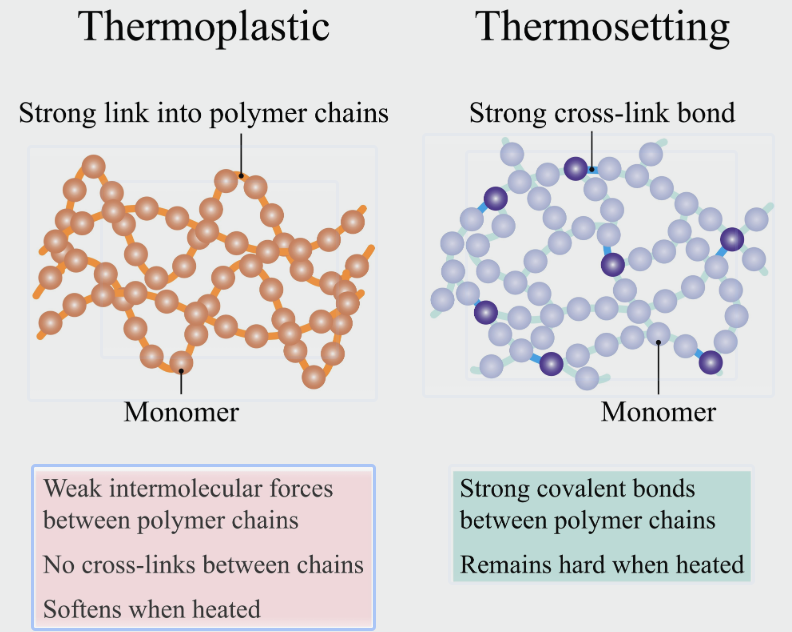
To understand why your gear fails in the cold, we have to look at the molecular level. Most modern fly lines and lure coatings are composed of complex polymers—specifically PVC (polyvinyl chloride) or polyurethane—wrapped around a core of braided nylon or monofilament.
Every polymer has what scientists call a Glass Transition Temperature. This is the point where a material transitions from a “rubbery,” flexible state to a “glassy,” brittle state.
In Warm Water: When fishing in temperatures around 20 degrees Celsius, the polymer chains within the line are mobile. They can slide past one another, allowing the line to stretch slightly and lay flat on the water.
In Cold Water: When the temperature drops toward 3 degrees Celsius, those same polymer chains lose their kinetic energy. They “lock” into place. If the line was stored on a round reel, it “remembers” that curve. When you cast it, it maintains that coiled memory, creating a zig-zag on the surface that ruins your drift and makes it impossible to detect a subtle strike.
The Encyclopedia Entry: Thermal-Responsive Polymers
As we see in the latest gear releases this week, the solution isn’t just “softer” plastic. It is the integration of Thermal-Responsive Polymers (TRPs).
Thermal-Responsive Polymers: A class of “smart” materials that undergo a physical change in response to external temperature fluctuations. In fishing gear, TRPs are engineered with a specific T tailored to a narrow environmental window.
The 5-Degree Calibration: Leading manufacturers are now moving away from “Coldwater” or “Saltwater” labels. The new standard is Interval Calibration. Gear like the Scientific Anglers Mastery series launched this month features lines specifically formulated for 5-degree increments. By adjusting the ratio of plasticizers—the chemical “lubricants” between polymer chains—engineers can ensure that a line designed for 5 degrees Celsius remains as supple as a tropical line in the Caribbean.
This level of precision means that the “all-around” line is becoming a relic of the past. Professional guides are now carrying multiple spools, swapping them out as the sun warms the water through the afternoon. It is no longer about fighting the weather; it is about calibrating to it.
The “Conditions-First” Revolution: Scientific Anglers Mastery
The flagship release of this spring season is the revamped Mastery Series. While the name is familiar, the chemistry is entirely new. This year’s lineup introduces a textured coating that interacts with water tension differently based on the thermal density of the liquid.
Cold water is more viscous (thicker) than warm water. A standard smooth line experiences more “drag” when trying to lift off a cold surface. The new Mastery lines utilize a micro-dimpled surface—similar to a golf ball—which traps tiny air bubbles. This reduces the surface area contact, allowing the line to “break” the water’s surface tension even when the cold makes that tension at its strongest.
Key Features of Calibrated Spring Gear:
Variable Core Tension: The braided core inside the line is pre-stretched at a specific temperature to ensure that “hook set” power remains constant, whether the line is chilled or baked.
Hydrophobic Integration: New coatings are chemically bonded to repel ice crystals, preventing the “iced guide” syndrome that plagues steelheaders.
Low-Refractive Index: Cold, clear spring water offers fish incredible visibility. Calibrated lines now match the refractive index of water more closely, making the “thick” part of the fly line nearly invisible to a wary trout.
The Hook: Pro-Planet Performance and the “Marine Plastic Sneaker”
Performance is no longer the only metric for “Pro” gear. In the modern era, an angler’s impact on the environment is scrutinized as much as their casting distance. This month, the industry has seen a viral sensation in the form of the Strike Bluefin.
Marketed as the “Marine Plastic Sneaker,” the Strike Bluefin represents a breakthrough in circular manufacturing. While previous “eco-friendly” shoes were often flimsy or unsuitable for the deck of a boat, the Bluefin is a piece of high-performance kit made entirely from upcycled marine plastic.
Why the Strike Bluefin Matters:
- Material Origin: The upper mesh and sole are harvested from discarded nylon fishing nets (ghost nets) and PET bottles recovered from the Great Pacific Garbage Patch.
- Salt-Resistant Durability: Upcycled plastic often struggles with UV degradation. The Bluefin uses a proprietary “Titanium-Infused Polymer” coating that prevents the salt and sun from breaking down the recycled fibers.
- Non-Marking Traction: The sole is engineered with a “Siped” pattern—thin cuts that open up when you step, pushing water out and providing a “suction” effect on wet gelcoat.
The launch of the Bluefin proves a vital point for this year’s market: Pro gear must be Pro-Planet. We are fishing for a dwindling resource; wearing the very plastic that threatens that resource—reimagined as a tool for its protection—is the ultimate status symbol of the conscious angler.
Beyond the Line: Rods and Reels in the Cold
Thermal calibration doesn’t stop at the fly line. The hardware itself is undergoing a “Material Renaissance.”
Carbon Fiber and Thermal Expansion
Most anglers don’t realize that a carbon fiber rod “shrinks” and “expands” with the temperature. While the change is microscopic, it affects the friction at the ferrules (the joints where the rod pieces fit together). In extreme cold, ferrules can loosen, leading to snapped rods during a cast.
Modern high-end rods are now being built with Coefficient-Matched Resins. The resin that holds the carbon fibers together is designed to expand and contract at the exact same rate as the carbon itself. This prevents the “micro-fractures” that traditionally occurred when moving a rod from a warm truck into a freezing river.
The Sealed Drag Evolution
The “Pro” reels released this season have moved almost exclusively to Zero-Tolerance Sealed Drags. In older reels, a single drop of water entering the drag housing would freeze, effectively turning your reel into a “fixed spool” and snapping your leader when a fish ran.
The new standard utilizes a nitrogen-purged chamber. By replacing oxygen with nitrogen, manufacturers eliminate the moisture that causes internal icing. You can dunk these reels in a slushy river, and the drag will remain as smooth as it was in the shop.
The “New Normal” for the Spring Angler
As we look at the landscape of the sport today, the definition of “skill” is changing. It is no longer just about the “tight loop” or the “perfect fly.” It is about Environmental Literacy.
The modern angler is a part-time physicist. They understand that the TG of their line is as important as the hatch of the Mayfly. Aswell as knowing that a shoe made of recycled nets is a better investment than one made of virgin plastic. They recognize that we are no longer “conquering” nature; we are attempting to resonate with it.
By adopting temperature-calibrated gear, we stop fighting the weather. We stop wrestling with telephone-cord lines and frozen drags. We enter the water with tools that are as fluid and adaptive as the environment itself.
I’d love to hear from you: Have you ever had a piece of gear “fail” you specifically because of the weather—a snapped rod in the cold or a sticky line in the heat? Or are you a “one-gear-fits-all” purist who thinks we’re overcomplicating things?