
Table of Contents
I was standing on a patch of rust-red earth in Ouidah, Benin, when the weight of the “Slow Journey” finally hit me. I wasn’t just another tourist with a camera; I was holding a folder of genomic data and a printed family tree that had taken me three years to piece together. As the local elders began the Homecoming Ceremony—a ritual designed to welcome back those whose ancestors were taken centuries ago—the air felt different. It didn’t smell like a vacation. It smelled like a beginning.
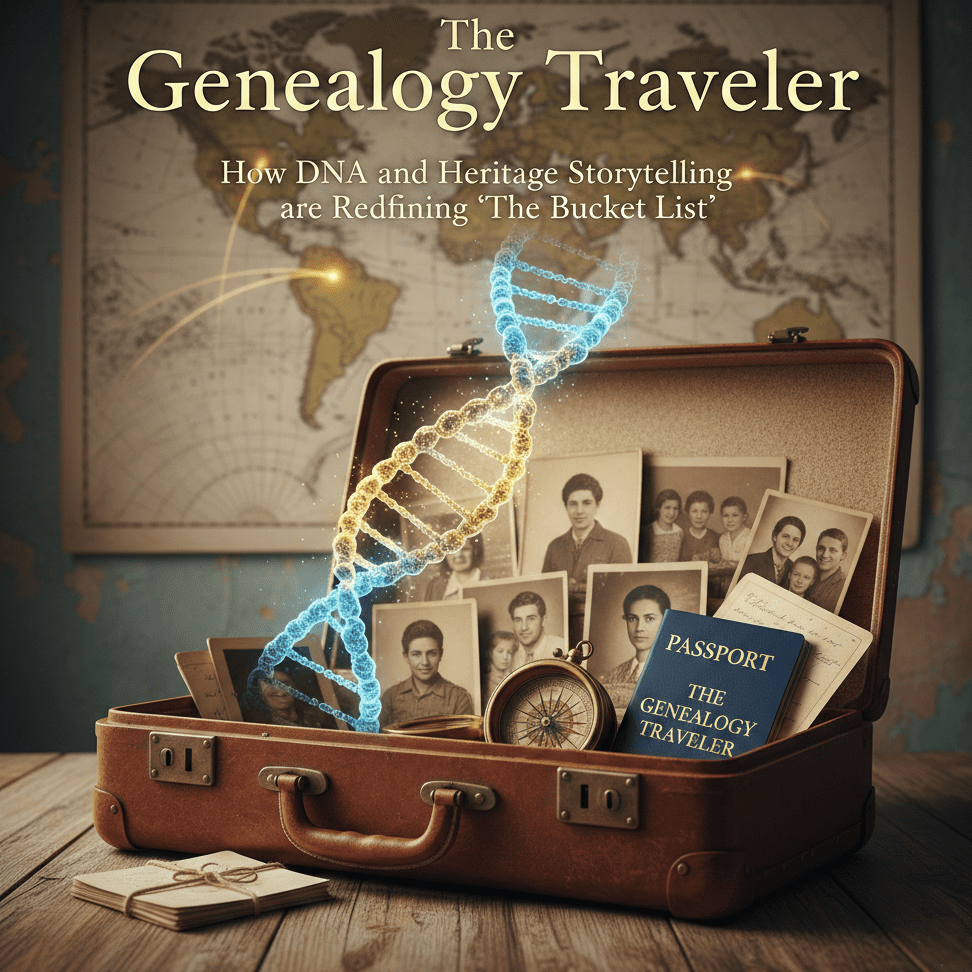
In 2026, we’ve moved past the era of “check-list” travel. We’ve realized that flying halfway around the world just to see a landmark we’ve already viewed a thousand times on a screen is… empty. Instead, we are entering the era of the Genealogy Traveler. We are using DNA as our compass and heritage storytelling as our map. We aren’t just visiting countries; we are “rewilding” our own histories and reclaiming pieces of our identity that were once thought lost to time. Here is how I traded “sightseeing” for “soul-searching” and why Africa is leading the charge in this profound travel revolution.
The DNA Compass: From Data to Destiny
For years, my DNA results sat in a digital tab on my browser—a pie chart of percentages that I occasionally showed off at dinner parties. But in 2026, those percentages have become boarding passes.
West African nations like Senegal and Benin have transformed the travel landscape by launching official “Homecoming” programs. These aren’t just tours; they are legal frameworks. In Benin, for example, the government recently passed a landmark law granting a form of “ancestral nationality” to those who can provide DNA proof of their sub-Saharan lineage.+1
- The Experience: I didn’t just walk through a museum. I participated in a renaming ceremony where I was given a traditional name based on my genetic markers.
- The Shift: We are moving from being “observers” of a culture to being “descendants” of it. It changes the way you talk to locals, the way you eat the food, and the way you walk down the street. You aren’t “visiting” home; you are returning to it.
Heritage Storytelling: The New ‘Bucket List’
We’ve all had that “Bucket List” of 50 things to do before we die. But in 2026, the list is getting more personal. It’s no longer about “seeing the Pyramids”; it’s about “finding the village where my great-great-grandfather farmed.”
This is Heritage Storytelling. It’s the practice of using travel to fill in the “blank pages” of your family’s narrative. When I traveled to the Casamance region of Senegal, I wasn’t looking for the best hotel. I was looking for the specific rhythm of the drums that my DNA suggested was part of my ethnic heritage.

- Rewilding History: Much like environmental rewilding returns an ecosystem to its natural state, heritage travel rewilds the human spirit. It strips away the layers of modern, homogenized identity and plugs you back into a lineage that spans centuries.
- Meaningful Transit: To get there, I skipped the domestic flight and booked a cabin on the new High-Speed Sleeper Trains.
The Slow Journey: High-Speed Sleepers and Meaningful Transit
One of the most surprising trends of 2026 is the return of the train as a status symbol. But these aren’t the cramped commuters of the past. I took the Al Boraq extension through Morocco, which has redefined the “Sleeper” experience.
Why take a train when you could fly in two hours? Because the Genealogy Traveler understands that transit is part of the story.
- The Ritual: There is something deeply meditative about watching the landscape change slowly outside a train window. It gives your mind time to catch up with your body.
- The Connection: On these trains, you meet other heritage travelers. You share stories, swap DNA tips, and realize that the journey is the ceremony. In 2026, “getting there fast” is for business; “getting there meaningfully” is for the soul.
How to Plan Your Own Heritage Homecoming
If you’re ready to move beyond the tourist trail, here is the blueprint I used to plan my homecoming:
- Phase 1: The Genomic Deep-Dive: Don’t just look at your “Ethnicity Estimate.” Look at your “Genetic Communities.” Many DNA services now pinpoint specific regions or even tribes. This is your destination.
- Phase 2: The Archive Hunt: Contact local libraries or historical societies in your target region before you leave. In West Africa, many “Homecoming” agencies have professional genealogists who can cross-reference your DNA with historical ship manifests and village records.
- Phase 3: The ‘Slow’ Itinerary: Build in “Reflection Days.” Heritage travel is emotionally heavy. You will need time to just sit and process the fact that you are standing where your ancestors stood.
Why This is the Future of Travel
The world is more connected than ever, yet we’ve never felt more disconnected from our roots. In 2026, we are using the most advanced technology (DNA sequencing and high-speed rail) to reach back to the most ancient parts of ourselves.
The Genealogy Traveler isn’t looking for a tan or a souvenir. We are looking for a sense of belonging that no passport stamp can provide. When I left Benin, I didn’t feel like I was leaving a vacation. I felt like I was carrying my ancestors back with me, finally acknowledged and finally home.
Stepping onto the soil of a country that matches your DNA is an experience that is impossible to describe—it’s like a puzzle piece finally clicking into place after a lifetime of wondering where it belongs.
I’d love to know: Have you ever taken a DNA test and found a result that completely surprised you? Did it make you want to book a flight immediately, or are you still “researching” the story?