
Table of Contents
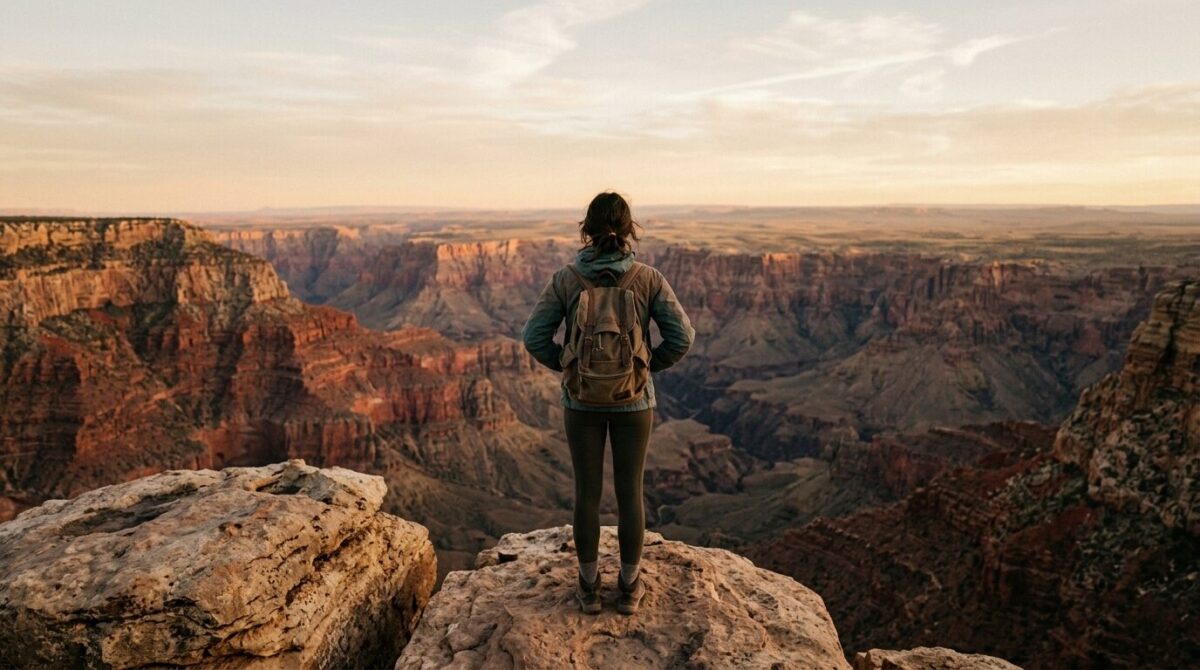
I stood on the rim of the Grand Canyon as the sun began to dip below the horizon, and for the first time in years, the “noise” in my head went silent. I am someone who lives in the digital world—my mind is usually a frantic browser with fifty tabs open, ranging from upcoming deadlines to past regrets. But as I stared into that vast, ancient void, my internal monologue evaporated. I felt tiny, insignificant, and strangely, more alive than I had ever been.
At the time, I called it a “spiritual moment.” But as I dug deeper into the science of awe, I realized what I was actually experiencing was a profound neurological reset. My brain wasn’t just enjoying the view; it was physically changing its state.
The Day I Felt My “Self” Shrink
We often travel to see things, but the most powerful trips are those that change how we see ourselves. Scientists call this the “small self” phenomenon. When I was dwarfed by the sheer scale of the canyon, my parietal lobe—the part of the brain responsible for spatial awareness and tracking the “self” versus the “other”—had to recalibrate.
In our daily lives, we are the protagonist of every scene. The traffic jam is happening to us. The email is a threat to us. But in the presence of “Big Nature,” the science of awe dictates a shift. When the brain encounters something so vast it cannot immediately be categorized or understood, it undergoes “accommodation.”
I felt my ego retreat. It wasn’t a depressing feeling of insignificance; it was a liberating one. If I am this small, then my problems, my anxieties, and my “tabs” are even smaller. This isn’t just a metaphor—it’s a biological survival mechanism that lowers inflammation and quiets the amygdala.
The Vagus Nerve: Why Nature Feels Like a Deep Breath
During that trip, I noticed my physical symptoms of stress—the tight chest, the shallow breathing—simply vanished. This is where the science of awe meets our nervous system.
When we experience awe, we activate the parasympathetic nervous system via the vagus nerve. Unlike the “fight or flight” response we feel in the city, awe triggers a “stillness and wonder” response. Researchers have found that individuals who regularly experience awe have lower levels of pro-inflammatory cytokines (IL-6).
Essentially, by looking at a mountain, I was physically telling my immune system to stop overreacting. I wasn’t just sightseeing; I was administering a biological dose of anti-inflammatory medicine.
Beyond Sightseeing: Why Scale Matters
I used to think a park in the city was “nature” enough. But the science of awe suggests there is a qualitative difference between a manicured lawn and “Big Nature.” To trigger the neurological shift, we need a sense of “perceived vastness.”
This is why we feel different standing under a 2,000-year-old Sequoia than we do sitting under a backyard maple. The Sequoia demands a cognitive leap. It forces the brain to acknowledge a timescale and a physical scale that humbles our human experience.
I’ve found that the more “unscripted” the nature is—the more it reminds us of the raw, indifferent power of the earth—the deeper the neurological impact. This is the “soul-care” aspect of travel. We are looking for places that make us feel small so that we can finally feel whole.
The “Awe-Deprivation” of Modern Life
The tragedy of our current era is that we are living in an “awe-deficit.” We spend our lives staring at screens that are 6 inches wide. Our brains are constantly focused on the “near-work” of local problems.
I’ve noticed that when I go too long without a dose of Big Nature, my “digital authenticity” starts to wane. I become more reactive, less empathetic, and more trapped in my own head. The science of awe shows that people who experience awe are more likely to be prosocial—they become more generous, more patient, and more willing to help others.
By booking a trip to a glacier or a desert, I am not just taking a vacation from work; I am taking a vacation from my own ego. I am intentionally putting myself in a position where I have no choice but to be humbled by the world.
How to Cultivate Awe Without a Plane Ticket
While “Big Nature” is the ultimate catalyst, the science of awe is a muscle we can train. I’ve started practicing “Awe Walks”—even in familiar places. The key is to look for the “vast” in the “micro.”
It could be the fractals in a leaf, the way the light hits a spiderweb, or the realization of the complex history beneath the pavement. The goal is to find something that challenges your current understanding of the world.
However, for a true neurological overhaul, nothing replaces the pilgrimage. I make it a point now to visit one “Earth Giant” every year. Whether it’s the silence of a desert at night or the roar of a massive waterfall, these experiences are the anchors of my mental health.
The Evergreen Lesson of the Mountain
The mountains don’t care about our social media feeds. The canyons don’t follow the news. They exist on a geological timeline that is indifferent to our temporary human trends. This is the ultimate evergreen angle: the physiology of how we interact with the earth is ancient and unchanging.
When I return from these trips, I am a different version of myself. I am quieter, more expansive, and my brain feels “reset.” I’ve learned that the most productive thing I can do for my career, my blogging website, and my relationships is to occasionally go somewhere that reminds me I am not the center of the universe.
The science of awe is a reminder that we are part of a massive, intricate system. And sometimes, the best way to move forward is to stand perfectly still in front of something big.