
Table of Contents
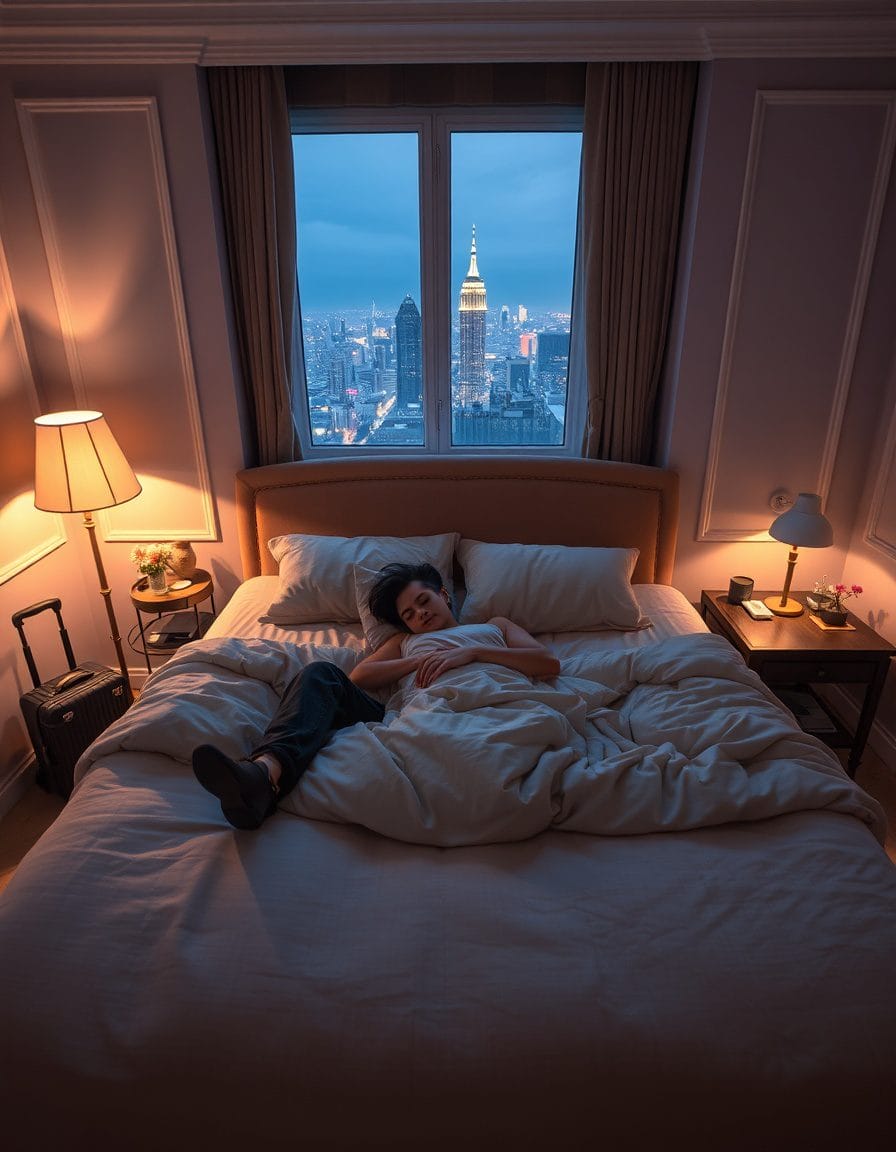
I once spent three days in a beautiful hotel in Tokyo feeling like a ghost. I had flown from New York, and while my body was physically standing in a bustling neon-lit street at 7:00 PM, my brain was convinced it was 6:00 AM and that I was currently undergoing a severe bout of food poisoning. I couldn’t focus, my coffee tasted like cardboard, and I felt a strange, hollow irritability that no amount of “travel excitement” could fix. Circadian Alignment.
That was the trip that broke me. I realized that “powering through” or drinking endless espresso wasn’t a strategy—it was a slow form of torture.
When I got home, I obsessed over the “why.” I dove into the biology of our cells and the ancient rhythm of light that has governed life on Earth for billions of years. What I discovered changed the way I travel forever. You cannot “trick” your way out of jet lag, but you can re-sync your system with clinical precision. Here is how I learned to reset my internal clock in a single day.
The Master Clock: Understanding Your Circadian Rhythm
To fix the problem, we have to understand the hardware. Every single one of us has a “Master Clock” located in a tiny part of the brain called the Suprachiasmatic Nucleus (SCN).
This SCN is essentially a biological conductor. It tells your heart when to beat slower, your stomach when to produce acid, and your pineal gland when to pump out melatonin. This 24-hour cycle is your Circadian Rhythm.
The problem with jet lag (scientifically known as desynchronosis) is that your SCN is still playing the music of your home time zone, while the world around you is playing a completely different song. Your liver is trying to process “midnight” toxins while you are trying to eat a “noon” lunch. That internal friction is what causes the brain fog, the digestive upset, and the fatigue.
Pillar 1: Light is the “Reset” Button
If the SCN is the conductor, light is the sheet music. Our eyes contain specialized cells that aren’t for seeing shapes, but for detecting the specific blue-wavelength light found in the morning sun. When this light hits your retina, it sends a direct signal to the SCN: “The day has begun. Stop the melatonin. Start the cortisol.”
The First 24 Hours: The “Light Anchor”
When I land in a new time zone, the very first thing I do—before checking in, before eating, before showering—is find the sun.
- The Rule: You need at least 20 to 30 minutes of direct, outdoor sunlight as soon as possible after the local sunrise.
- The Science: Windows filter out a significant portion of the light intensity your brain needs to register a “reset.” You need to be outside. Even if it’s cloudy, the lux (light intensity) outdoors is thousands of times higher than inside a hotel room.
Avoiding the “Dead Zone”
Conversely, light at the wrong time can lock your jet lag in place. If you are traveling East and you seek out bright light in the local late afternoon, you might actually be telling your brain to “delay” its clock further, making it harder to wake up the next day. I use a “Light Exposure Map” based on my direction of travel to know exactly when to wear sunglasses and when to seek the sun.
Pillar 2: The “Fast-Feast” Method (The Food Clock)
Most people don’t realize we have secondary clocks in our liver and gut. These clocks are heavily influenced by when we eat.
The 16-Hour Fast
I learned this trick from a study on chronobiology. To “reset” the metabolic clock, I fast for about 14 to 16 hours before the “breakfast time” of my destination.
- The Process: If I’m flying to London and breakfast there is at 8:00 AM, I stop eating on the plane or the day before. I drink only water.
- The Reset: When I finally eat that 8:00 AM breakfast in London, my body receives a massive “start” signal. My metabolic clock aligns with the light clock, and the two systems lock into the new time zone together.
Pillar 3: The Temperature Anchor
Your body temperature isn’t constant; it follows a wave. It is lowest in the early morning (around 4:00 AM) and highest in the late afternoon. This temperature drop is a huge signal for your brain to initiate sleep.+1
The Hot Shower Hack
To help my body realize it’s “nighttime” in a new city, I take a very hot bath or shower 90 minutes before I want to sleep.
- Why it works: When you get out of a hot bath, your blood vessels are dilated, and your core temperature drops rapidly. This rapid cooling mimics the natural biological drop that happens before deep sleep, “tricking” the brain into a state of sleepiness even if the rhythm isn’t fully adjusted yet.
Pillar 4: Supplementation vs. Sedation
I used to think sleeping pills were the answer. I was wrong. Sleeping pills provide “sedation,” not “sleep.” They don’t help your clock reset; they just knock you unconscious while your internal organs remain confused.
The Melatonin Micro-Dose
Melatonin is not a sleeping pill; it is a timing molecule. I use it to “nudge” my conductor.
- The Dose: Most store-bought melatonin is 5mg or 10mg, which is way too much. I use a micro-dose (0.5mg to 1mg) about two hours before local bedtime.
- The Goal: It tells the brain, “The sun has set,” helping the SCN transition more smoothly.
The 24-Hour Protocol: A Step-by-Step Walkthrough
If you want to beat the fog, you have to be disciplined. Here is exactly how I handle a 10-hour time jump.
1. The Flight (The Preparation)
As soon as I sit in my seat, I change my watch to the destination time. I stop eating immediately. I stay hydrated with water and electrolytes, but I avoid caffeine—it lingers in the system for up to 8 hours and confuses the adenosine receptors that help us feel “sleep pressure.”
2. The Landing (The Anchor)
If I land in the morning, I stay awake. This is the hardest part. I go for a walk. I look at the sky. I don’t wear sunglasses unless it’s blindingly bright. I am forcing my retinas to tell my brain that the day has started.
3. The Afternoon “Lull” (The Danger Zone)
Around 2:00 PM local time, the “home” clock will scream for a nap. Do not nap. If you nap for three hours now, you will be wide awake at 3:00 AM, and your jet lag will last for a week. If I am desperate, I take a “Coffee Nap”: drink a small coffee and sleep for exactly 20 minutes. The caffeine hits just as you wake up, preventing “sleep inertia.”
4. The Evening (The Lockdown)
Three hours before bed, I dim all the lights in my room. I put my phone away (blue light is the enemy here). I take my hot shower, take my micro-dose of melatonin, and get into bed only when it is at least 9:00 PM local time.
Why “Fad” Cures Fail
You’ll see people suggesting you “walk barefoot on the grass” (earthing) or take “anti-jet-lag” homeopathic drops. While these might make you feel better psychologically, they don’t address the core biological machinery.
Jet lag is a physical misalignment of cellular clocks. You cannot “earth” your way out of a Suprachiasmatic Nucleus that thinks it’s 3:00 AM. You have to use Light, Food, and Temperature. These are the only three levers the body recognizes as “time-givers” (or Zeitgebers).
The Long-Term Benefit: Beyond Travel
Learning to master my internal clock didn’t just help my travel; it helped my daily life. I realized that “social jet lag”—the act of staying up late on weekends and sleeping in—was doing the same damage to my brain as flying to London every Friday.
By applying these same principles—morning sunlight, consistent meal times, and evening cooling—I found a level of energy and focus I haven’t had since I was a teenager. Your body wants to be in sync with the world. All you have to do is give it the right signals.
When you land in a new time zone, are you Team Power Through (Stay awake no matter what until 9 PM) or Team Tactical Nap (Take a quick 20-minute snooze to survive the day)?
Let’s help each other survive the next long-haul flight in the comments!