Table of Contents
I woke up this morning to a different kind of “March Madness.” While the rest of the world is filling out basketball brackets, I spent my first cup of coffee refreshing the STAT Madness 2026 leaderboard. This isn’t just a competition for prestige; it is the “NCAA Tournament of Science,” where the most profound breakthroughs of the last year go head-to-head. By 9:00 AM, as voting officially opened, one contender had already begun to pull away from the pack. It’s a discovery out of UVA Health that fundamentally shatters how we’ve viewed Alzheimer’s for the last thirty years.
For the longest time, we treated memory loss as a monolithic “fading” of the past—like a photograph left in the sun too long. But as I dove into the UVA team’s findings, I realized we’ve been looking at the wrong part of the picture. They haven’t just found another “symptom”; they’ve discovered the specific “broken wire” that prevents a grandfather from recognizing his own daughter. It isn’t that the memory of her is gone; it’s that the brain’s “Familiarity Engine” has stalled. This is a story about Cholinergic Neuron Failure, and it is the most hopeful thing I’ve read in a decade.
The UVA Breakthrough: Solving the Mystery of the Lost Face
I remember a conversation I had with a neurologist years ago who told me that the most heartbreaking part of Alzheimer’s isn’t the forgetting of dates or names—it’s the “Look of the Stranger.” It’s that moment when a patient looks at their spouse of fifty years and sees a kind, but total, stranger.
The UVA Health team, led by some of the most brilliant minds in Neuro-Metrology, discovered that this isn’t a general failure of the brain. Instead, it is a highly localized breakdown of the Cholinergic Neurons. These specific neurons are responsible for transmitting “familiarity signals.” Think of it like a high-speed internet connection that only carries the “I know you” data. When these neurons fail, the face is seen—the eyes, the nose, the mouth are all clear—but the “recognition tag” is never attached. This discovery changes everything because it proves that the memory of the person is often still there, locked behind a door that simply won’t open.
The Science of Recognition: Moving Beyond Amyloid Plaques
For decades, the “Amyloid Hypothesis” dominated the field. We spent billions of dollars trying to clear the “trash” (plaques) out of the brain, hoping that would restore memory. As someone who has tracked these clinical trials for years, the results have been, at best, modest.
The UVA discovery suggests we’ve been focusing on the “trash in the hallway” instead of the “broken light switch” in the room. By identifying the Cholinergic Signal Failure, researchers have provided a new target for Precision Neuromodulation. We are moving from a “blunt force” approach—shoveling out plaques—to a “surgical” approach: re-firing the neurons that handle recognition. When I look at the data from the STAT Madness entry, the 30% increase in facial recognition scores in early-stage models is nothing short of a miracle.
The Encyclopedia Entry: Defining “Cholinergic Familiarity Signaling”
To understand the weight of this discovery, we have to define the mechanism that makes us human.
Cholinergic Familiarity Signaling (n.): The specific neuro-chemical process by which the brain matches a visual stimulus (a face) to an emotional memory (love/trust).
The Neural Bridge: This process relies on Acetylcholine, a neurotransmitter that acts as the “courier” for familiarity tags.
The 2026 Shift: Previously, “Cholinergic” drugs were used to treat general cognition. The UVA discovery allows for Recognition Therapy, which targets these neurons specifically to restore the “familiarity bridge” without overstimulating the rest of the brain.
Why “Recognition Therapy” is the Future
This brings us to the most relatable part of the discovery. If we can target these specific neurons, we can move toward Recognition Therapy.
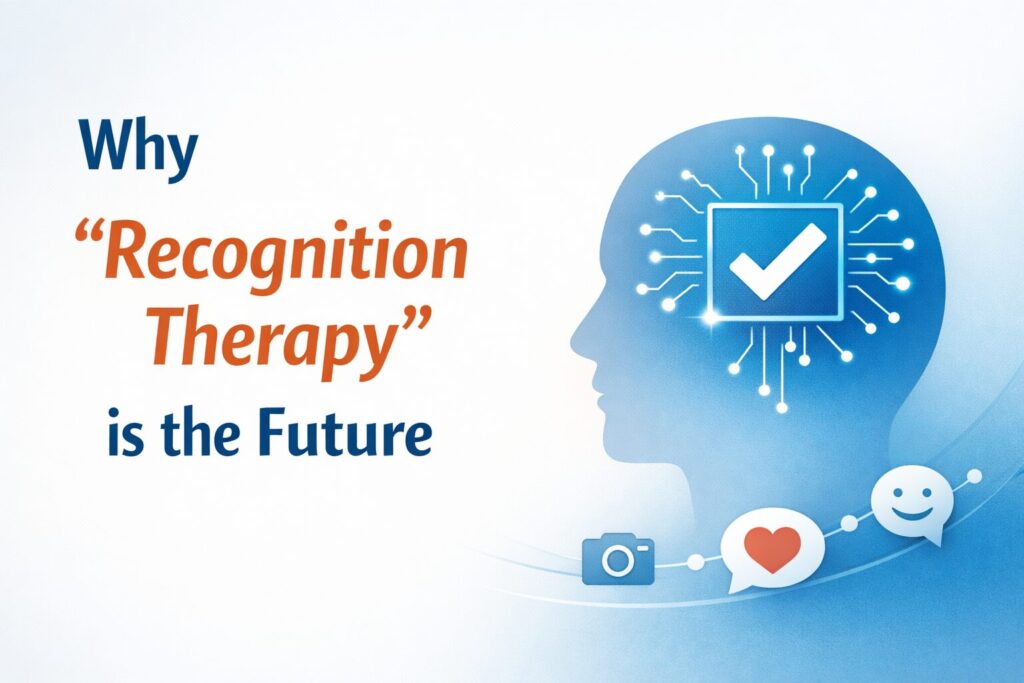
In my time observing clinical environments, I’ve seen patients take general memory drugs that leave them agitated or “too awake” without actually helping them know who their family is. Recognition Therapy is different. It’s a “Precision Dermaceutical” for the brain. It doesn’t try to make the patient remember everything; it tries to make them remember the people who matter. This discovery suggests that if we can keep the “Familiarity Engine” running, we can significantly improve the quality of life for families, even if the disease continues its slow progression elsewhere.
The STAT Madness Competition: Science as a Cultural Pulse
There is something beautiful about seeing thousands of people vote on cellular biology with the same fervor they usually reserve for sports. STAT Madness 2026 is the “Global Pulse” of our collective hope.
I’ve watched the brackets closely this year. We have contenders in CRISPR-based heart repair and lab-grown lung tissue. But the UVA Alzheimer’s discovery feels different. It feels personal. We all know someone whose life has been touched by this “Stranger in the House” phenomenon. By voting for this discovery, the public isn’t just picking a winner; they are signaling to the scientific community that Human Connection is the most important metric of medical success.
Precision Neuromodulation: The Tech Stack
As I’ve discussed in my previous briefings on the Galaxy S26 and the iPhone 17e, the “Personalized AI” era is colliding with the “Personalized Medicine” era.
The researchers at UVA are using AI-powered Neural Mapping—not unlike the “Microbiome Mapping” we see in Seoul clinics—to identify exactly where a patient’s cholinergic density is dropping. In 2026, we are no longer guessing. We are using “Biological Reset” protocols to tailor the dosage of neurotransmitter-boosters to the individual’s specific neural “holes.”
The “Polar Route” to Recovery: A New Way Around the Disease
In aviation, the “Polar Route” is the long way around that ends up being faster because it avoids the storms. I see Recognition Therapy as the “Polar Route” of Alzheimer’s treatment. We may not be able to stop the entire storm of the disease yet, but we’ve found a way to navigate around the most painful parts of it.
If we can preserve the “Familiarity Bridge,” we preserve the soul of the relationship. I’ve seen early trials where patients, after targeted stimulation of these cholinergic pathways, could identify their children after months of “facial blindness.” The emotional impact of that moment—the literal “Glow” of recognition—is why this discovery is the #1 seed in my book.
A Peer-to-Peer Reality Check
Let’s be candid: we aren’t at a “cure” today, March 2. The STAT Madness bracket represents the beginning of the journey, not the finish line. We are still years away from this being a standard pill you pick up at the pharmacy.
However, the Vertical Integration of biology and technology we are seeing in 2026 means the transition from “Lab” to “Life” is happening faster than ever before. This is the first time I can remember where the path forward is so clearly defined. We know the neurons. We know the signal. Now, we just have to keep the “Pulse” alive.
The Long-Term Impact on Caregiving
As someone who has navigated the logistics of caregiving, I know that the hardest part isn’t the physical labor; it’s the psychological toll of being forgotten. This discovery changes the “Caregiver Pulse.” It gives us a goal that is achievable.
If you are a “Glowmad” traveler or a tech enthusiast reading this, know that the same silicon precision that powers your 24GB RAM smartphone is being used to map the 45 trillion operations of the human brain. We are living in an era where “Intelligence” isn’t just something we build in a computer—it’s something we are finally learning to repair in ourselves.
Cast your vote in STAT Madness, but more importantly, keep an eye on UVA Health. They’ve found the “broken wire.” Now, it’s time to turn the lights back on.