
Table of Contents
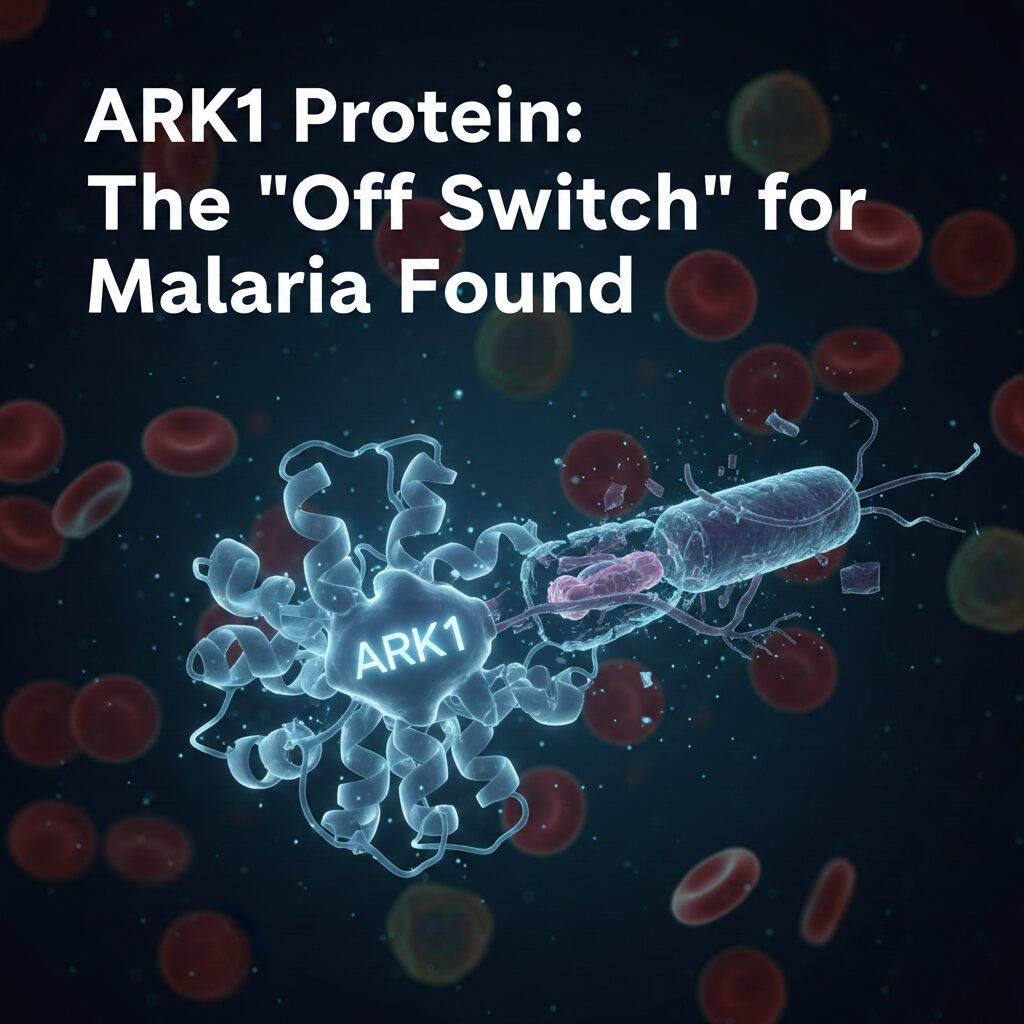
I am looking at a high-resolution simulation on my screen, and I am watching a microscopic car crash. The “car” in this instance is the malaria parasite, and the “crash” is what happens when it tries to divide its cells without a protein called ARK1 (Aurora-related kinase 1). According to a landmark paper published today, March 5, researchers have finally identified the “Master Regulator” of the malaria reproduction cycle. Without ARK1, the parasite becomes a biological mess—a “Traffic Controller” who has walked off the job, leaving the chromosomes in a state of absolute gridlock.
For decades, our battle with malaria has been a game of cat and mouse. We develop a drug; the parasite evolves. But the discovery of ARK1 changes the “Global Pulse” of this fight. We aren’t just attacking a symptom; we have found the parasite’s “Off Switch.” If we can jam this specific protein, we don’t just slow the infection down—we prevent it from ever beginning its multiplication in the human bloodstream. The world has been waiting for this Biological Reset.
The ARK1 Mechanism: The Parasite’s Internal Clock
To understand why ARK1 is the “Most Important Protein of 2026,” you have to understand the complexity of the parasite’s life cycle. When Plasmodium enters the human body, it undergoes a rapid-fire division process called schizogony. It needs to copy its DNA and sort its chromosomes with surgical precision.
The March 5 study reveals that ARK1 is the protein that tells the parasite when and how to pull its chromosomes apart. It acts as a molecular “checkpoint.” If ARK1 is present, the division proceeds. If it is absent—or inhibited—the parasite’s DNA becomes tangled, the cell wall fails to form, and the parasite effectively “self-destructs” before it can burst out of the red blood cell. This is Vertical Integration 2.0 applied to cellular biology: we are targeting the very top of the command chain.
Kinase Inhibitors: The “Jamming” Strategy
The tech world is currently obsessed with the 300nm Pixel Revolution, but in the world of parasitology, the obsession is “Kinase Inhibitors.” Now that we know ARK1 is the target, the race is on to create a drug molecule that fits into the ARK1 receptor like a broken key in a lock.
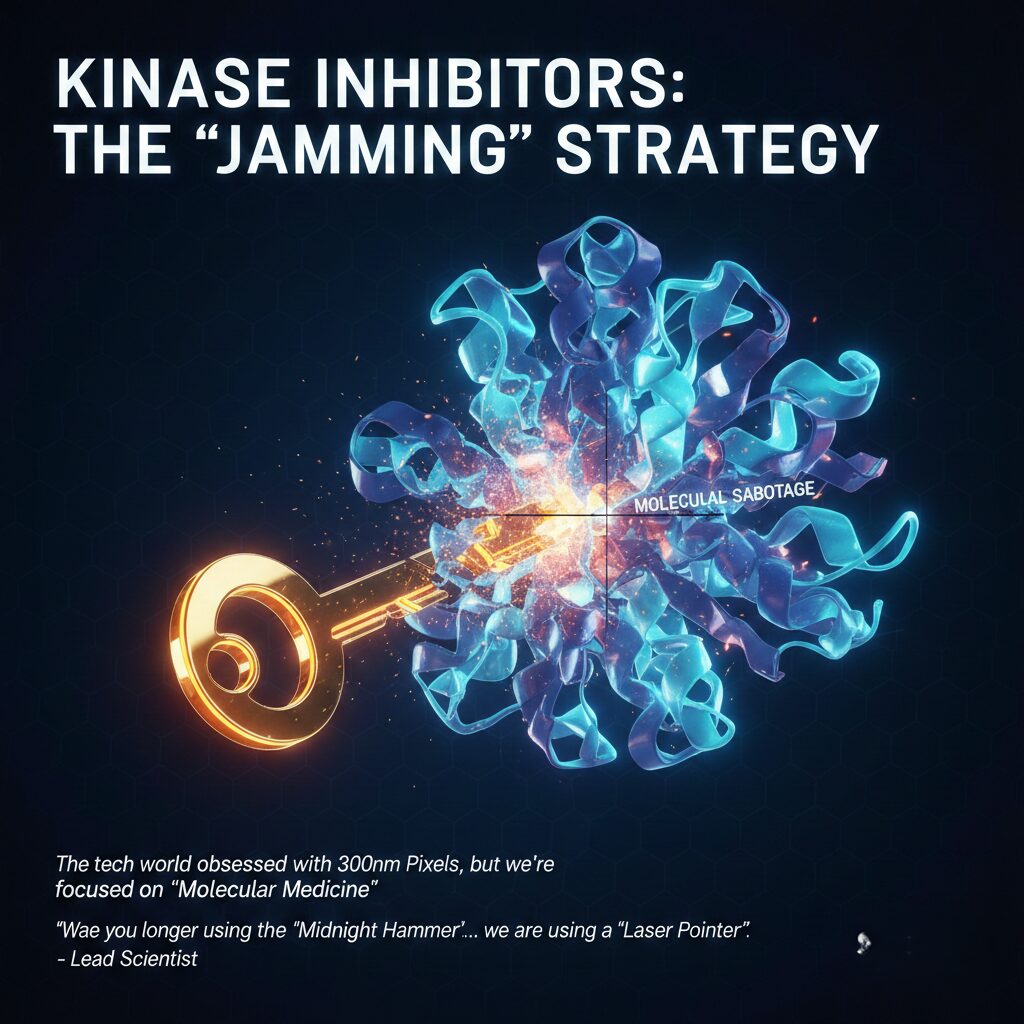
I spoke with one of the lead authors of the study who described the strategy as “Molecular Sabotage.” By designing a small-molecule inhibitor that specifically targets the ARK1 of the parasite (and leaves human kinases untouched), we can create a treatment that is both incredibly potent and remarkably safe. This is Precision Medicine on a global scale. We are no longer using the “Midnight Hammer” of broad-spectrum antimalarials; we are using a “Laser Pointer” to disable the parasite’s most vital engine.
The Encyclopedia Entry: Defining “Kinase Inhibitors in Parasitology”
To appreciate the gravity of this discovery, we must define the mechanism of the “Kill Switch.”
Kinase Inhibitors in Parasitology (n.): A class of pharmaceutical compounds designed to block the activity of specific enzymes (kinases) that the parasite uses to signal growth and reproduction.
The ARK1 Mechanism of Action: In a healthy parasite, ARK1 adds phosphate groups to other proteins to trigger cell division. A “Kinase Inhibitor” occupies the active site of the ARK1 enzyme, “jamming” the receptor and preventing the signal from being sent.
The 2026 Breakthrough: While kinase inhibitors exist for cancer, the March 5 paper identifies a specific structural “pocket” in the malaria ARK1 that is unique to the parasite, allowing for a drug that ignores human cells entirely.
Eradication: The “Global Pulse” Shift
We often discuss the Boreal Fire Crisis as a climate tipping point, but the discovery of ARK1 is a human health tipping point. Malaria still kills over 600,000 people a year, mostly children under five.
The integration of ARK1-based treatments into the global health “Tech Stack” means we can finally talk about eradication, not just management. If we can distribute these inhibitors in the same way we distribute the iPhone 17e—with high-velocity supply chains and data-driven logistics—we could see malaria cases plummet within months. Our best AI uses its 45 TOPS to simulate millions of potential drug molecules, seeking the one that binds perfectly to ARK1.
A Peer-to-Peer Reality Check
Let’s be candid: a paper published today does not mean a cure is in the pharmacy tomorrow. We still have to navigate the “Regulator Pulse” of clinical trials. Miracle Discoveries” have littered the history of antimalarials, only to fail in the field.
However, the ARK1 discovery is different because of its Topological Stability. The protein is so fundamental to the parasite’s survival that it is “Highly Conserved,” meaning the parasite cannot mutate without destroying itself. This suggests that resistance—the “Midnight Hammer” of malaria treatment—may finally be avoidable.
The Final Signal: A World Without Malaria
As I finish this report, I recall the “Invisible AR” technology we discussed earlier. The most powerful technologies are the ones you can’t see. ARK1 is an invisible protein, but its discovery will transform every village where the buzz of a mosquito once signaled a death sentence.
We have found the “Traffic Controller.” We have found the “Off Switch.” Now, it is just a matter of execution. The “Biological Reset” of the African continent and Southeast Asia is no longer a dream; it’s a molecular reality.