
Table of Contents
I used to think my gut was just a processing plant—a simple tube where the food I ate was turned into fuel. But a few years ago, after a period of intense, unexplained brain fog and low mood, I learned that my stomach was actually doing much more than digesting lunch. It was, in a very literal sense, talking to my brain. This realization changed my life. I discovered that I wasn’t just what I ate; I was what I hosted.
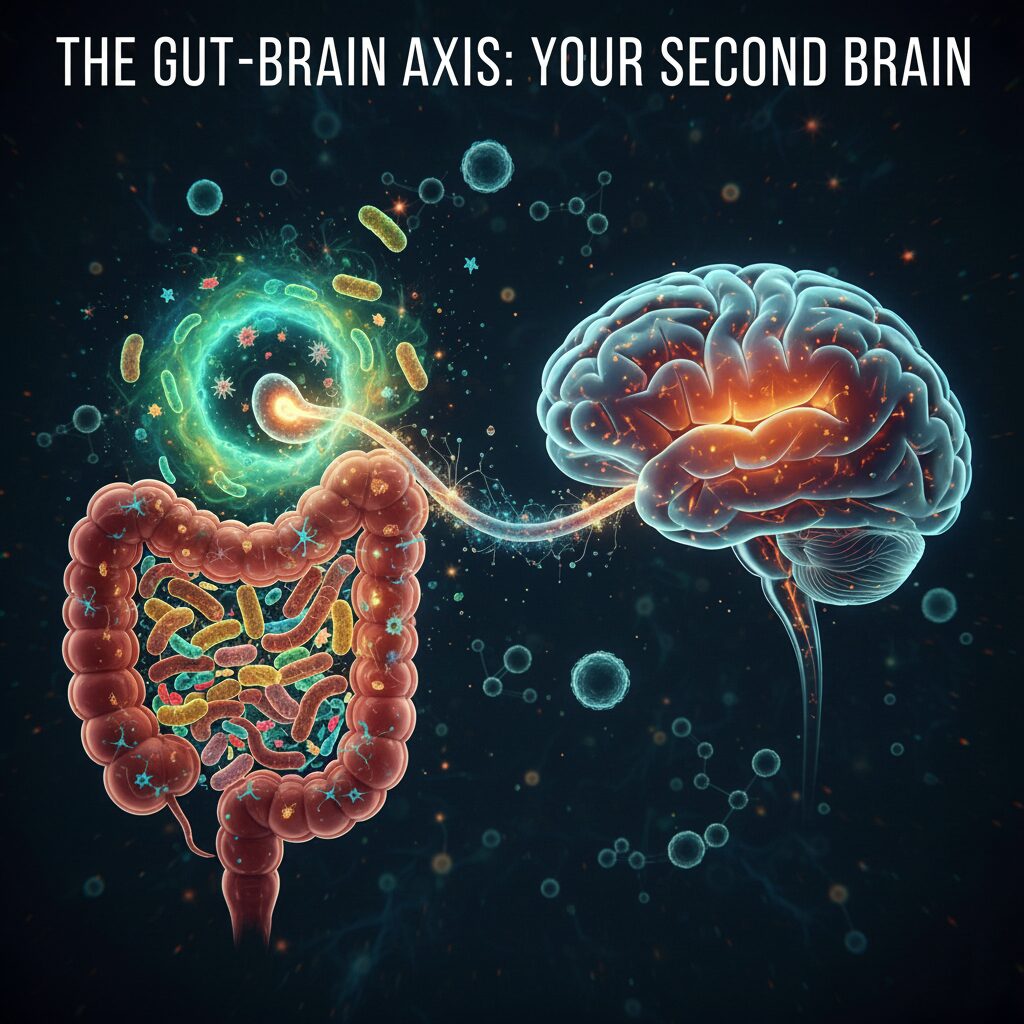
There is a constant, chemical conversation happening between your gut microbiome and your central nervous system. This is the gut-brain axis, a bidirectional highway that influences everything from your anxiety levels and focus to your overall sense of joy. When this internal ecosystem is in harmony, you feel sharp and steady. When it is out of balance, the signals sent to your brain can feel like static, manifesting as persistent unease or fatigue.
The Science of the “Second Brain”
Scientists often refer to the enteric nervous system (ENS) as our “second brain.” Tucked into the walls of your digestive tract, the ENS contains hundreds of millions of neurons—more than you find in the spinal cord. This is why you feel “butterflies” when you are nervous or a “gut feeling” before a major decision.
In my journey to understand this, I learned that about 90% of the body’s serotonin—the neurotransmitter famously responsible for stabilizing our mood and feelings of well-being—is produced in the gut, not the brain. If your microbiome is struggling, that production line falters. We are beginning to see a clear link between gut health and mental health, suggesting that caring for your digestion is, in many ways, an act of protecting your mental clarity.
Listening to the Conversation
How do you know if your “second brain” is trying to get your attention? For me, it was subtle. It wasn’t always obvious indigestion. Sometimes it was just a lingering feeling of irritability that didn’t match my external circumstances. I started tracking my meals and my moods, and the patterns became impossible to ignore.
This is where the microbiome—the trillions of bacteria living in your digestive tract—comes into play. Think of them as a massive, diverse civilization. When you eat, you aren’t just feeding yourself; you are deciding which “citizens” in your gut thrive. A diverse, thriving microbiome sends positive, calming signals via the vagus nerve directly to the brain. A restricted, unhappy one? It sends out distress signals that can trigger inflammation and cloud your cognitive function.
Optimizing the Axis: A Sustainable Approach
I am not a fan of quick fixes or the latest “miracle” supplement trends that pop up on social media every few months. Instead, I have focused on building a resilient internal environment. This is an evergreen strategy:
- Prioritize Fiber Diversity: I stopped looking for a single “superfood” and started aiming for a wider variety of plants. Different fibers feed different beneficial bacterial strains, which keeps the ecosystem robust.
- The Power of Fermentation: Integrating traditional, fermented foods into my daily routine—like kimchi, sauerkraut, or kefir—has been the most effective way to introduce beneficial bacteria naturally.
- Mindful Eating: We often forget that the gut-brain conversation starts before the first bite. Eating in a state of stress physically inhibits your ability to digest properly. Taking three deep breaths before a meal is a small, ritualistic way to tell my nervous system it is safe to nourish itself.

The Long-Term Impact on Mental Clarity
When I prioritize my gut health, the “noise” in my head tends to quiet down. It isn’t a cure-all, but it provides a foundation. By viewing my gut as a partner in my mental health rather than a separate bodily function, I’ve gained a sense of agency that I never had before.
This is the beauty of the gut-brain connection: it reminds us that our health is holistic. You cannot separate the mind from the body. When you start to view your gut as a command center for your mood, you stop looking for external fixes for internal problems and start nourishing the source of your resilience.
The next time you feel a shift in your mood, don’t just ask what’s happening in your day—ask what’s happening in your gut. Your second brain is always talking; it’s time we learned how to listen.
Have you noticed a direct link between the foods you eat and your mental state? Share one ‘gut-friendly’ food or ritual you’ve added to your day that helped you feel more balanced!